



Where to buy officer accountability body cameras online
Finding the right source for purchasing body-worn cameras built for law enforcement and security professionals can feel overwhelming. When searching for where to buy officer accountability body cameras online, the most reliable options include authorized manufacturer websites, certified distributors specializing in public safety equipment, and established B2B platforms that cater to institutional buyers. Direct engagement with manufacturers like SHOOP ensures access to authentic devices backed by comprehensive technical support, customization services, and warranty coverage that meets the demanding requirements of police departments, security firms, and emergency response teams across the United States.
Understanding Officer Accountability Body Cameras and Their Importance
Ten years have passed since the last big change in public safety equipment. Body-worn recording devices have gone from being extras to being necessary tools that shape how police work and how security operations are run today. These specialized devices are very different from regular action cams because they have military-grade security standards, tamper-proof recording protocols, and a design architecture that is driven by compliance.
What Makes These Devices Different from Standard Cameras
Professional body-worn gadgets made for police officers have features that help them deal with certain operating problems. The technology makes sure that video footage stays true throughout the whole chain of custody, which means it can be used in court. Advanced chipsets like the Ambarella H22 provide stable performance in high-pressure situations, and sensors like the OV05A20 provide excellent image quality in a wide range of lighting conditions, from bright patrols during the day to difficult situations at night.
When you look at data security measures, the difference becomes clear. AES256 encryption keeps all recorded content safe from people who shouldn't be able to see it, so the footage can be used in court. Storage systems that use H.264/H.265 encoding let departments record more than 24 hours of continuous footage without worrying about storage space. Intelligent compression technology keeps the quality of the video while making the most of the storage space for longer operations.
The Role These Devices Play in Modern Security Environments
Departments that use body-worn camera programs say that community relations and the quality of evidence have gotten better. The devices do several things at once: they record interactions with the public, provide training materials for scenario-based teaching, and give command centers real-time information about what's happening during major events. The GPS positioning feature lets dispatch know exactly where each officer is, which helps with quick response planning and better safety standards.
Recording technology has been very useful in many professional settings. Teams that enforce traffic laws use devices made for outdoor use and long shifts to keep records of road inspections and accident scenes. Firefighters film emergency operations and the conditions on the scene, which can be used for teaching and reviewing how things work. Wearable cameras are used by emergency medical teams and hospital security staff to record their responses to emergencies and handle conflicts in high-stress medical settings. This makes workplaces safer and more open.
Key Factors to Consider Before Purchasing Officer Accountability Body Cameras
A lot of technical and practical factors need to be carefully looked at before a procurement choice can be made. The selection process is easier to handle when it is split up into clear categories that meet the needs of the department and all legal requirements.
Performance Metrics That Impact Daily Operations
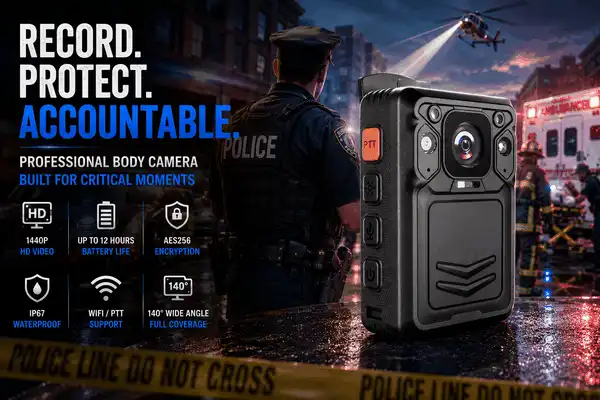
The operating readiness is directly related to the battery capacity. Professional-grade devices have 3200mAh batteries that can record continuously in 1080P for up to 12 hours, which is the same length of time as a typical patrol shift without needing to be charged in the middle of the shift. Recording resolution determines how useful footage is as evidence. For example, 1440P video captures face features, license plates, and outdoor context that lower-resolution devices miss, making it perfect for court proceedings and incident reviews.
Video stabilization technology is important for scenarios with a lot of movement, like foot chases. Six-axis picture stabilization makes sure that footage stays clear and usable even when operations are hard on the body. The 140-degree view angle is similar to how our natural peripheral vision works. It lets you get a full picture of a scene without the fisheye distortion that comes with wider angles.
Data Security and Compliance Capabilities
Modern devices that are worn on the body must meet strict data protection standards. Encrypting files when they are written to memory cards keeps people from getting to them without permission, even if the device is lost or stolen. Network security methods that use AES256 encryption for streaming video, audio, and text data keep real-time communication safe from being hacked.
Compliance goes beyond just encryption for the officer accountability body camera. Automatic timestamping and GPS-tagging make a chain of custody that can't be broken. This makes administration easier and makes sure that the law is followed. Pre-event delay records 30 to 60 seconds of video before the record button is pressed. This shows what happened before an incident that the police may not have seen coming. This feature has been very helpful in putting together the sequence of events during investigations and court cases.
Evaluating Supplier Credibility and Support Infrastructure
A business's relationship with an equipment seller goes far beyond the initial buy. A warranty shows that the company that made the product is confident in its quality. An 18-month warranty is longer than the norm in the industry and shows that the company is committed to long-term performance. How quickly technology problems are fixed and how well departments can add new devices to their current evidence management processes depend on the infrastructure for after-sales support.
Credentials for certification provide independent confirmation of a device's skills. IP67 waterproof ratings make sure that devices work successfully in bad weather, and 2-meter drop protection makes sure that they will last through the physical demands of field work. With international certifications like CE, ROHS, and ISO, you can be sure that manufacturers follow safety standards and keep their quality control processes consistent.
Top Online Sources and Brands for Officer Accountability Body Cameras
There are several ways to get professional body-worn recording equipment through the procurement landscape. For departments to make choices that balance cost, character, and quality, they need to know the pros and cons of each channel.
Direct Manufacturer Relationships
Working directly with manufacturers helps large purchasers. SHOOP, Shenzhen Kexin technologies Co., Ltd., only makes body-worn police cameras and security technologies. The 2015-founded startup has over a decade of sophisticated imaging expertise. It meets several legal and operational criteria with law enforcement agencies in over 30 nations.
Working directly with a manufacturer allows for adjustments that off-the-shelf alternatives can't. Departments may pick features, branding standards, and system-compatible connection processes using ODM and OEM services. Adaptability is particularly useful for firms with operational or regulatory requirements. The SHOOP Real Time Body Camera, which weighs 140 grams and is 84.5 mm long, 56.3 mm broad, and 27.3 mm high, combines cutting-edge streaming technology with safe field operation.
Technical specifications show the device's professional characteristics. The Ambarella H22 chipset keeps the system running smoothly under pressure, while the OV05A20 camera shoots stunning photos in any light. The 1440P video is crisp and useful for court procedures and incident reviews. Different departments may employ 32GB to 256GB memory. The 2-inch HD display plays well and saves battery life throughout long shifts with screen-off settings.
Authorized Distributor Networks
Certified wholesalers offer local help and often keep stock on hand so that they can be sent out right away. These partners go through training and certification processes that make sure they can offer good warranty service and technical support. Regional wholesalers know the rules that need to be followed in each area and can help buying teams understand how those rules affect setting up devices and managing data.
The distribution model works especially well for areas that need to buy things quickly or that would rather work with local suppliers because it is easier for them to manage. Authorized dealers keep in touch with manufacturers to make sure they only send genuine equipment and give users access to firmware patches and technical notes that keep devices up to date with changing security standards.
B2B Platform Considerations
Business-to-business platforms let you compare prices, but you need to be very careful when using them. Before making a purchase, procurement teams should check the seller's credentials, the terms of the warranty, and the devices on the list to make sure they meet the requirements. The buying organization is ultimately responsible for due research, even though reputable B2B platforms may offer buyer protection programs and have seller verification procedures in place.
One of the best things about B2B platforms is that they bring together many suppliers, so you can compare prices and specs. It's easy for departments to look over technical documents, compare warranty terms, and compare delivery times from different vendors. It's important to be careful and make sure that the products on the list are real from the manufacturer and not fakes or changes that were not authorized and could affect how well they work or void the warranty.
How to Evaluate and Choose the Best Officer Accountability Body Cameras for Your Organization
To choose the best gadget, you have to match its technical skills with its practical uses. A structured review framework stops common mistakes in purchasing and makes sure that the tools bought will last for a long time.
Defining Organizational Requirements
To make a good choice, you must first be honest about how the gadgets will be used. Patrol officers want the longest battery life and the toughest equipment, while investigators may care more about video resolution and sound quality. When it comes to store security, discrete designs and easy operation are what people need. On the other hand, combat teams need ruggedization and connection with communication systems.
The needs for a gadget are affected by its surroundings. Departments that work in places with wide temperature differences need tools that can handle a wider range of temperatures. Agencies that work in coastal areas can get better corrosion resistance than the standard IP67 rating. In cities, departments that do a lot of work inside might put an emphasis on how well sensors work in low light, while in rural areas where they cover a lot of ground, they need batteries that last longer and GPS that works well.
Structured Comparison Framework
By making a standard evaluation matrix, you can compare devices and suppliers in an objective way. Important features include the amount of time that can be recorded at the desired quality, how long it takes to charge, the amount of storage space that can be used, and whether the mounting system can be used with current uniform configurations. The comparison should look at the total cost of ownership, which includes not only the cost of buying the device but also the cost of setting up the storage infrastructure, the cost of integrating the evidence management software, and the cost of long-term maintenance.
Testing in the real world shows capabilities of the officer accountability body camera that can't be fully described in specs. Departments should ask for showcase units or pilot projects that let them test things in the field while they are actually being used. Officers give very useful feedback on ergonomics, how easy it is to use the interface, and performance in a variety of situations. During this hands-on evaluation time, real issues that affect user adoption rates and, in the end, program success are often brought to light.
User Feedback and Case Study Analysis
Departments that have body-worn camera programs can give you useful information that goes along with the technical details. Peer agencies give honest opinions on how quick vendors are, how reliable devices are, and how hard it is to integrate new systems. Regional law enforcement associations and professional groups often have forums where agencies can share their buying experiences. This helps agencies avoid bad suppliers and find ones with a good track record.
Case studies show measurable results that show why investments were made. There are measurable returns on investment in the form of fewer complaints, more successful prosecutions, and fewer incidents of police using force. Improvements in the ease of evidence handling free up staff to do more important work. These written results help get budgets approved and show review groups and community partners that people are responsible.
Overcoming Challenges in Procuring Officer Accountability Body Cameras Online
There are certain risks that come with buying things online that need to be managed proactively. Understanding common mistakes and taking precautions is the best way to make sure that acquisitions go well.
Verifying Seller Legitimacy and Product Authenticity
There are both trustworthy sellers and shady ones in the digital marketplace, offering fake or hacked devices. Some ways to make sure something is real are to check the manufacturer's authorization, look over the business's credentials, and make sure the physical business address is correct. Legitimate providers are happy to give you thorough information about their business, professional references, and clear information about the product's features and limits.
Prices that are much lower than the going rate on the market, vague product descriptions, a refusal to provide detailed technical documentation, or tactics that put pressure on you to make a quick purchase decision are all red flags. Before making a purchase, procurement teams should make sure they have official product literature, warranty paperwork straight from the manufacturer, and clear return policies. Working with companies that have complete websites, such as policebody-cameras.com, which have full product information, gives you more trust in the legitimacy of the supplier.
Ensuring Adequate Support Infrastructure
Even the most advanced gadget can be dangerous if it doesn't have good technical help. Support available hours, reaction time commitments, and the presence of specialized technology teams familiar with law enforcement operational needs should all be taken into account when evaluating a service. Suppliers that offer support hotlines 24 hours a day, seven days a week, extensive online knowledge bases, and field service capabilities show that they care about their customers' long-term success.
Professional sellers are different from equipment vendors because they offer training and help with application. Suppliers who offer full user training, help with integrating evidence management systems, and ongoing advice as programs develop are good for departments. This method is used by SHOOP, where engineering teams offer full support throughout the lifecycles of devices to make sure departments get the most out of their technology investments.
Addressing Post-Deployment Compliance and Management
The process of getting gadgets is only the start of a full body-worn camera scheme. When making internal rules about activation methods, video holding periods, redaction procedures, and public disclosure processes, it's important to be very careful and review them often. It's easier to follow these rules when devices have strong access controls, an audit trail, and the ability to connect to evidence management platforms.
Updates to the firmware and security patches keep devices safe from new online dangers. Suppliers who provide regular updates and clear communication about security holes found show that they are taking a proactive approach to security. Departments should set up update schedules and validation processes to make sure that devices that are already in use meet the latest security standards without causing problems with operations.
Conclusion
Buying officer accountability body camera equipment is a big investment that will have long-lasting effects on how the department works, how it interacts with the community, and how the law is applied. As part of the procurement process, you have to weigh technical requirements against operational needs, check the reliability of the supplier, and put in place comprehensive support strategies. When you work directly with a maker, you can make changes and build long-term partnerships that are useful as programs grow and needs change. Organizations that do thorough evaluations, work with reputable providers, and make detailed plans for implementation are more likely to achieve results that meet their goals for public safety, accountability, and openness.
FAQ
1. How do I verify that an online seller is an authorized distributor?
On their official websites, legitimate manufacturers keep lists of authorized distributors that anyone can see. To check authorization status, call the maker directly using their verified website's contact information, not the information given by the seller. Ask for proof that the device is a distributor and compare the serial numbers of the devices being mentioned with those in maker records. Authorized sellers are happy to give this information, and they know that institutional buyers need to see it before they commit to big purchases.
2. What warranty coverage should I expect from professional body-worn cameras?
Professional-grade gadgets usually come with warranties that last between 12 and 18 months. Full guarantees cover problems with the way the product was made, broken parts, and performance loss from normal use. Make it clear what situations don't qualify for coverage, like making changes without permission or charging in the wrong way. Service contracts and options for longer warranties offer extra protection for large deployments where broken devices cause operational gaps.
3. Can devices integrate with our existing evidence management system?
These days, body-worn cameras come with standard protocols for connecting to most platforms for managing evidence. During the evaluation phase of the procurement process, make sure that the new system will work with the old one. Manufacturers like SHOOP offer technical consultation to look at integration needs and figure out what middleware or configuration changes need to be made. If the integration goes well, it will be easy to post proof, tag metadata automatically, and keep track of the chain of custody.
Partner with SHOOP for Professional Body-Worn Camera Solutions
Organizations looking for dependable providers of officer accountability body cameras should look at SHOOP's all-around approach to public safety technology. Our Real Time Body Camera works like a professional and lasts a very long time. It has CE, ROHS, IP67, and ISO certifications that prove it meets quality standards. We can make solutions that fit the needs of any department, from city police to private security firms, thanks to our flexible ODM and OEM services. Get in touch with our team at sales@ishoop.com.cn to talk about your specific needs and find out how our ten years of imaging experience helps agencies in over thirty countries every day with devices they can trust in the field.
References
1. National Institute of Justice. "Body-Worn Camera Program Implementation: A Comprehensive Guide for Law Enforcement Agencies." U.S. Department of Justice, Office of Justice Programs, 2020.
2. Police Executive Research Forum. "Cost and Benefits Analysis of Body-Worn Camera Programs for Municipal Law Enforcement." Washington, DC: PERF Critical Issues in Policing Series, 2021.
3. Bureau of Justice Assistance. "Body-Worn Camera Toolkit: Policy and Implementation Guide for Public Safety Organizations." U.S. Department of Justice, 2019.
4. International Association of Chiefs of Police. "Body-Worn Camera Model Policy Framework: Privacy and Data Security Considerations." IACP Law Enforcement Policy Center, 2022.
5. Journal of Criminal Justice Technology. "Comparative Analysis of Body-Worn Camera Technologies: Performance Metrics and Procurement Considerations." Vol. 34, Issue 2, 2023, pp. 127-156.
6. National Law Enforcement and Corrections Technology Center. "Body-Worn Camera Standards and Testing Protocols: Technical Assessment Report." National Institute of Standards and Technology, 2022.

USER EVALUATE
Here is the customer's evaluation of us