



Cloud-Enabled Body Camera Systems: What are the Benefits?
Cloud-enabled body camera systems transform traditional video recording into a dynamic digital ecosystem. These advanced devices instantly upload footage to secure cloud platforms, allowing authorized personnel to access evidence from anywhere with an internet connection. By combining wearable technology with cloud infrastructure, organizations eliminate the delays and vulnerabilities associated with manual data transfer. This modern approach ensures video evidence remains protected, accessible, and admissible, addressing critical accountability needs across law enforcement, security, emergency services, and commercial sectors. The shift to cloud connectivity represents a fundamental improvement in how organizations manage, share, and preserve vital visual documentation.
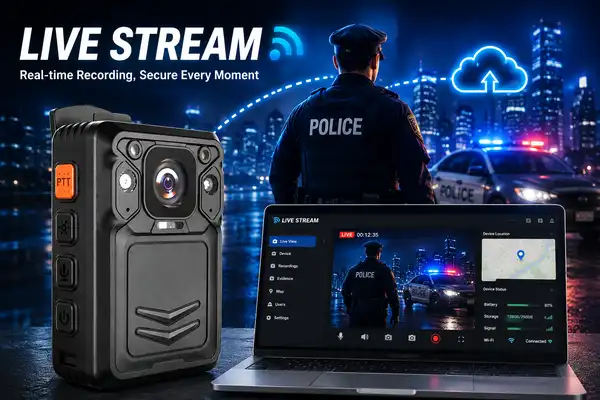
Understanding Cloud-Enabled Body Camera Systems
Wearable recording gear and internet-based storage design are combined in cloud-enabled body cameras. While operations are going on, the camera records high-definition video and sends it directly to remote servers over Wi-Fi or cellular networks. This design gets rid of the need for actual docking stations and file transfers that have to be done by hand, which are inefficient ways to handle evidence.
Core Components and Architecture
Wearable recording devices, secure transmission methods, and centralized cloud storing platforms are the three parts that make up modern systems. Sensors, processors, batteries, and wireless transmission units are all built into the recording device. Transmission uses AES-256 encryption to keep data safe while it's being sent. To keep evidence's integrity, cloud platforms offer redundant storing, limits over user access, and audit logs. From the time the recording starts, this design makes sure that the video goes through a safe chain of control without any help from a person.
Enhanced Accessibility and Security
Traditional body cameras store video locally on SD cards, which means that the footage could be damaged, stolen, or changed. Connecting to the cloud gets rid of these weaknesses by instantly copying files to several safe data centers. Authorized people can look at video tape within minutes of an event, which speeds up the investigation process. Multi-factor security and role-based rights keep information open and stop people who aren't supposed to be there from getting in. Compliance standards like CJIS and GDPR are met by encrypted transmission routes, which keep private information safe throughout its lifecycle.
Operational Effectiveness Through Technology
The Ambarella H22 chipset and OV05A20 sensor in the ISHOOP HD 1080P body camera make it cloud-ready, and the 1080P quality is crystal clear. Built-in 4G and dual-band Wi-Fi make it possible to connect reliably in a variety of settings. H.265 video compression makes the best use of bandwidth, which lets you watch for longer periods of time without using too much data. The 3200mAh battery lets you record continuously at 1080P quality for up to 12 hours, so you can cover the whole shift. The IP67 grade for waterproofing and the 1.8-meter drop resistance make sure that it will last in tough situations, like city patrols and emergency rescue missions.
Benefits of Cloud-Enabled Body Camera Systems for B2B Procurement
When businesses use cloud-based video management, they get instant practical benefits. The frustrating wait times of physical retrieval systems are gone, and now you can get to evidence right away. When a police officer records a traffic stop, they can have their bosses look over what happened before they leave the scene. Security managers who are in charge of several sites can view live feeds without having to go from one site to another. This responsiveness changes how teams work together during major incidents.
When footage automatically uploads, it's easier to keep track of evidence. IT infrastructure costs have gone down for procurement teams thanks to cloud platforms, which get rid of the need for expensive on-site servers and maintenance contracts. With subscription pricing methods, costs are based on real usage, and businesses can be flexible as they grow. When safe sharing methods are used instead of slow physical evidence transfers, collaboration between agencies gets better.
Automated retention rules make it easier to meet compliance standards for footage from a cloud-enabled body camera. Systems that are set up to follow the law automatically store video for the necessary amount of time and then delete files safely when the time is up. Audit trails keep track of every attempt to access data, making records that can be used in court. This technology cuts down on mistakes made by people and makes sure that rules are always followed.
Monitoring in real time improves the performance of operations. During high-risk operations, supervisors can watch live streams and give instant instructions to field staff. Adding GPS helps better use of resources by showing where officers are during checks. When cameras are integrated with alert systems, they start recording instantly when an emergency call comes in. This way, you can't forget to turn on the cameras when things are stressful.
Comparing Cloud-Enabled Body Cameras with Traditional and Alternative Solutions
With traditional body cams, cops have to dock the devices at the end of their shifts, which can take hours or even days. Physical storage limits the length of time that can be recorded, which means that quality has to be sacrificed or data has to be offloaded often. If the hardware fails, evidence could be lost forever. Connecting to the cloud fixes these issues by backing up data all the time and allowing for endless, expandable storage.
Dependence on the network is the main trade-off. In remote places with poor cell service, access may come and go. However, modern devices have local buffering that sends video when the signal returns. Organizations that are careful with their budgets worry about data costs, but H.265 compression uses a lot less bandwidth than older codecs. Adaptive bitrate streaming changes the quality automatically based on the connection speed, so files can continue even when the connection speed is slow.
Dashboard cameras work well in cars, but they can't be moved around easily enough for foot patrols, building searches, or dealing with large groups of people. Wearable tech follows people through hallways, stairwells, and other places that fixed cameras can't reach. The personal view makes it easier to take responsibility for one's actions than wide-angle car cams, which might miss important details.
While wired systems offer steady data transfer speeds, they make it harder to move around and set up. Wireless cameras that connect to the cloud let you move around freely while keeping data transmission safe. Without having to run cables through facilities, installation is easier. When firmware updates are sent over the air instead of having to be installed on each individual device, maintenance costs go down.
How to Choose the Right Cloud-Enabled Body Camera System for Your Organization
Setting clear operational requirements is the first step to successful procurement. Law enforcement agencies put a high priority on evidence standards and being able to use evidence in court. Private security teams stress tracking in real time so that incidents can be dealt with right away. To keep patient information safe, healthcare sites need privacy limits. Technical review is based on knowing these unique needs.
Video clarity has a direct effect on the quality of the proof. The 1080P video on the ISHOOP model can pick up license plates, faces, and other fine details even when the lighting is bad. A 3200mAh battery that can record for 12 hours makes sure that officers can work full shifts without having to charge in the middle of the day. Features that make something last longer, like IP67 waterproofing and drop resistance, keep investments safe in rough places like rainy patrols and dusty construction sites.
The features of a cloud platform should be carefully looked at for a cloud-enabled body camera. Reliable sellers offer multiple data centers that are sure to be online more than 99.9% of the time. Storage flexibility should be able to handle growing evidence files without slowing down the system. Complex systems make it harder for people to use them and cost more to train them, so user interfaces need to be easy to understand. When APIs are compatible, they can be added to existing records management systems. This makes workflows more unified instead of separate tools.
Support from vendors is what determines long-term success. The 18-month guarantee on the ISHOOP shows that the company behind it is sure that the product will work well. Getting technical help can help you fix problems with connectivity, configuration, and firmware updates. Well-known companies like Shenzhen Kexin Technology have been making imaging equipment for ten years and have customers in thirty countries, showing that they can work in a wide range of situations.
Budget concerns go beyond the cost of the tools itself. Look at the total cost of ownership, which should include upkeep contracts, membership fees, and training costs. When the government buys things, they often need lists of certified vendors and compliance certifications like CE, ROHS, and ISO standards. ISHOOP products meet these international standards. Negotiating volume pricing for large deployments cuts costs by a large amount, and financing options spread costs out over several budget cycles.
Implementing Cloud-Enabled Body Camera Systems: Best Practices and Use Cases
Phased deployment keeps things running smoothly during changes. Pilot programs let businesses test systems with small groups of users before putting them into use for everyone. In controlled environments, this method finds configuration needs, connectivity problems, and training gaps. When pilots go well, they boost user confidence and get frontline employees who can see the benefits to support the organization.
Full training makes sure that adoption goes smoothly. The staff needs to be taught how to activate things, what the indicators mean, and how to take care of batteries. Supervisors need to be trained on how to review video images, control access, and handle proof properly. IT staff need to know how to set up networks, fix problems, and keep protection up to date. Staff change is handled by ongoing refresher training that emphasizes the right way to use things.
Value is maximized by integrating with current systems. When body cams are linked to alert systems, they can record automatically when calls come in. Adding video timestamps to reports is easier when you connect to records management software. When facility access controls are synchronized, full incident documentation is created, from the time an incident is entered until it is resolved.
Improvements can be seen and measured in the real world. When retail security teams use ISHOOP cams, they say that shoplifting cases are solved faster because there is more clear proof. Security cameras in corporate buildings record incidents at work, which protects against false liability claims. Security staff at events control crowds by live streaming video to command centers. Emergency medical teams keep records of their interactions with patients in chaotic settings. These records help with quality improvement reviews and defend the team against complaints.
Privacy rules need to be carefully followed. Before they are made public, automated redaction tools hide faces and car plates. Access logs keep track of when and who sees private footage. Data is encrypted while it is being sent and while it is being stored. Clear rules about how to record in private areas stop people from abusing the system while still allowing it to work properly in certain cases.
Conclusion
For modern organizations that need accountability, transparency, and quick access to evidence, cloud-enabled body camera systems represent crucial infrastructure. By sending protected video straight to secure cloud platforms, these devices get rid of common security holes and shorten the time it takes to investigate. Professional-grade hardware and smart cloud connectivity are combined in the ISHOOP HD 1080P model, which offers 1080P resolution, a 12-hour battery life, and IP67 durability. Organizations get better control over proof, automated regulatory compliance, and real-time insight into operations. Successful operations that improve safety in the business, law enforcement, and emergency services sectors are made possible by careful procurement that focuses on technical specs, vendor skills, and total cost of ownership.
FAQ
1. How long can modern devices record continuously?
How long you can record relies on the resolution choices and the battery life. With its 3200mAh battery, the ISHOOP device can record for up to 12 hours at 1080P or 15 hours at 480P. The battery lasts for 12.5 hours when streaming over Wi-Fi and GPS is turned on at 480P at the same time. This is enough to last for full work shifts without stopping.
2. Do these cameras effectively prevent misconduct?
According to research, gadgets that can be seen can change people's behavior in a good way. When conversations are written down, both employees and customers act more professionally. Transparent footage quickly settles disagreements by providing objective proof. It also protects honest workers from false accusations while revealing real wrongdoing that needs to be fixed.
3. What security measures protect cloud-stored footage?
AES-256 encryption is used by professional tools to write, send, and store files. Access to cloud platforms is controlled by multi-factor authentication. HTTPS protocols keep connections to the internet safe. Compliance certifications and regular security audits, such as ISO 27001, make sure that data centers keep up with strict security standards. Losses caused by localized disasters can't happen when storage is spread out across sites in different areas.
Partner With SHOOP for Professional Cloud-Enabled Body Camera Solutions
When businesses need reliable cloud-enabled body camera systems, Shenzhen Kexin Technology Co., Ltd. is the place to go. Customers in more than 30 countries can buy professional-grade devices under our ISHOOP name. These devices have 1080P resolution, strong wireless connection, and enterprise-level security. We have been making body cameras for a long time and have ISO-certified production facilities. We also offer full ODM/OEM customization services that are tailored to specific operational needs. You can email our team at sales@ishoop.com.cn to talk about your deployment needs, get technical specs, or set up a product demo. Find out why procurement professionals all over the world trust ISHOOP to provide solutions that combine cutting-edge technology with dependability in real life.
References
1. National Institute of Justice. "Body-Worn Camera Implementation and Outcomes: A Comprehensive Analysis of Law Enforcement Agencies." U.S. Department of Justice Research Report, 2021.
2. International Association of Chiefs of Police. "Cloud Storage Standards for Digital Evidence Management: Best Practices for Law Enforcement." IACP Technology Policy Framework, 2022.
3. Bureau of Justice Assistance. "Cost-Benefit Analysis of Body-Worn Camera Programs: A Multi-Agency Study." Office of Justice Programs Special Report, 2020.
4. Security Industry Association. "Video Surveillance and Body-Worn Camera Integration: Technical Standards and Operational Guidelines." SIA Industry Standards Document, 2023.
5. European Union Agency for Cybersecurity. "Data Protection in Cloud-Based Video Surveillance Systems: Compliance Guidelines for GDPR Implementation." ENISA Technical Report, 2022.
6. Police Executive Research Forum. "Building Successful Body-Worn Camera Programs: Procurement, Implementation, and Sustainability." PERF Critical Issues in Policing Series, 2021.

USER EVALUATE
Here is the customer's evaluation of us