



What are the primary uses for body worn cameras?
Body worn camera are essential in many US professions. In essential encounters, these wearable video devices record audio and video in real time, improving accountability and transparency. Police officers recording arrests and retail security staff monitoring stores use these gadgets as objective witnesses. Emergency responders, traffic police, firemen, and healthcare personnel use this technology to record operations, resolve disputes, and safeguard workers and the public with verifiable evidence.
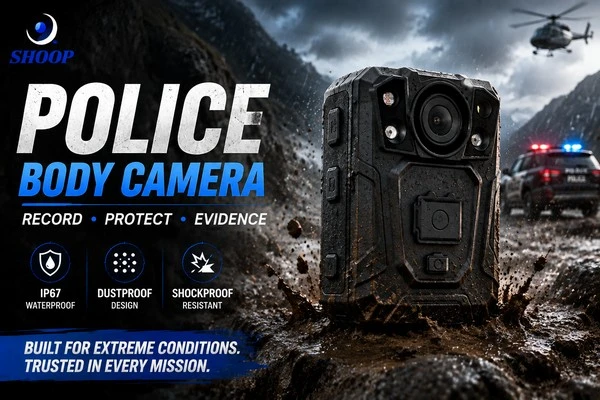
Understanding Body Worn Cameras: Overview and Core Functions
Body-worn cameras are advanced mobile recording devices that capture high-quality video and audio in professional settings. Innovative imaging sensors, strong computers, secure storage, and long-lasting batteries are built into these small, wearable gadgets. Modern cameras use 140-degree wide-angle lenses to record the whole field of view without missing peripheral action.
Essential Recording Capabilities
Professional devices need strong chipsets like the Ambarella H22 to process video. Depending on operational needs, this supports 720P or 1440P recordings. H.264 and H.265 optimise storage space for longer recording sessions without compromising visual quality. High-sensitivity sensors like the OS05A20 capture crisp film in low light, and infrared capabilities allow night vision up to 10 meters.
Battery Performance and Storage Solutions
Duration affects operational efficiency. Quality systems use 3200mAh or higher batteries to record 10–12 hours throughout shifts. Depending on retention regulations and recording frequency, procurement teams may choose 32GB to 256GB storage. Adjusting resolution balances video quality with storage, minimising essential film gaps during lengthy operations.
Pre-Recording and Post-Recording Features
Pre-event buffering is a key technological benefit. Officers may record events from 5 seconds to 2 minutes before manually activating the record function using this capability. Post-recording continues recording after the stop button is hit, documenting event outcomes. These skills are crucial when circumstances rise suddenly or when staff cannot instantly initiate recording.
Legal Compliance and Data Security
Privacy laws vary by country, making compliance crucial for B2B purchases. AES256 encryption safeguards recorded material for judicial procedures by preventing manipulation. Watermarks with user ID, timestamps, and GPS locations verify authenticity, while password-protected systems prohibit deletions. These security measures guarantee recorded evidence admissibility in courts worldwide.
Primary Use Cases of Body Worn Cameras in Various Industries
Law Enforcement Applications
Police agencies use wearable recording devices most. Traffic stops, warrants, domestic conflicts, and arrests benefit from objective documentation that protects officers and people. Video explains contradicting stories, lowers spurious complaints, and offers scenario-based teaching. High-risk units need ruggedised devices with long battery life and dependable performance.
Security Industry Deployment
Private security in business buildings, residential neighbourhoods, transit hubs, and entertainment venues uses body worn camera devices to chronicle incidents and dissuade aggression. Camera video of security guard-visitor disagreements protects organisations from liability lawsuits. The sight of recording equipment de-escalates difficult situations, minimising confrontations. Security management teams analyse film for training and procedural changes.
Traffic Law Enforcement
Traffic police inspecting roadside vehicles, photographing accident sites, and monitoring traffic offences need sturdy outside equipment. Devices must sustain recording quality despite harsh temperatures, precipitation, and impact. GPS integration automatically locates footage at crossroads and highways. This spatial labelling helps recreate accidents and verify citation locations in legal cases.
Emergency Response Documentation
Firefighters entering dangerous settings record operating film for post-incident analysis and training. Records of fire scenes, rescue operations, and emergency procedures help departments improve response protocols and safety. In high-stress circumstances requiring quick judgments, medical emergency teams record patient encounters and treatment decisions. This paperwork protects doctors from unjustified charges and provides professional growth.
Healthcare and Hospital Security
Patient violence and worker safety are specific concerns at emergency rooms and mental hospitals. Wearable cameras warn irritated people that encounters are being filmed, de-escalating situations. Footage explains violent altercations and protects medical professionals from false allegations. Hospital security employs these devices like private security to record trespassing, patient elopements, and policy infractions on medical campuses.
Retail Loss Prevention
Supermarkets and other businesses increasingly provide floor personnel and loss prevention teams with small recording devices. These cameras prevent shoplifting, record theft, and resolve consumer complaints. Management uses recorded film from busy shopping times to evaluate crowd control and detect bottlenecks. Video evidence reduces false liability claims by objectively supporting or refuting consumer claims of maltreatment or damage.
Selecting the Right Body Worn Camera: Key Considerations for B2B Buyers
Critical Technical Specifications
When choosing wearable recording systems, procurement professionals must consider numerous technological factors. 1080P is clear enough for most applications, while 1440P improves face recognition at longer distances. During ordinary encounters, 25-30 frames per second captures enough information for smooth motion. Lower aperture values like F2.0 indicate improved low-light performance.
Evening operations are enhanced by night vision. Infrared LEDs enable face recognition at 10-meter distances in full darkness for nightly patrols and security shifts. 140-degree wide-angle lenses catch more peripheral action than smaller lenses, eliminating confrontation blind spots.
Durability and Environmental Protection
Construction must be sturdy in professional settings. IP67 waterproof ratings protect electronics against rain, spills, and humidity during one-meter submersion. Quality equipment can endure 2-meter drops onto concrete during violent altercations. All-day comfort without hindering mobility or equipment access is provided by compact dimensions of 77mm x 57mm x 26mm.
Rotating metal clips fasten uniforms and enable adjustment for best filming angles. Lightweight design minimises fatigue during 10-12 hour stints. Outdoor enterprises in varied American regions need temperature tolerance to perform in harsh heat and cold.
Connectivity and Integration Features
WiFi allows file sharing and remote configuration management on modern devices. Supervisors may provide tactical supervision during crucial crises by live broadcasting field circumstances. GPS tracking records accurate position data, establishing geographic audit trails. These connection characteristics make standalone recorders part of security environments.
PTT (push-to-talk) allows emergency command center collaboration with body worn camera systems. SOS capabilities enable endangered employees to transmit distress warnings for prompt supervisor reaction. Integration with evidence management software automates uploads and secures chain-of-custody documents across file lifecycles.
Comparative Analysis: Leading Manufacturers
The market has several producers with strengths. Established businesses like Axon provide camera, docking station, and cloud storage ecosystems. Motorola emphasises rugged construction for harsh environments. Shenzhen Kexin Technology's decade of expertise helps companies like ISHOOP provide professional-grade solutions with superior Ambarella chipsets and flexible customisation to fulfil different customer needs.
Prices vary greatly by feature, durability, and software. Though cheaper, entry-level devices lack corporate capabilities like encryption, GPS, and live streaming. Municipal budget-friendly mid-range professional systems are capable and affordable. High-performance agencies may get premium solutions with the best battery life, durability, and integration choices.
Implementation and Integration Strategies for Body Worn Cameras in B2B Environments
Procurement Best Practices
Needs assessment is key to deployment success. Organisations must decide how many devices, what operating circumstances, and what functionalities fit certain use cases. Before buying huge amounts of equipment, pilot projects with representative staff give vital input. Volume procurement agreements typically result in lower prices, warranty extensions, and customised configurations.
Vendor selection should include equipment quality, after-sales service, training, and software ecosystem maturity. Manufacturers with one-year guarantees exhibit product dependability. When equipment breaks down, technical support, including troubleshooting and replacement parts, prevents operational disruptions.
Training and Policy Development
Staff training on device functioning, legal recording parameters, and organisational rules is needed for successful adoption. Personnel must know when recording is required, when discretion applies, and how privacy regulations influence certain situations. As regulations change and new features are added, refresher training ensures compliance.
Clear footage review, retention, and access protocols safeguard organisations and people. Evidence is preserved from capture to judicial presentation via chain-of-custody protocols. Audit traces of file accesses and times prevent manipulation and provide accountability.
Data Management Infrastructure
Organisations need secure, high-volume storage infrastructure. Ten hours of recording by one cop creates hundreds of megabytes every week. Scalable and off-site redundancy are available with cloud storage, although internet access and membership fees are required. Local network-attached storage gives organisations control but requires strong backup and physical security.
File categorisation, metadata tagging, and retention compliance are automated using evidence management software. Advanced platforms include video redaction for privacy, analytics for pattern identification, and integration with incident reports and case management systems.
Future Trends and Innovations in Body Worn Camera Technology
Artificial Intelligence Integration
Wearable cameras will become clever helpers with AI. Facial recognition algorithms may alert police to wanted people during routine encounters. Traffic stop vehicle identification is automated using license plate recognition. Automatic recording and supervisor notification occur upon gunshot detection. These smart features improve situational awareness and save manual labour.
Extended Battery Life and Charging Solutions
Improved battery technology promises lighter, longer-lasting electronics. Wireless charging docks automatically upload video and recharge power at shift end. Remote field deployments are expanded by solar-assisted charging. These innovations decrease device management downtime and administrative burden.
Enhanced Sensor Technology
Next-generation image sensors will capture remarkable information during crucial occurrences with 4K resolution in smaller form factors. Many applications will not need infrared lighting due to improved low-light sensitivity. Outdoor activities often include strong sunshine and deep shadows, which a wider dynamic range can manage.
Evolving Privacy Frameworks
Regulatory environments evolve as governments balance openness and privacy. Data protection will be simplified by automated redaction technologies that hide bystander faces, car plates, and sensitive data before film release. Blockchain-based chain-of-custody systems may improve legal admissibility by authenticating evidence tamper-proof.
Staying current with technology breakthroughs helps organisations preserve competitive advantages while meeting increasing operational and regulatory requirements for security infrastructure.
Conclusion
Law enforcement, security, emergency services, healthcare, and retail use body worn camera wearable recording devices. These solutions improve accountability, safeguard staff, and chronicle crucial encounters objectively. Organisations must consider resolution, battery life, durability, connection, vendor support, and total cost of ownership when choosing equipment. Comprehensive training, clear rules, and solid data management infrastructure are needed for execution. As AI, sensors, and batteries improve, companies that strategically invest in quality solutions position themselves for long-term operational success.
FAQ
1. How long can professional devices record continuously?
Quality units equipped with 3400mAh batteries typically record 10-12 hours at 1080P resolution, sufficient for standard shifts. Lower resolutions like 480P extend recording time to 15 hours. Enabling features like GPS tracking and WiFi reduces battery life slightly, but most professional devices still exceed 10-hour operational requirements.
2. Can recorded footage be edited or deleted in the field?
Professional systems incorporate security features preventing unauthorized deletion or editing. Files are protected by AES256 encryption and require administrator access via management software for any modifications. This tamper-proof design maintains evidence integrity and chain-of-custody documentation essential for legal proceedings.
3. What storage capacity is necessary for typical operations?
Daily recording generates approximately 8-12GB per device depending on resolution and duration. Weekly operations require 40-60GB capacity. Organizations typically select 64GB or 128GB devices, providing adequate buffer capacity while avoiding premature storage exhaustion. Regular data offloading to secure servers prevents capacity issues.
Partner with SHOOP for Professional-Grade Recording Solutions
Organizations seeking reliable wearable recording technology should consider SHOOP's comprehensive solutions. Our devices feature advanced Ambarella H22 chipsets delivering exceptional 1440P video quality with efficient H.265 compression. The robust 3400mAh battery ensures full-shift operation, while IP67 waterproofing and drop-resistant construction withstand demanding field conditions. We offer flexible storage options from 32GB to 256GB, GPS tracking, WiFi connectivity, and live streaming capabilities that integrate seamlessly with existing security infrastructure.
As an experienced body worn camera manufacturer, Shenzhen Kexin Technology provides ODM/OEM services tailored to specific organizational requirements. Our solutions meet international standards including CE, ROHS, IP67, and IK09 certifications. Contact our team at sales@ishoop.com.cn to discuss your deployment needs and receive customized recommendations aligned with operational goals and budget parameters.
References
1. Anderson, M. (2021). "Body-Worn Cameras in Law Enforcement: Implementation and Outcomes." Journal of Criminal Justice Technology, 45(3), 234-256.
2. Chen, L., & Roberts, K. (2022). "Video Evidence Management Systems: Best Practices for Public Safety Organizations." Security Management Quarterly, 38(2), 112-135.
3. Federal Bureau of Investigation. (2023). "Digital Evidence Collection Standards for Law Enforcement Agencies." Washington, D.C.: U.S. Department of Justice.
4. National Institute of Justice. (2022). "Body-Worn Camera Program Implementation Guide for Law Enforcement." Office of Justice Programs, U.S. Department of Justice.
5. Thompson, R., & Williams, S. (2023). "Privacy Considerations in Body-Worn Camera Deployment: A Comprehensive Analysis." American Journal of Criminal Law, 50(1), 78-103.
6. White, M. D. (2021). "The Impact of Body-Worn Cameras on Police Behavior and Citizen Complaints: A Meta-Analysis." Policing: An International Journal, 44(4), 567-589.

USER EVALUATE
Here is the customer's evaluation of us