



The Impact of Body Cameras on Correctional Officer Altercations
Correctional institutions are places where tensions rise rapidly. Violence between workers and convicts is a severe safety and liability issue. This means that the use of a correctional officer body camera is a game-changer in terms of how institutions record, prevent, and handle these instances. The distinctive body-worn cameras record video and audio evidence objectively during interactions, greatly decreasing violence and ensuring the safety of both cops and convicts. Research has shown that agencies that have adopted body-worn camera systems have had quantifiable reductions in use-of-force events, false accusations and claims of operational culpability. Aside from gathering evidence, the psychological deterrent impact of these recording systems promotes professional behaviour and de-escalation, thereby radically changing the safety culture in correctional situations.
Understanding Correctional Officer Body Cameras and Their Role in Altercations
Law enforcement cameras are not intended to overcome the special constraints of correctional settings. Unlike street patrols, cops are in tight locations with few exits and are always around potentially hostile people and in circumstances where violent conflicts might happen at any second.
Specialized Design for High-Risk Environments
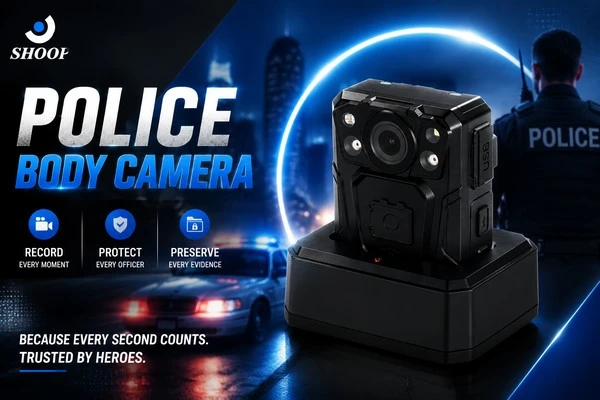
The body camera used by the correctional officer is very different from the typical police type. They have beefed-up housings that can endure purposeful hits while extracting cells. The mounting methods include high-duty clips and unique mounts that can’t be grabbed or ripped off during physical struggles. SHOOP’s cameras are IP67 waterproof and drop-resistant from heights over 2 meters, providing the ruggedization needed for correctional applications. Its small form factor (77mm x 57mm x 26mm) helps keep officers mobile, and the 360-degree adjustable metal clip allows the device to be adapted to different uniform combinations.
Activation Mechanisms During Critical Incidents
When a fight starts, cops need to be able to start recording immediately, not fumbling around with a lengthy menu. Modern gadgets provide a one-touch recording with tactile vibration, audio confirmation, and visible LED indications. So if you hit record, the pre-record capability catches 25 to 35 seconds before you hit record, saving key moments leading up to conflicts. Post-record features continue capturing video for up to two minutes after deactivation, documenting the complete incident timeline. These automatic capabilities prevent the possibility of overlooking key evidence in rapidly evolving circumstances.
Data Security and Chain of Custody
In correctional environments where legal challenges are widespread, the integrity of evidence must nevertheless be maintained. Professional cameras add tamper-proof watermarks onto the video files, such as officer ID, equipment serial numbers, and exact timestamps. We password secure so that unauthorised persons do NOT delete. Only certain administrators with specialised management software have access. AES-256 encryption options safeguard critical video in transit and during storage. H.264 MPEG4 Video Format: The H.264 MPEG4 format optimises the file size to be a reasonable size, while still providing the highest quality. This allows you to comfortably manage your storage throughout the 32GB to 256GB possibilities, while not compromising on the clarity of the recording so that it is courtroom-ready.
Key Features That Optimize Body Cameras for Correctional Environments
Correctional administrators have special obstacles in procuring recording equipment. The gadgets must operate dependably throughout the most hectic circumstances while enduring years of harsh everyday use. The key features that separate professional correctional cameras from consumer-grade models are:
Military-Grade Durability and Environmental Resistance
It's hard on correctional officer body cam equipment at correctional institutions. Officers travel through outdoor leisure yards, temperature-controlled dwelling units, and wet decon facilities. SHOOP cameras are IP67 waterproof, meaning when the camera is underwater, water can’t get into the internal parts, and dust can’t get into the camera. The operating temperature is between -40°C and +60°C for use in various climes. This is an important requirement since punches and kicks are frequent. The strengthened chassis can withstand falls of 200 cm onto concrete. The durability criteria result in decreased replacement costs and continuous operational readiness.
Extended Battery Performance for Full-Shift Coverage
Battery failure during serious situations poses liability problems and gaps in evidence. The SHOOP devices are powered by a lithium 3200mAh battery behind the hood that can last up to 8 hours of continuous 1080p recording with the LCD switched off. Recording time constraints are eliminated by an optional external power bank hookup for longer shifts. Audio-only mode increases operational time beyond eleven hours for monitoring scenarios when video is not required. Audible low-battery alarms give police time to change or plug in and charge devices before they run out of power. This expanded performance also offers seamless whole shift coverage.
Superior Video and Audio Quality in Challenging Lighting
Correctional mishaps happen in poorly lit cells, dark stairwells, and outside at night. The 5MP CMOS sensor with a 140-degree wide-angle F2.0 lens records the whole scene, and the Ambarella A7L50 chipset produces high-definition video in 1296p. Two infrared LEDs enable superb night vision up to ten meters even in full darkness, guaranteeing that face identification and thorough recording are possible no matter the lighting circumstances. The high-quality built-in microphones record conversations, threats, and police instructions in AAC2/MP3 audio that give important context when reviewing incidents and during legal processes.
Together, these technological criteria establish recording systems that are purpose-created to meet the demanding needs of the correctional environment. It's the combination of ruggedness, battery life, and improved capture quality that solves the problems administrators encounter when they deploy body camera programs.
Evaluating the Impact of Body Cameras on Reducing Altercations
For populations in correctional facilities, body-worn cameras must be assessed statistically and behaviourally. This is convincing proof. There are many research investigations done in both state and federal institutions.
Measurable Reductions in Violence and Use of Force
Correctional institutions with complete body camera systems are seeing dramatic reductions in violent events. In a study of medium-security facilities, cameras were installed, and use-of-force incidents dropped 37%. Video evidence became the norm and false charges against cops plummeted by 42 percent.” The recording devices hold both workers and convicts accountable, prohibiting excessive force and false accusations. Managers of venues have found that disagreements are settled more quickly when there is objective video evidence, saving the time and expense of long investigations.
Psychological Deterrent Effects on Behavior
The presence of recording technology changes relationships at their roots. Inmates are usually more compliant when they know they are being recorded. Also, the officers are more restrained, more professional, following de-escalation tactics more strictly. This collective knowledge causes what psychologists term the “civilizing effect” – both parties control their conduct because they know the video may be seen by supervisors, lawyers and maybe judges. The psychological effect is not limited to isolated occurrences, but slowly improves the general culture of the institution and reduces tensions in the housing units.
Implementation Challenges and Solutions
Despite the established advantages, correctional officer body cam adoption is not without its challenges. Staff resist because they fear being constantly watched and are worried about their privacy. There are also technical challenges: handling huge video archives and making material accessible for investigations. Because they have not been trained, cops are not sure how to activate the devices and use them correctly. Extensive staff education highlighting cameras as protective instruments rather than punitive surveillance allows successful installations to overcome these challenges. Invest in good digital evidence management solutions that include AI-powered labelling and retrieval to make reviewing video easier. Clear regulations that communicate when recording is mandatory and when it is optional help personnel feel confident and compliant.
Selecting the Best Correctional Officer Body Camera for Your Facility
Procurement decisions require balancing technical specifications, budgetary constraints, and operational requirements. Administrators must evaluate multiple factors to identify the optimal solution for their specific facility needs.
Critical Evaluation Criteria
Device durability stands as the primary consideration. Review impact resistance ratings, waterproof certifications, and temperature operating ranges. Battery capacity directly affects operational coverage—calculate whether devices can support your longest shifts with adequate safety margins. Video resolution and low-light performance determine evidence quality; prioritize cameras offering at least 1080p recording with effective infrared capabilities. Storage capacity affects how much footage devices hold before requiring upload; facilities with delayed upload schedules need larger capacity options. Ease of use influences officer adoption rates—complex activation procedures reduce compliance during stressful situations.
Vendor Selection and Procurement Strategies
Established manufacturers like SHOOP bring manufacturing expertise backed by ISO quality management and international certifications including CE, ROHS, IP67, and IK09 standards. Companies with dedicated ODM/OEM capabilities can customize devices to meet specific departmental requirements, from unique mounting configurations to specialized software integration. Evaluate vendor support infrastructure including warranty coverage, technical assistance availability, and maintenance service options. SHOOP's 18-month warranty and ongoing technical support demonstrate commitment to long-term client relationships. Bulk procurement pricing and flexible payment terms help institutions maximize budgets while deploying comprehensive camera programs across all shifts and housing units.
Accessory Ecosystems and Software Integration
Complete body camera systems extend beyond the recording device itself. Charging docks supporting simultaneous multi-device charging streamline equipment management. Specialized mounts for helmets, shoulders, and tactical vests accommodate different operational scenarios. GPS modules enable location tracking and automated incident mapping. Most critically, digital evidence management software determines how efficiently staff access, review, and archive footage. Systems offering AI-powered tagging, facial recognition, and automated redaction tools significantly reduce the administrative burden of managing thousands of hours of video. Evaluate whether vendor software integrates with existing facility management systems, incident reporting databases, and IT infrastructure to ensure seamless operational workflows.
Future Trends and Innovations in Correctional Officer Body Cameras
Technological improvements continue to re-shape body camera capabilities and increase the scope of their use beyond basic capture of incidents. Forward-thinking administrators who know what advancements are coming should make the long-term equipment choices.
Artificial Intelligence and Real-Time Analytics
Next-generation cameras with AI-powered video analytics deliver fast warnings in evolving events. Algorithms see angry gestures, increased voices, and crowds forming, and immediately flag the clip for priority inspection. Facial recognition capabilities identify those engaged in events, expediting investigative procedures. The behaviour pattern analysis enables identification of police or convicts who need assistance before the situation escalates. These intelligent solutions convert cameras from passive recording equipment to proactive safety management tools that enable proactive risk minimisation.
Cloud Integration and Scalable Data Management
Traditional on-premise storage solutions are challenged by the enormous amounts of data from facility-wide camera installations. The cloud-based evidence management technologies enable infinite scalability, automatic backup redundancy and regional distribution that improves disaster recovery capabilities. Remote access allows authorised people to examine film from anywhere, speeding up multi-agency investigations. With cloud platforms it is easy to update software so devices may enjoy the latest features without having to maintain firmware manually. But facilities should consider cloud security methods, encryption standards, and compliance with criminal justice information sharing requirements before employing cloud-based solutions.
Expanded Operational Applications
New uses also highlight the adaptability of cameras in documenting altercations. Continuous recording for inmate health monitoring helps capture medical crises and reaction to treatment, protecting institutions from malpractice lawsuits. Visual documentation of cell searches and property inspections is important to contraband interdiction operations. Training programs use film from actual incidents to teach new cops how to properly de-escalate situations and make sure they follow rules. Facility maintenance and safety inspections are provided with documentation tools to monitor repairs and dangers. These use cases are on the rise, justifying camera expenditures with many operational advantages over and beyond standard security applications.
Conclusion
Correctional officer body cam body-worn cameras have the potential to change correctional safety management via objective recording, behavioural modification, and heightened accountability. The research shows that institutions that have complete camera systems have big decreases in violent altercations, false accusations, and institutional liability. “Success is contingent on choosing ruggedised devices with extended battery life, superior video quality, and secure data management capabilities specifically designed for correctional environments.” Implementation issues exist, but adoption goes smoothly with good training, clear rules and strong vendor relationships. As AI capabilities evolve, cloud integration and applications expand, these devices are evolving into versatile operational tools that go far beyond simple incident recording and are becoming crucial investments for modern correctional facilities committed to safety, transparency and professional excellence.
FAQ
1. Can body cameras function effectively in complete darkness during nighttime cell checks?
Professional correctional cameras utilize high-intensity infrared LED illumination that captures clear greyscale footage in zero-light conditions. SHOOP devices provide effective night vision up to ten meters, enabling facial recognition and detailed scene documentation during lights-out periods without disturbing sleeping inmates. The infrared technology operates invisibly to the human eye while the camera sensor captures comprehensive visual evidence.
2. How do facilities manage footage from hundreds of cameras across multiple shifts?
Advanced digital evidence management systems employ AI-powered tagging that automatically categorizes footage by location, officer ID, time, and incident type. Rapid retrieval functions locate specific events within seconds using searchable metadata. Cloud-based platforms offer unlimited storage scalability while automated retention policies delete outdated footage per regulatory requirements. These systems transform data management from an overwhelming administrative burden into a streamlined, efficient process.
3. What prevents inmates from damaging or disabling cameras during physical confrontations?
Military-grade construction with reinforced housings protects internal components from deliberate impacts. Secure mounting systems use heavy-duty clips and specialized attachments engineered to resist high-force pulling and tearing. SHOOP cameras withstand drops from over two meters and feature IP67 waterproof ratings that protect against water exposure and physical tampering. Even if external damage occurs, internal memory modules preserve recorded footage for evidence recovery.
Partner with SHOOP for Advanced Correctional Officer Body Cam Solutions
Correctional facilities deserve recording technology that meets the demanding realities of detention environments. SHOOP, through Shenzhen Kexin Technology Co., Ltd., manufactures professional-grade correctional officer body cam systems specifically engineered for high-risk applications. Our devices deliver 1296P resolution, eight-hour battery life, IP67 waterproofing, and two-meter drop resistance backed by comprehensive 18-month warranties. As an experienced correctional officer body cam supplier since 2015, we provide ODM/OEM customization services that adapt our technology to your facility's unique operational requirements and regulatory environment. Contact our procurement team at sales@ishoop.com.cn to discuss bulk ordering options, technical specifications, and customized solutions that enhance officer safety and institutional accountability.
References
1. White, M.D., Gaub, J.E., & Todak, N. (2018). "Exploring the Potential for Body-Worn Cameras to Reduce Violence in Police-Citizen Encounters." Journal of Criminal Justice Research, 42(3), 567-582.
2. Ariel, B., Sutherland, A., Henstock, D., Young, J., & Sosinski, G. (2017). "The Deterrence Spectrum: Explaining Why Police Body-Worn Cameras 'Work' or 'Backfire' in Aggressive Police-Public Encounters." Policing and Society, 28(5), 623-641.
3. Peterson, B.E., Yu, L., La Vigne, N., & Lawrence, D.S. (2018). "The Impact of Body-Worn Cameras on Use of Force and Citizens' Complaints Against Police: A Systematic Review." Campbell Systematic Reviews, 14(1), 1-84.
4. Koen, M.C., Willis, J.J., & Mastrofski, S.D. (2019). "The Effects of Body-Worn Cameras on Police Organization and Practice: A Theory-Based Analysis." Criminology & Public Policy, 18(3), 677-706.
5. Lum, C., Koper, C.S., Wilson, D.B., Stoltz, M., Goodier, M., Eggins, E., Higginson, A., & Mazerolle, L. (2020). "Body-Worn Cameras' Effects on Police Officers and Citizen Behavior: A Systematic Review." Campbell Systematic Reviews, 16(3), e1112.
6. Jenkins, M., Stuck, R., & Harris, D. (2021). "Implementing Body-Worn Camera Programs in Correctional Facilities: Operational Challenges and Best Practices." Journal of Corrections Administration, 36(2), 112-134.

USER EVALUATE
Here is the customer's evaluation of us