



Full guide: Pros and cons of body worn cameras + the use cases
Body worn cameras have improved accountability and transparency in US industry. These little recording devices record real-time video and audio during essential contacts, protecting professionals and the public. Understanding this technology's pros and cons is crucial for police, hospital, and retail managers. This artical covers wearable cameras' pros and cons, the real-world uses, and their worth for enterprises seeking improved security, operational efficiency, and legal protection in today's accountability-focused climate.
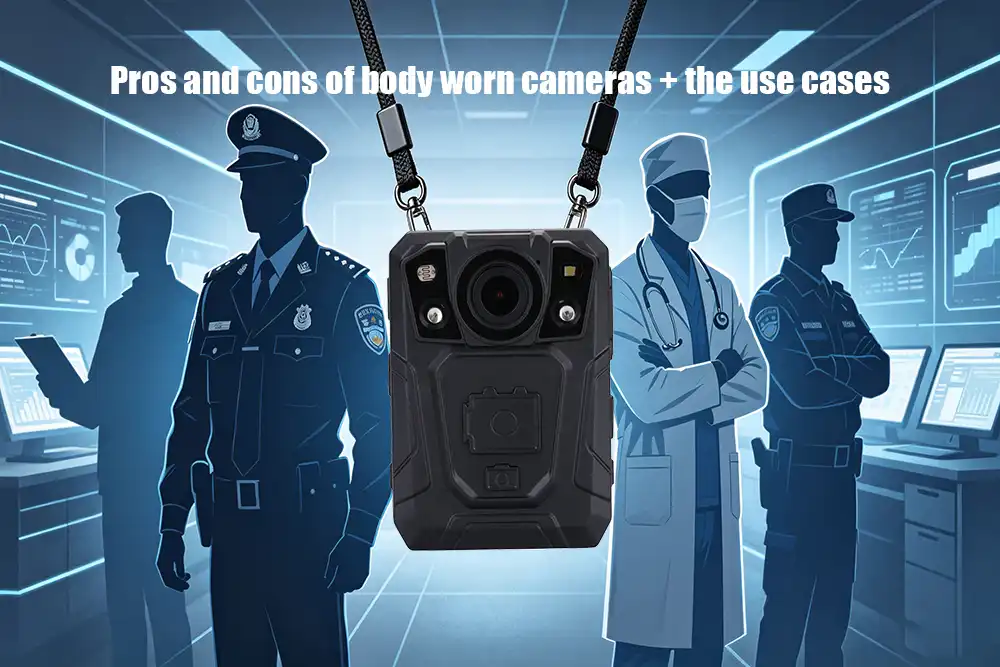
What Are Body Worn Cameras and How Do They Work?
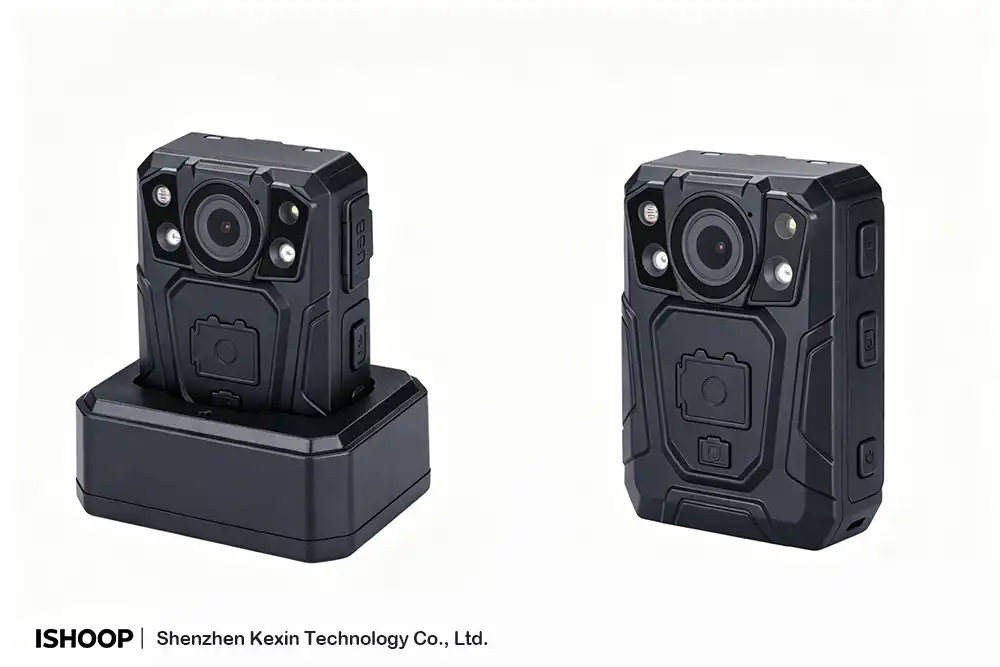
Portable Body Worn Camera recording devices record encounters via video and audio on the chest, shoulder, or uniform. These devices move with the user, giving a first-person view of events, unlike dashboard-mounted systems.
Core Technology Components
Modern body-worn cameras use numerous key technologies. The Ambarella H22 chipset does video compression using H.264 and H.265 standards for quality and storage economy. Even under poor illumination, the OS05A20 sensor records good images at 30 frames per second in 720P to 1440P quality, meeting evidential requirements. Storage capacity ranges from 32GB to 256GB for varied operations and recording times.
Advanced Functionality Features
Modern models go beyond recording. GPS monitoring pinpoints occurrences, which aids investigations and judicial processes. WiFi allows wireless data transfer, minimizing officer docking time. Live broadcasting lets managers observe emergencies remotely, boosting response coordination. SOS functions give quick crisis notifications. Post-recording features chronicle the aftermath, while pre-recording buffers collect 5 to 120 seconds before activation to capture essential context.
Pros and Cons of Body Worn Cameras
Knowing strengths and weaknesses helps firms make buying selections that fit operational needs and budgets.
Key Advantages for Organizations
Body worn camera systems help numerous operating areas. Objectively documenting interactions reduces dispute uncertainty and enhances transparency. Research shows that recording enhances staff and public conduct by encouraging professionalism and discouraging hostility. This reduces civilian complaints and use-of-force events for law enforcement.
Evidence quality greatly increases over written reports. Memory and notes may overlook tone, body language, ambient factors, and specific utterances. Video catches these. Courts trust this evidence, speeding up case settlement and approving plea deals. Defense counsel can check client treatment, while prosecutors strengthen cases. Real video of good and bad practices helps training programs make learning concrete rather than abstract. Footage clears workers of bogus charges and verifies protocol compliance, protecting organizations from responsibility.
- Enhanced Accountability: Objective documentation protects professionals and individuals by documenting interactions and fostering public confidence via openness.
- Operational Efficiency: Integration with digital evidence management solutions simplifies data retrieval, analysis, and sharing across departments, minimizing administrative burden.
- Behavioral Impact: Recording technology significantly decreases employee confrontations and complaints across sectors.
- Superior Evidence Quality: High-definition video with audio gives courts and investigators context that printed reports cannot.
Practical Challenges and Limitations
Organizations face many implementation obstacles. Privacy considerations continue, especially when filming in sensitive areas like hospitals, private households, or with kids. Policies that balance documentation needs and individual rights require legal and community engagement. Protecting terabytes of sensitive material requires safe storage and rigorous access restrictions to avoid breaches or unauthorized viewing.
Technical constraints impede regular operations. Increased battery life requires frequent charging and monitoring to prevent mid-shift failures. High-resolution film quickly fills storage, requiring expensive data management solutions or cloud subscriptions. Despite tough design, excessive heat, cold, wetness, and physical force can damage devices. Regular firmware upgrades, hardware inspections, and replacement as technology evolves are maintenance needs. Financial issues go beyond buying and pricing. Budgets must include mounting accessories, docking stations, storage, training, policy formulation, and technical support. Smaller agencies or enterprises may struggle to explain cumulative charges, especially when conflicting agendas need limited resources.
The Key Use Cases of Body Worn Cameras in B2B Procurement
Body-worn camera technology improves security and operations in businesses outside law enforcement.
Law Enforcement and Police Operations
Police departments use Body Worn Camera technology the most. Police record traffic stops, arrests, suspect interviews, domestic disturbances, and community encounters. Footage gives prosecutors powerful evidence and protects cops from bogus claims. Residents trust community policing when contacts are documented properly. After implementation, departments report lower complaints and litigation expenses, generating social and financial rewards.
Private Security and Corporate Protection
Body-worn cameras help commercial, residential, transit, and event security personnel capture occurrences, discourage trespassing, and give reliable recordings during disputes. Property managers prefer technology for tenant dispute liability protection. First-person footage combines fixed surveillance equipment to provide complete security for corporate security teams monitoring entry points and probing internal theft.
Traffic Management and Highway Patrol
Traffic police record DUI stops, accidents, and roadside enforcement. The gadgets record license plates, car damage, and driver conduct during extended stints outside for penalties and insurance claims. Engineers use footage to rebuild crash events to enhance road safety. GPS tracking helps remote highway police units coordinate emergency dispatches.
Firefighter Operations and Emergency Response
Rescue firefighters use tiny cameras to record structural conditions, hazard locations, and tactical decisions under pressure. Post-incident assessments enhance safety practices and training with this film. Documenting scene circumstances protects agencies against liability claims and gives investigators crucial evidence in arson or carelessness investigations. Fire service technology must survive intense heat, smoke, and physical demands.
Healthcare and Hospital Security
Emergency medical workers record patient conditions throughout transit to support treatment decisions and prevent malpractice lawsuits. Cameras help hospital security de-escalate hostile patients, visitor confrontations, and workplace violence. Video evidence of correct restraint techniques protects personnel from false accusations and protects patient rights in psychiatric hospitals. The technology improves medical safety and transparency.
How to Choose the Right Body Worn Camera for Your Business
Matching technological specifications to operational requirements and considering long-term value and support is key to choosing Body Worn Camera recording devices.
Critical Technical Specifications
Durability ratings should match environmental requirements. The IP67 certification protects electronics against rain, dust, and accidental immersion in outdoor operations. IK09 impact ratings prevent drops and contact. Battery capacity directly influences shift coverage—3200mAh devices can record for 10+ hours, enough for most applications, but longer operations may require backup batteries or recharge solutions. The 32GB to 256GB storage choices accommodate varying recording lengths and retention regulations. To evaluate capacity, organizations should calculate average daily footage volume and retention needs.
Resolution impacts evidence quality and storage. 1080P is sufficient for most circumstances, but 1440P is better for faces, license plates, and tiny things at a distance. Storage and downloads increase with higher resolutions. H.265 compresses videos without sacrificing quality, improving storage economy over H.264.
Essential Feature Evaluation
Video with GPS tracking helps reconstruct event timelines and verify police whereabouts during investigations. Wireless uploads reduce docking station time and speed evidence availability with WiFi. Live broadcasting allows remote monitoring during crucial crises, although it drains batteries and may require cellular connectivity. For nighttime operations, night vision is important. Recording context before manual activation saves crucial first moments. To evaluate real-world performance, vendors should demonstrate these functionalities during product reviews.
Best Practices for Using and Maintaining Body Worn Cameras
Effective deployment, training, and maintenance of Body Worn Cameras enhances ROI and ensures critical incident reliability.
Deployment and Training Standards
User comfort and film quality depend on Body Worn Camera positioning. Chest mounting gives secure, forward-facing views that match the wearer's. Shoulder placement works with some uniforms but may change throughout exercise. Team mounting sites should be standardized to ensure uniform film angles. Training must encompass technical operation, law, and ethics. Personnel must know when to record, how to alert subjects, and how to mark sensitive video for redaction. Operational protocols should define activation policies. All public encounters must be recorded to minimize discretionary gaps in accountability. Special rules apply to delicate situations like minor interviews and confidential informant interviews. Supervisors must regularly evaluate film and fix discrepancies with remedial training rather than punitive actions that discourage technical failure reporting.
Data Management and Security
Organizations can use cloud or on-device storage. Local storage reduces subscription expenses and gives total data management, but downloads, backups, and access restrictions need IT equipment and staff. Cloud solutions offer scalability, automated backups, and advanced administration features, but require vendor reliability and ongoing fees. Redundancy and cost management are achieved by combining local and cloud storage. Security must prevent unwanted access and manipulation. AES256 encrypts data in storage and transport. Only authorized workers with investigation or oversight duties should have viewing permissions under role-based access constraints. Audit logs capture who watches footage and when, establishing organizational accountability. Retention rules should meet legal requirements without storing excessive non-evidentiary video that raises liability and storage expenses.
Maintenance and Troubleshooting
Regular maintenance prolongs Body Worn Camera life and prevents issues. After hundreds of charge cycles, batteries deteriorate. Instead of waiting for field failures, organizations should plan replacements by usage. Installing firmware upgrades during periodic maintenance avoids security risks and adds functionality. Physically inspect mounting clips, lens cleaning, and port integrity before each shift. Recording, battery, and communication difficulties are common troubleshooting challenges. Overloaded storage or damaged files impede new recordings, causing recording failures. Draining batteries may imply age or unnecessary power use by background services like GPS. WiFi setup errors or facility coverage gaps cause connectivity issues. Technical support teams should create knowledge bases on frequent issues and solutions to save downtime and provide assistance.
Conclusion
Body worn camera recording devices increase law enforcement, security, healthcare, retail, and emergency services transparency, accountability, and evidence quality. Reducing complaints, strengthening legal protection, and improving operational efficiency benefit organizations. Implementation involves strict privacy legislation, operationally relevant technological requirements, extensive training, and solid data management infrastructure. Although initial and recurring expenditures are difficult, the technology's quantifiable effects on liability reduction, case resolution, and public trust justify investment for organizations devoted to professional quality and community accountability.
FAQ
1. Are body-worn cameras legal in all states?
Recording regulations vary widely in the US. No federal law prohibits law enforcement or private security usage, but state permission laws vary. Some states need two-party authorization for audio recording, others one. Before deploying rules, organizations must engage legal advice to verify compliance with state and local legislation.
2. How do these devices protect privacy?
Modern systems include many privacy safeguards. AES256 encryption protects footage during storage and transmission. Before public release, video redaction software hides faces, car plates, and sensitive information. Access restrictions restrict viewing to authorized users. Recording, retention, and deletion policies reconcile operational demands with privacy rights. To retain community trust and legal compliance, organizations must develop clear standards on these issues.
3. What battery life can organizations expect?
Under normal recording conditions, a 3400mAh battery lasts 8–12 hours. Resolution, feature usage like GPS or WiFi, temperature, and battery age affect duration. Battery life is less for 1440P live streaming than 1080P without a connection. Organizations should prepare end-of-shift charging and backup batteries for longer operations or emergencies.
Partner with a Trusted Body Worn Camera Manufacturer
Shenzhen Kexin Technology Co., Ltd. provides professional Body Worn Camera recording solutions for US law enforcement, security, healthcare, and retail. Our gadgets have Ambarella H22 chipsets, AES256 encryption, 1440P resolution, GPS, WiFi, and live streaming. Our products survive harsh working settings with IP67 waterproofing, IK09 impact resistance, and 10-plus hour battery life. Flexible ODM/OEM customisation meets CE, ROHS, and ISO requirements. An experienced Body Worn Camera provider since 2015, we offer low prices, fast delivery, and dedicated technical support. Call sales@ishoop.com.cn to discuss your needs, request product demos, or investigate bulk purchase solutions to improve your organization's accountability and operational excellence.
References
1. Bureau of Justice Assistance. (2020). Body-Worn Camera Toolkit: Implementation Guide for Law Enforcement Agencies. U.S. Department of Justice, Office of Justice Programs.
2. Lum, C., Koper, C. S., Wilson, D. B., Stoltz, M., Goodier, M., Eggins, E., Higginson, A., & Mazerolle, L. (2020). Body-Worn Cameras' Effects on Police Officers and Citizens: A Systematic Review. Campbell Systematic Reviews, 16(3).
3. White, M. D., & Coldren, J. R. (2017). Body-Worn Police Cameras: Separating Fact from Fiction. PM Magazine, International City/County Management Association.
4. Ariel, B., Sutherland, A., Henstock, D., Young, J., Drover, P., Sykes, J., & Henderson, R. (2016). Wearing Body Cameras Increases Assaults Against Officers and Does Not Reduce Police Use of Force. Journal of Quantitative Criminology, 32(3), 453-475.
5. National Institute of Justice. (2019). Police Body-Worn Camera Research: A National Review and Evaluation Framework. Office of Justice Programs, U.S. Department of Justice.
6. International Association of Chiefs of Police. (2018). Body-Worn Camera Model Policy and Implementation Guide for Law Enforcement. IACP Law Enforcement Policy Center.

USER EVALUATE
Here is the customer's evaluation of us