



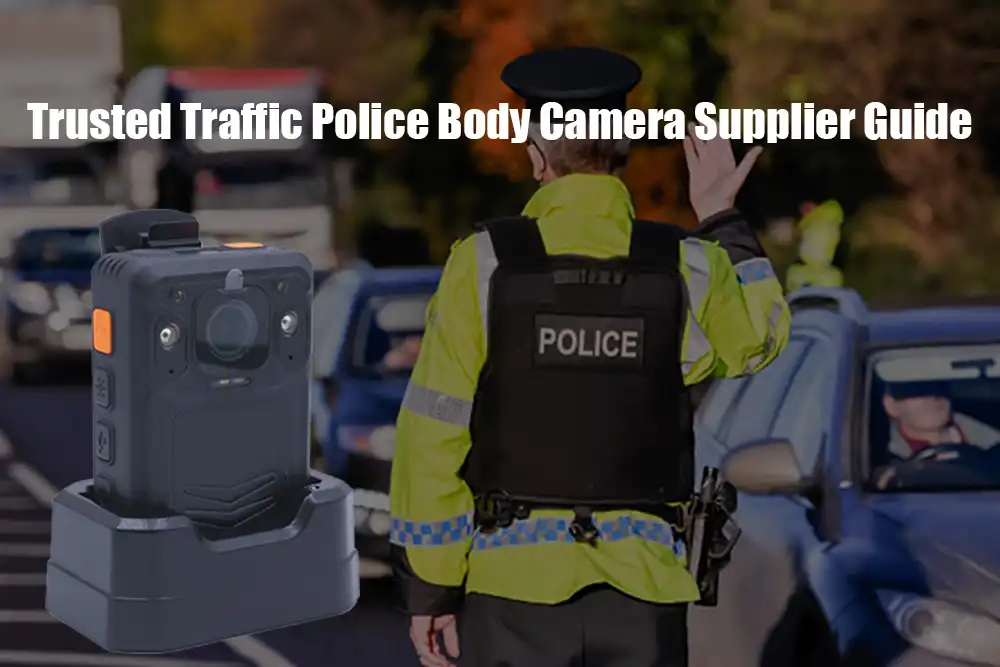
Trusted Traffic Police Body Camera Supplier Guide
Traffic enforcement agencies that value openness and evidence integrity must choose a dependable body-worn camera supplier. Traffic Police Body Cameras are more than just recorders—they provide accountability during roadside stops, accident reporting, and enforcement. Prioritize providers with proven durability, prolonged battery performance, safe data encryption, and international standards. This handbook guides procurement professionals through key decision variables to find vendors that build equipment for harsh outdoor situations while meeting departmental legal and operational standards.
Understanding Traffic Police Body Cameras: Core Features and Benefits
What Makes Body Cameras Essential for Traffic Enforcement
Traffic policemen have specific camera needs compared to patrol officers. Extended outside exposure, varied weather, and uncertain event durations require roadside equipment. Weatherproofing, extended battery systems, and simple one-touch recording that works with gloves during winter patrols solve these problems in modern body-worn cameras.
Multiple police agencies discovered that body cameras cut citizen complaints by 50%, however, it is unclear if this is due to better officer performance or fewer baseless allegations. Whatever the technique, fewer complaints minimize administrative strain and enhance community relations.
Core Technical Features That Define Performance
Whether your gadget lasts complete shifts depends on battery capacity. The 3200mAh battery of our professional body recording camera allows 12 hours of 1080P or 15 hours of 480P recording. This extended duration removes mid-shift charge problems, especially during large occurrences or traffic accidents that require lengthy reporting.
Storage flexibility matters too. Devices with 32GB, 64GB, 128GB, and 256GB capacities let organizations meet field storage needs. Higher capacity versions hold over 24 hours of HD film, so officers never have to delete evidence to clear up space during investigations.
Traffic enforcement weathers rain, snow, and dust with the IP67 waterproof certification. These durability requirements and 2-meter drop resistance protect electronics from damage from car doors or pavement drops during physical fights.
Essential Laws and Compliance for Traffic Police Body Cameras
Privacy Regulations Governing Body Camera Deployment
US law enforcement organizations must manage complicated federal and state laws for Traffic Police Body Cameras. No federal mandate limits body camera use, but states have different consent, retention, and disclosure regulations. Audio recording requires two-party consent in certain jurisdictions, although the officer can consent in others.
Protecting data is crucial. Throughout the chain of custody, AES256 encryption prevents footage alteration and illegal access. The writing procedure to memory cards and network transmission of streaming video, audio, and text data are encrypted by our devices.
Footage Retention and Access Requirements
Agencies must set explicit retention periods, usually 30 days for non-evidentiary film and indefinite for force or formal complaints. Video evidence management systems should tag user IDs, devices, timestamps, GPS locations, and agency logos for easy classification and retrieval during court processes.
When film is used in court, chain of custody documentation is crucial. Proper labeling and encryption prevent defense counsel from challenging video authenticity, maintaining the camera program investments' evidential value.
How to Choose the Right Traffic Police Body Camera: A Decision Support Framework
The F-1 Criteria Screening Approach
The definition of non-negotiable requirements before model evaluation is key to effective procurement. The F-1 Criteria Screening Approach has five main components:
- Functional Requirements: 1080P or 1440P resolution, 8-12 hours battery life, WiFi, 4G, GPS, and IP67 weather resistance.
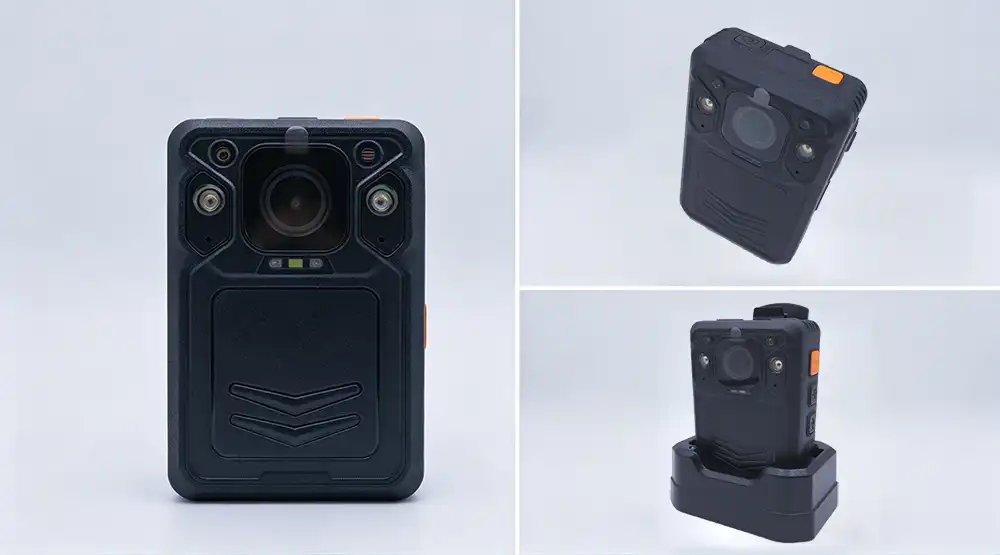
- Field Durability: Traffic devices must withstand drops, high temperatures, and wetness. Our camera's 2-meter drop resistance and IP67 rating exceed requirements while being small (84.5mm × 56.3mm × 27.3mm) and weighing only 140 grams.
- Financial Constraints: Compare device prices to storage infrastructure, management software subscriptions, and upkeep. Cloud storage simplifies deployment but comes with recurrent fees, whereas on-premise servers cost more upfront but less over time.
- Footage Management: Consider device-evidence management integration. Our cameras provide USB mass storage mode with JSON instructions for complete settings setup without proprietary software, easing IT integration across different agency architectures.
- Future-Proofing: Consider 4G modules, GPS augmentation, external camera connections, and clustered talkback. Modular designs allow agencies to update their devices without replacing the fleet.
Body Cameras vs Dashboard Cameras: Complementary Systems
Dashboard cameras on patrol cars record traffic stops from approach to completion. Officers' body-worn cameras record passenger window exchanges, back seat talks, and foot pursuits away from cars. Comprehensive documentation agencies use both technologies with body and vehicle film timeline synchronization.
Integrated ecosystems that activate body cameras when police vehicle lights engage, or officers depart vehicles, increase documentation completeness and reduce officer activation load. This integration fixes activation failures that affect fast-developing evidence collection.
Top Traffic Police Body Camera Solutions in 2026: Brands and Models Overview
Leading Market Solutions
The Traffic Police Body Cameras market includes established brands like Axon, WatchGuard, and Motorola Solutions, as well as Chinese competitors at varying pricing points. Integration of Tasers, in-car technologies, and evidence management platforms makes Axon the North American market leader. WatchGuard specializes in dashboard camera-integrated video systems. Motorola body-worn cameras draw on decades of public safety communication experience.
Shenzhen Kexin Technology Co., Ltd. offers affordable professional-grade alternatives that fulfill CE, ROHS, IP67, IK09, and ISO certification criteria. Through ODM/OEM customisation, these manufacturers allow agencies to define operationally relevant feature sets without paying for extraneous capabilities.
Innovative Features Driving 2026 Purchasing Decisions
The Ambarella H22 chipset in our professional body recording camera provides powerful processing with energy economy. Even under low-light traffic enforcement settings, the OV05A20 sensor records 1440P quality at 30 frames per second for bright, true-to-life colors and crisp details.
Real-time connection turns cameras into communication centers. Real-time broadcasting to command centers via built-in 4G and dual-band WiFi (2.4G and 5G) lets supervisors guide difficult scenarios. GPS monitoring records police whereabouts during shifts, aiding event reconstruction and coordination during multi-officer major accident responses.
A 140-degree viewing angle provides full scene coverage for Traffic Police Body Cameras without ultra-wide lens distortion. H.264/H.265 encoding improves file sizes without reducing quality, maximizing storage, and meeting courtroom display standards.
Procuring Traffic Police Body Cameras: Best Practices for B2B Buyers
Identifying Reputable Suppliers
Beyond product specs, supplier evaluation includes production, quality control, and post-sale assistance. Established manufacturers have specialized R&D teams that advance camera technology, and experienced sales teams understand public sector procurement and paperwork. Since 2015, Shenzhen Kexin Technology Co., Ltd. has provided police agencies worldwide with body-worn cameras. The company provides ODM/OEM services for agency-specific mounting solutions, firmware, and branding integration.
Procurement Options and Service Agreements
Direct purchase, wholesale bulk buys for multi-department installations, leasing arrangements lowering upfront capital, or trial projects testing devices before full deployment are all options for agencies. Each technique has benefits based on budget cycles, departmental size, and technical uncertainty about appropriate feature sets.
We provide an 18-month warranty that exceeds industry norms, demonstrating manufacturing quality and component selection. Professional technological assistance aids deployment planning, officer training, and troubleshooting. Service agreements should define technical issue response times, replacement device availability during repairs, and software update arrangements to keep devices updated.
Needs assessment consultations define functional requirements and implementation dates before ordering. After specification confirmation, agencies get full device, accessory, mounting, and management software quotations. After order confirmation, manufacturing goes on schedule with quality testing before shipment. For smooth adoption into operational operations, delivery includes integration help.
Conclusion
When selecting a Traffic Police Body Camera, device capabilities, manufacturer trustworthiness, and long-term support infrastructure must be carefully considered. Camera requirements for traffic enforcement differ from normal patrol applications because of longer outside exposure, fluctuating weather, and unexpected incident durations. Procurement must balance urgent functional demands against total ownership costs while meeting changing privacy and evidence management criteria. For transparent and competent documentation agencies, manufacturers with customisation, international certifications, and extensive post-sale support give the best value. Choosing a reliable Traffic Police Body Camera supplier can also help ensure consistent performance, secure evidence collection, and long-term operational efficiency.
FAQ
1. How Long Should Battery Life Last During Typical Shifts?
Standard patrol shifts are 8-12 hours, making battery capacity crucial. Our professional body recording camera can record 1080P for 12 hours and 480P for 15 hours. Smart power management and 2-inch HD display disablement when recording enhances operating time. Agencies should define battery needs for real shift lengths, including overtime.
2. What Storage Capacity Do Agencies Typically Need?
Recording duration, resolution, and retention regulations determine storage needs. A 64GB capacity holds 8-10 hours of 1080P film, while a 128GB capacity holds 16-20. For police working successive shifts or special tasks, agencies should constantly choose 128GB or 256GB to ensure many days of footage before downloading.
3. How Do Wireless and Wired Models Compare for Reliability?
WiFi and 4G provide real-time streaming and film access without a physical connection. Wireless transmission uses more battery power. Our gadgets allow USB cable charging and data transmission and wireless streaming (7-8 hours with simultaneous recording), giving them operational flexibility to fit deployment circumstances and infrastructure capabilities.
Partner with a Proven Body Camera Manufacturer Today
Working with experienced manufacturers that offer quality, customization, and support helps agencies find trusted Traffic Police Body Cameras systems. Shenzhen Kexin Technology Co., Ltd. has over a decade of law enforcement video system experience servicing traffic police and security agencies globally. Our professional body recording camera gives roadside enforcement personnel durability, battery life, and evidence-quality footage.
We provide flexible ODM/OEM customisation to meet your operating needs, guaranteed by CE, ROHS, IP67, and IK09. Request product datasheets, bulk purchases, or field demos from our procurement professionals at sales@ishoop.com.cn.
References
1. National Institute of Justice, "Body-Worn Camera Implementation and Outcomes: Research Findings from Law Enforcement Agencies," U.S. Department of Justice, 2021.
2. Police Executive Research Forum, "Cost and Benefits of Body-Worn Camera Deployment: A Multi-Site Evaluation Report," Washington, DC, 2020.
3. International Association of Chiefs of Police, "Body-Worn Camera Model Policy and Guidelines," Alexandria, VA, 2022.
4. Bureau of Justice Assistance, "Body-Worn Camera Toolkit: Program Development and Implementation Guide," Office of Justice Programs, 2023.
5. Smith, R. and Davis, M., "Video Evidence Management in Modern Policing: Technical Standards and Legal Compliance," Journal of Law Enforcement Technology, Vol. 18, 2023.
6, European Union Agency for Law Enforcement Training, "Body-Worn Cameras in European Law Enforcement: Regulatory Framework and Best Practices," Lisbon, 2022.

USER EVALUATE
Here is the customer's evaluation of us