



Wearable Cameras for Safety and Efficiency in the Field
Wearable Body Cameras have changed how safe, accountable, and open operations are in many fields. These small devices catch audio and video in real time in the field to keep workers and the public safe. For police, firefighters, and store security staff, these cams make their jobs easier and record important events. In places of work where time is of the essence, the technology meets higher standards for openness, making decisions based on facts, and following safety rules.

Understanding Wearable Body Cameras: Features and Benefits
Wearable Body Cameras are vital for accurate field recording. Advanced imaging technology and sturdy design make these products suitable for harsh working circumstances.
Core Technical Specifications That Matter
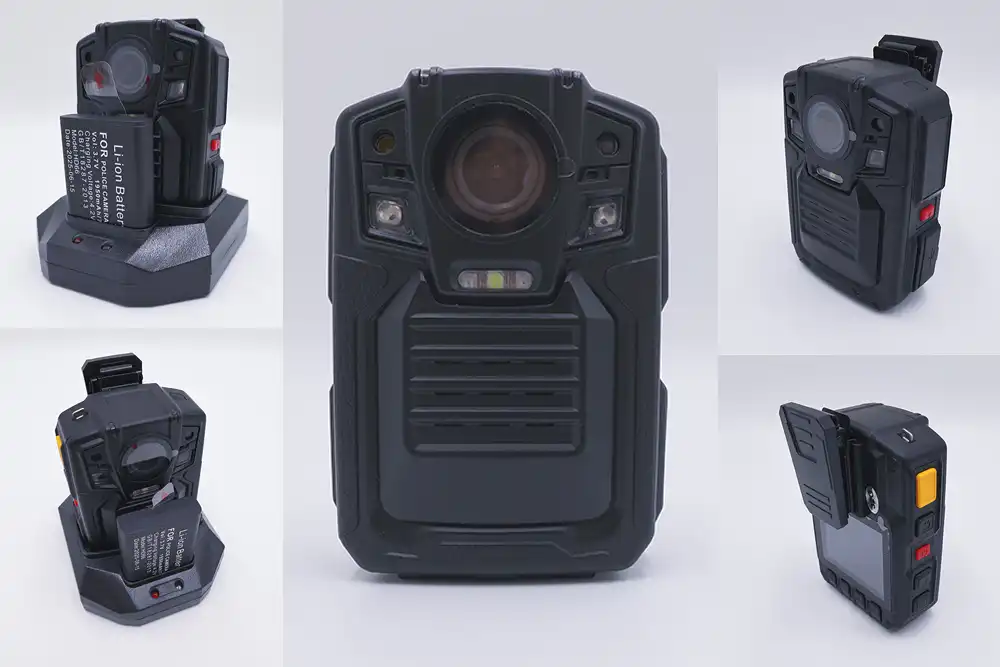
These days' gadgets can record 1080p to 1296p video at 30 to 60 frames per second, so they can get good pictures even when things are moving quickly. There is a 140-degree wide-angle lens that covers the area, and 33-megapixel cameras that take clear pictures. 32GB lets you record for 128 hours, and 256GB lets you record for longer periods of time. The 165g weight and small size (84x54x29mm) make it easy to wear for long amounts of time without getting tired or limiting your movement.
Night Vision and Low-Light Performance
Smart infrared technology lets you work in the dark with 10 metre ranges. Smart IR-cut filters switch instantly between day and night vision modes, so you can see clearly no matter how bright it is. This is helpful for police, emergency medical services, and security teams that work at night.
Comparing Wearable Body Cameras: Making the Right Choice for Your Business
Understanding how different models match operational requirements across businesses is crucial to choosing recording equipment. Consumer-grade action cameras to police enforcement, and industrial equipment are available.
Professional-Grade vs. Consumer Solutions
Wearable Body Cameras vary from GoPros in numerous important ways. Legal evidence management requires tamper-proof storage, encrypted data transmission, and a chain of custody. Axon dominates law enforcement markets with cloud-based evidence management systems, whereas Shenzhen Kexin Technology Co., Ltd. (ISHOOP brand) offers adaptable ODM/OEM solutions that fulfill CE, ROHS, IP67, IK09, and ISO certifications.
Consumer action cameras are great for recreational recording but lack security, durability, and compliance requirements for commercial use. Professional versions can withstand rain, dust, and physical impacts in security, traffic enforcement, and emergency response scenarios thanks to their IP67 waterproof rating and IK09 impact resistance.
Wearable Cameras vs. Dash Cameras
Professionals on the go need hands-free documentation for facilities, outdoors, and unexpected circumstances. Dash cams exclusively capture forward-facing roadway images, whereas Wearable Body Cameras track people inside buildings, construction sites, and limited places. Wearable technologies help traffic police during roadside stops and accident investigations when vehicle-mounted cameras cannot capture crucial exchanges and evidence.
Procurement Guide: Buying Wearable Body Cameras with Confidence
Strategically buying Wearable Body Cameras requires careful assessment of supplier capabilities, total cost of ownership, and regulatory compliance beyond the initial purchase price.
Supplier Evaluation Criteria
International certifications and production capabilities show reliable manufacturers' quality. Since 2015, Shenzhen Kexin Technology Co., Ltd. has been a professional manufacturer with committed R&D teams providing new law enforcement and public safety products. CE and ROHS certifications enable market access across foreign jurisdictions, while ODM/OEM services allow customization for regional standards and operating preferences.
Before signing large-order contracts, procurement managers should assess manufacturing capacity, quality control, and sample testing. ISO-certified manufacturers have established quality management procedures for manufacturing consistency.
Bulk Purchasing Strategies
When procurement teams combine requirements across departments or coordinate purchasing with partners, volume pricing discussions for Wearable Body Cameras improve. For budget planning and vendor comparison, precise quotations of unit pricing, accessory bundles, shipping terms, and payment schedules provide transparency.
- Volume discounts: Start with considerable discounts at 50-100 units and additional breaks at 250+ units.
- Payment terms: Negotiate 30% deposit with balance upon delivery or extended net-30/net-60 terms for established businesses.
- Warranty coverage: Get 24-36 months of parts and labor warranty beyond one year.
- Training inclusion: Request on-site or virtual training for technical personnel and end-users in the purchase agreement to save installation expenses.
- Spare parts availability: Verify availability and cost stability for 12–24 months after purchase.
Future Trends and Innovations in Wearable Body Cameras
Growing Wearable Body Camera technology promises to improve field safety and operational intelligence in the coming years.
Artificial Intelligence Integration
AI-powered analytics are turning passive recorders into active safety monitors. Real-time analysis can identify weapons or dangerous circumstances in frame, increased voices indicating conflict escalation, and occurrences requiring supervisor scrutiny. Facial recognition helps searchers identify criminals and missing people, but technology must manage changing privacy laws and public acceptability.
Enhanced Connectivity and Cloud Management
WiFi and Bluetooth provide wireless footage uploading without docking, speeding up investigations and lowering administrative burden. Command centers may remotely guide complicated occurrences and coordinate multi-unit reactions using live broadcasting. Case preparation is easier with cloud-based evidence management tools that consolidate footage from distant teams and categorize it with information.
Ensuring Successful Implementation: Best Practices and Case Studies
Comprehensive planning, user training, and continuous maintenance practices that address technical and human issues are needed to implement technology successfully.
Addressing User Adoption Challenges
The biggest implementation challenge is workforce acceptability, especially when Wearable Body Cameras are seen as surveillance rather than safety equipment. Transparent communication about mutual protection benefits—documenting false claims against workers and supporting evidence—helps Wearable Body Cameras adoption. Frontline staff involvement in policy creation and device selection fosters ownership and addresses comfort, usability, and operational issues.
Case Study: Municipal Police Department Implementation
A recognized manufacturer provided training and technical assistance for 85 Wearable Body Cameras in patrol and traffic divisions of a mid-sized police force servicing 150,000 citizens. Clear activation procedures required recording all public contacts, and cops received four hours of hands-on instruction in operation, evidence processing, and privacy protocols.
Results measured after 12 months demonstrated a 37% reduction in use-of-force incidents and a 28% decrease in citizen complaints against officers. Video evidence accelerated case resolution in 64% of analyzed events, with prosecutors reporting higher conviction rates. Officers felt more confident in confrontations knowing their professional conduct was videotaped, and supervisors commended the training benefit of seeing film during performance reviews.
Maintenance and Sustainability Strategies
Preventing major equipment breakdowns with scheduled maintenance. Weekly checks should evaluate battery health, lens clarity, and mounting hardware integrity, while monthly firmware upgrades fix security issues and add features. Standardizing docking and charging stations during shift changes enables battery preparedness and automatic film uploads.
Organizations should budget for equipment replacement cycles of 3-5 years, accounting for battery degradation, lens scratches, and advancing technology capabilities. Spare equipment pools spanning 10-15% of deployment quantities allow fast device replacements, ensuring operational continuity without service disruptions.
Conclusion
Wearable Body Camera technology improves law enforcement, security, emergency services, healthcare, and retail operational safety, legal protection, and transparency. Strategic procurement concentrating on technical criteria, supplier reliability, and implementation planning maximizes investment value. AI integration, connectivity, and materials will expand capacities to solve new operational difficulties. Partners with experienced manufacturers receive customization, regulatory compliance support, and continuous technical help to extend equipment lifespan and maximize ROI across deployment lifecycles.
FAQ
1. What battery life can organizations expect from professional body cameras during typical shifts?
Professional devices with dual 1950mAh batteries can record for 8-10 hours, enough for regular work shifts. Resolution, night vision frequency, and temperature affect duration. Spare batteries and mid-shift charging during breaks can prolong operational life. Under everyday usage, batteries deteriorate after 300-500 charge cycles and need replacement every 18-24 months.
2. How do body-worn cameras comply with privacy regulations like GDPR?
Compliance needs technological and procedural data collection, storage, and access restrictions. Organisations must clearly state when recording is required or forbidden, especially in sensitive or private places. Access logs record who watches footage and when, while data encryption prevents illegal access. Redaction mechanisms hide bystander faces and sensitive information before public distribution, while retention schedules remove film after defined times unless marked for legal actions.
3. What distinguishes wearable cameras from traditional fixed surveillance systems?
Wearable Body Cameras capture first-person viewpoints in dynamic conditions where fixed cameras cannot. They record interactions and evidence collection, not passive area monitoring. Patrol officers, inspectors, and emergency responders need a portable recording that permanent systems cannot offer. Combining stationary systems, monitoring facilities, and body-worn devices documenting field operations outside camera reach provides full coverage.
Partner with a Trusted Wearable Body Camera Manufacturer
Shenzhen Kexin Technology Co., Ltd. develops high-quality Wearable Body Cameras for law enforcement, security, emergency services, and commercial applications globally. Our skilled R&D and sales teams have created unique products that satisfy CE, ROHS, IP67, IK09, and ISO requirements since 2015. Our adaptable ODM/OEM customisation services meet regional and operational requirements, guaranteeing solutions meet your organizational goals. ISHOOP cameras include 1296p HD quality, 33-megapixel photos, smart night vision, and dual 1950mAh batteries for long shifts. Contact our procurement specialists at sales@ishoop.com.cn to discuss volume pricing, technical specifications, and customization options for your body camera deployment. We offer competitive manufacturer pricing, complete technical support, and timely delivery schedules supporting your implementation timeline and budget requirements.

References
1. White, M.D. (2022). Body-Worn Cameras in Law Enforcement: Benefits, Challenges, and Implementation Strategies. Oxford University Press.
2. Thompson, R.A. & Harrison, L.K. (2023). Wearable Technology in Public Safety: A Comprehensive Guide for Procurement Managers. Industrial Safety Publications.
3. Chen, Y. & Rodriguez, M. (2024). "Impact of Body-Worn Cameras on Use-of-Force Incidents: A Meta-Analysis of North American Police Departments." Journal of Criminal Justice Technology, 48(2), 187-214.
4. Patterson, G.E. (2023). Video Evidence Management: Legal Compliance and Best Practices for Organizations. Security Industry Press.
5. Kumar, S. & Zhang, W. (2024). "Emerging Technologies in Wearable Recording Devices: AI Integration and IoT Connectivity." International Journal of Security Innovation, 12(1), 45-68.
6. National Institute of Justice. (2023). Body-Worn Camera Program Guidelines for Law Enforcement and Public Safety Agencies. U.S. Department of Justice.

USER EVALUATE
Here is the customer's evaluation of us