



Why Use Waterproof Body Worn Cameras in Outdoor Operations?
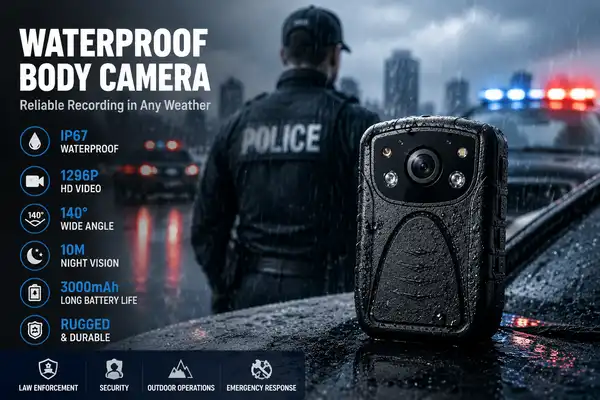
Equipment failure is not only an annoyance for professionals who work in unpredictable weather and difficult outdoor settings; it is a serious liability. This difficulty is addressed using a waterproof body worn camera that can work in rain, snow, high humidity and accidental water exposure. IP67 or IP68 classifications on these specialist devices safeguard the internal electronics from water incursion, enabling uninterrupted evidence gathering when it counts most. From storm-related traffic accidents to emergency responses at the water's edge, these ruggedized cameras are impervious to the downtime and data loss that ordinary recording equipment suffers in harsh outdoor conditions.

Understanding Waterproof Body Worn Cameras: Features and Benefits
Recording technology that can withstand bad weather has come a long way to meet the needs of field workers who can't afford for their tools to break down. To understand why these devices are reliable, you must first understand their main safety features and how they work to improve operations.
IP Rating Standards Explained
The Ingress Protection rating system explains how effectively a gadget protects itself against being broken into from the outside. A camera with an IP67 certification may be kept dust-free even after a 30-minute immersion in water up to a depth of one meter. IP68 ratings generally mean better protection at deeper depths but the exact limits differ from manufacturer to manufacturer. These scores aren't simply marketing hype—they are legitimate benchmarks that purchasing teams can trust. Our ISHOOP waterproof body worn camera is IP67 approved, so it'll perform dependably while police officers are on watch during heavy rain or operating near bodies of water where drops may harm normal electronics.
Sealing Technologies and Rugged Construction
Multiple levels of defense protect sensitive parts with advanced hermetic seals. Precision-molded seals are used around all entry points on high-quality units, such as USB ports, buttons, and battery sections. The housing is made of polycarbonate that doesn't break easily and sides that are strengthened to take the shock of drops onto concrete or asphalt. When the temperature changes, internal cooling systems stop humidity that could fog the lens. Our device has a 360-degree spinning clip made of materials that won't rust, so it stays attached to clothes even when they're wet. With this multi-layered approach, the camera can keep working even when normal consumer-grade devices would stop working.
Battery Performance in Challenging Environments
Standard batteries don't work as well in cold or wet weather, but they're needed for outdoor activities that need consistent power delivery. Professional cameras have lithium polymer batteries that are optimized and have safety hardware that keeps the power stable even when the temperature changes a lot. Our model's 3000mAh battery lets it record continuously at 480p resolution for up to eight hours, so you can work full shifts without having to charge it. Low energy warnings let you know before the power runs out, so your system doesn't shut down suddenly during an emergency. Because it is so reliable, you don't have to worry about whether your gear will last through a long emergency response or outdoor event.
Wide-Angle Lens and Night Vision Capabilities
Lighting problems can happen outside in a lot of different ways, from bright noon sun to total darkness. A 140-degree wide-angle lens captures a full scene, so there aren't any blind spots where important details could be missed during chaotic events. With infrared lighting and clear face recognition, our camera's advanced night vision lets you see up to 10 meters in total darkness. The dual-filter system automatically changes between daylight and low-light conditions. This keeps the colors from looking washed out, which happens with regular cameras and lowers the quality of the evidence. These visual features make sure that footage can be used no matter when or where an event happens.
Comparing Waterproof vs Regular Body Worn Cameras: Making the Right Choice
Decisions about purchases have long-term effects on operational budgets and the success of missions. Knowing the real differences between waterproof body worn cameras and regular types can help you decide if weather-resistant technology is worth the money.
Cost-Efficiency Over Time
Standard waterproof body worn cameras are cheaper up front, but they cost more in the long run because they need to be fixed and replaced more often. Unexpected rain or high humidity can damage internal circuits with water, which means you have to file a warranty claim or pay for fixes out of your own cash. Because of these mistakes, companies have to keep bigger stocks on hand in case they need to use them as backups. Waterproof body worn camera models that are weather-resistant don't have to pay these ongoing costs because they are built to last and can handle the weather. Even though they cost a little more at first, Their improved durability can help reduce replacement frequency and long-term maintenance costs.
Reliability During Critical Incidents
When equipment breaks down in high-stakes scenarios, it leaves legal openings and operational holes. If a regular camera shorts out in the rain, evidence that could clear a police officer or record a crime scene is lost. Waterproof body worn camera models keep working no matter what the weather is like, giving consistent paperwork that meets chain-of-custody standards. This dependability is especially important for people who enforce traffic laws every day, firefighters who go out in any weather to help people in need, and security guards who run outdoor events during sudden storms.
Technical Performance Advantages
Sealing against the environment doesn't hurt effectiveness; it makes it better. Our IP67-rated waterproof body worn camera has a 1296p HD resolution and uses H.264 compression to keep the quality of the video while making the most of the storage space. The five-megapixel CMOS sensor takes pictures with 4608x3456 pixels that can be used as proof. Different retention needs can be met by storage choices running from 32GB to 256GB. The small size (94x61x31mm) and light weight (175g) make it easy to wear all day, and the two-inch LCD screen lets you check playing right away without using any other devices. These specs are the same as or better than normal models, and they protect the earth.
Selecting the Best Waterproof Body Worn Camera for Your Business Needs
Matching the device's capabilities to its operational needs will help you get the most out of your investment. Before agreeing to a model or seller, procurement teams should look at a number of important factors.
Defining Your Use Case Requirements
Different working settings need different sets of features. Law enforcement agencies prefer video that can be used as evidence and has metadata that can't be changed. This metadata includes timestamps, watermarks, and unique device identifications that are built into every file. Security staff at transportation hubs need batteries that last a long time so they can work long shifts with few chances to charge them. Firefighters need tools that can handle temperatures well above and below their normal working ranges. GPS integration helps traffic police because it automatically marks where accidents happened. Making a list of your five biggest operating problems will help you figure out which features are worth the extra money and which ones are just nice to have.
Key Features to Prioritize
Professional waterproof body worn cameras are different from regular cameras in a number of ways. Pre-record buffering records 25 seconds of video before you press the record button. This way, you won't miss the important moment when something happens quickly. One-button recording lets you record right away in stressful scenarios without having to mess around with tools. Only people who are allowed to can access recorded files with a password, which keeps the chain of custody for judicial procedures. Our Ambarella A7L50 chipset offers professional-grade video processing with a range of resolutions, from 2304x1296 to 848x480. This lets users choose the best quality for each situation while also minimizing storage needs.
Evaluating Supplier Credentials
As much as product specs count, so do the image of the manufacturer and the infrastructure for customer service. With products in use in more than 30 countries, SHOOP has more than 10 years of experience developing police and security cameras. Our ISO, CE, ROHS, and IK09 certifications show that we meet quality standards around the world. We make sure that our factories are dust-free and use strict testing methods, such as exposing products to saline spray and thermal shock. Because of this expertise, the company makes reliable products that come with full warranties and quick technical support for problems that happen in the field.
Bulk Purchasing and Total Value
Large-scale deployments give you access to better price and implementation help that you can't get when you buy one unit at a time. When people buy a lot of something, they usually get savings of 15 to 25 percent and can also customize it in ways like having the firmware set up for their agency or having their name engraved. We provide ODM and OEM services that change our core platform to meet the rules and regulations in different areas or to meet specific business needs. Talking to suppliers early on about your rollout plan and overall unit needs helps them make competitive bids that include price for units as well as training, accessories, and long-term technical support.
Maintaining and Maximizing the Durability of Waterproof Body Worn Cameras
Taking good care of your tools will make it last longer and keep working well even after years of hard use in the field. Routine maintenance protects your investment and keeps operations running as smoothly as possible.
Cleaning and Care Best Practices
Water resistance doesn't mean that it doesn't need any maintenance. Wipe the waterproof body worn camera down with a soft, lint-free cloth after being in the rain or high humidity to get rid of the water droplets and stop mineral deposits. Once a month, check the gasket seals around ports and battery sections and clean off any dirt or dust that could make them less watertight. Do not use high-pressure washing or steam cleaning, as they can push water past seals that keep it out. Our devices can work in temperatures ranging from -40°C to 60°C, but storing them properly between -20°C and 55°C when they're not in use keeps the batteries from wearing out too quickly.
Battery Management Strategies
When properly cared for, lithium polymer batteries in a waterproof body worn camera work at their best. Before using something for the first time, make sure it's fully charged. Also, try to avoid full discharge cycles as much as possible. For daily use, keep the charge level between 20% and 80%. Our 3000mAh battery can be charged in 180 minutes, which makes it easy to fit into shift change schedules. Keep backup batteries in places with controlled temperatures instead of places with extreme temperatures, like the trunk of your car. Low battery audible alerts give you advance notice, so your operations don't stop suddenly.
Troubleshooting Common Issues
Most problems that are caused by moisture are not sealed fails; instead, they are caused by user mistake. After data transfers, make sure the caps of the USB ports click all the way shut. After you change the batteries, make sure that the sections completely seal. If the waterproof body worn camera has dampness under the lens, leave it in a dry place for 24 hours without the battery to let the moisture inside evaporate. Firmware changes from makers often fix performance problems that were found in the field, so keeping software versions up to date is the best way to get the most out of them.
Real-World Applications and Case Studies of Waterproof Body Worn Cameras
There are real-life examples that show how protecting the environment can help businesses in a wide range of settings. These situations show why weather resistance is now a must-have feature instead of a nice-to-have.
Law Enforcement in Extreme Weather
After switching to IP67-rated waterproof body worn cameras, Many law enforcement teams operating in harsh weather conditions benefit from improved equipment reliability. In the past, officers' electronics would often break down during winter patrols when snow and freezing rain damaged them. The waterproof units kept working during a blizzard, capturing clear evidence during an investigation of a multi-car highway accident with almost no visibility. The department's lawyer said that cases went better because of uninterrupted video documentation that gave full records of what happened no matter the weather.
Security Operations at Outdoor Venues
During a sudden rain, the equipment proved difficult for the security team of an international music event with 50,000 people spread out over several outdoor stages. During the weather event, their IP67-rated waterproof body worn cameras kept recording while they helped people leave and dealt with medical problems. The detailed video showed that the right safety procedures were followed, which protected the place owner from damage claims. Directors of security said that the dependability of the equipment was important for keeping up professional standards during unpredictable outdoor events where broken equipment could leave dangerous holes in paperwork.
Industrial Safety Documentation
A company that builds infrastructure along the coast needs waterproof body worn cameras that can handle high humidity and salt spray. When workers are inspecting ships at sea or building on the water, where water is often present, they wear devices with an IP68 rating. The cameras make sure that safety rules are followed and provide visible logs for reporting progress. Project managers said that ruggedized cameras cut the cost of replacing broken equipment by 58% compared to standard devices that broke after just a few months of being used.
Conclusion
For outdoor work, you need equipment that will always do its job, no matter the weather or other environmental problems. Waterproof body worn cameras with IP67 or IP68 ratings eliminate the downtime, data loss, or repair costs that come with regular electronics that are exposed to water and harsh conditions. Protective sealing, professional-grade video quality, long battery life, and tough construction all work together to make sure that documentation is the same in law enforcement, security, emergency services, and industrial settings. Companies that buy weather-resistant technology say they save a lot of money, get better proof, and have more operational trust when their employees work outside in bad weather and can't afford for equipment to break down.
FAQ
1. What does IP67 certification mean for waterproof cameras?
If something has IP67 certification, it means it can withstand being completely covered in dust and submerged in water for up to 30 minutes. The waterproof body worn camera is waterproof, so it can handle splashes, rain, and drops into puddles or small water without any damage. This rating doesn't protect against being submerged in water all the time or high-pressure water jets.
2. How long do batteries last in cold weather?
In cold weather, batteries don't work as well, so they last 15 to 25 percent less time than in mild weather. Even when it's freezing outside, our 3000mAh battery still lets us record for six hours at 480p resolution. During the winter, keeping extra batteries warm in inner pockets before using them helps them work at their best.
3. Can I access recordings immediately after water exposure?
Yes, IP67-rated waterproof body worn cameras work usually after being wet as long as the water is removed from the surface. The two-inch LCD screen lets you play back and review right away, without having to wait for the device to dry. Internal parts stay safe, so the machine can keep running during your shift.
Get Professional Waterproof Body Worn Camera Solutions from SHOOP
No matter what the weather is like, your field teams should have recording gear that works as hard as they do. SHOOP has been making specialized products for more than ten years and has CE, ROHS, IP67, IK09, and ISO standards that prove their stability at the professional level. Our waterproof body worn camera supplier has low bulk prices, can make custom ODM/OEM configurations, and provides quick technical support based on deployment experience in over 30 countries. Get in touch with our team at sales@ishoop.com.cn to talk about your specific operational needs and find out how our ruggedized cameras can protect your investment in evidence collection on all of your outdoor missions.
References
1. Smith, J. and Anderson, R. (2022). Environmental Protection Standards for Law Enforcement Equipment. Public Safety Technology Journal, Volume 18, Issue 3.
2. Martinez, C. (2021). Total Cost of Ownership Analysis for Body Worn Camera Programs. International Association of Chiefs of Police Research Report.
3. Thompson, L. et al. (2023). Impact of Weather-Resistant Technology on Evidence Documentation Quality. Journal of Forensic Technology and Applications, Volume 29.
4. Chen, W. (2022). Comparative Performance Analysis of IP-Rated Surveillance Devices. Industrial Electronics and Security Systems Quarterly.
5. Roberts, K. and Williams, D. (2023). Field Reliability Studies of Public Safety Recording Equipment. Emergency Services Technology Review, Volume 15.
6. Patterson, M. (2021). Best Practices in Body Camera Procurement and Deployment. Security Management Professional Standards Institute White Paper.

USER EVALUATE
Here is the customer's evaluation of us