



What Is an Explosion-proof Body Camera? A B2B Guide
An explosion-proof body camera represents specialized wearable recording equipment engineered with explosion-protection or intrinsically safe design principles to prevent ignition of volatile gases, combustible dust, or flammable vapors in hazardous work environments. Unlike conventional body-worn cameras, properly certified devices utilize non-sparking circuitry, thermal-limiting components, and reinforced enclosures that meet stringent international safety standards such as ATEX, IECEx, and UL certification. These cameras bridge the critical gap between operational transparency and workplace safety compliance, allowing personnel in oil refineries, chemical plants, underground mining operations, and manufacturing facilities to capture high-quality video evidence without introducing ignition risks. When B2B procurement teams evaluate equipment for high-risk zones, understanding the technical distinctions and compliance requirements of these specialized cameras becomes essential for protecting both workforce and assets.
Understanding Explosion-proof Body Cameras
Intrinsically safe recording devices are very different from regular commercial equipment in how they are built. These specialized cameras have a lot of safety features built in. They stop electrical sparks, keep the surface temperature low, and protect against possible fires inside the strengthened housings.
Core Engineering Principles
Explosion-proof building includes either intrinsic safety design, where electrical energy stays too low to light up the air around it, or flameproof enclosures that have an internal spark that doesn't let the flame spread. Low-power CMOS sensors and thermally protected lithium battery systems keep the surface temperatures well below the levels where they can spontaneously catch fire are used by the internal parts. To safely get rid of electrostatic buildup, anti-static polycarbonate or aerospace-grade metal housings have surface resistance standards below 1GΩ. These technical steps make sure that devices can work reliably in classified dangerous areas without starting fires.
Certification Standards and Compliance
Internationally recognized certification programs control the use of equipment like the explosion-proof body camera in dangerous areas through regulatory frameworks. The European Union's ATEX directives spell out the types of tools that can be used in explosive environments and the amounts of security that must be provided. IECEx offers global approval that is recognized by 38 partner countries. This makes it easier to buy things across borders. UL and CSA standards are used to classify dangerous areas in North American markets. For each approval, strict laboratory confirmation is needed, such as tests for impact resistance, thermal stability, and ingress protection. The people who are in charge of buying things have to make sure that the equipment they choose has the right certifications for its working setting, whether that is Zone 0, Zone 1, Division 1, or another hazardous area classification.
Design Elements for Harsh Environments
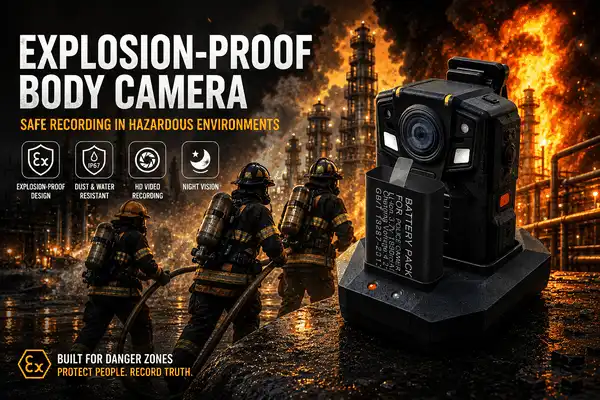
In addition to protecting against explosions, these cameras are built to withstand a wide range of weather conditions. If the rating is IP67 or IP68, it means that the product is completely dust-proof and waterproof when submerged in water. When dropped from two meters onto concrete, reinforced housings don't lose their sealed integrity. Operating temperature ranges usually cover -40°C to +60°C, which is wide enough to handle harsh industrial conditions. In low-light industrial settings, high-sensitivity sensors improve performance, and automatic infrared lighting makes it easier to see in dark tanks, caves, and at night. Recording options that meet safety standards and can withstand harsh environments are perfect for the toughest industrial uses.
Benefits of Using Explosion-proof Body Cameras in B2B Procurement
Using certified recording technology in dangerous areas improves safety management, working efficiency, and financial performance in a way that can be measured.
Enhanced Workplace Safety and Compliance
Putting cameras that are naturally safe in high-risk places makes recording incidents much better without adding any new risks. When maintenance teams do hot work checks, they can record procedures in real time. This lets technical support workers in dangerous Class I, Division 1 areas help out remotely without putting more people in danger. Safety officers write down procedures for following the rules. This makes records that can be checked and meets the needs of OSHA, HSE, and other regulations. Recording equipment makes people more likely to follow safety rules and gives objective evidence during investigations of accidents. When accidents happen, high-definition video records important details that help find the reason and stop them from happening again. By keeping correct records, businesses lower their risk of being sued and show they care about protecting their workers.
Operational Efficiency Improvements
Real-time video communication changes how technical help gets to dangerous places with an explosion-proof body camera. Experienced engineers help with complicated repair tasks from a distance, so there are no delays while waiting for specialists to arrive. Live-streaming lets people evaluate situations and make decisions from safe places, which cuts down on the time that people have to spend in dangerous areas. Recorded footage is useful for training because it lets companies keep track of the best ways to do things and go over their response plans. When chemical processing plants do safety checks, they make detailed visual records that help with efforts to keep getting better. In dusty settings, underground mines keep an eye on methane levels and the strength of structures while also keeping high-definition records. These operational benefits directly lead to less downtime, faster problem resolution, and better use of resources in industrial settings.
Long-term Cost Savings
Even though intrinsically safe equipment costs more than standard options, the overall cost of ownership makes it a strong investment. Strong building greatly increases the useful life, which lowers the number of replacements needed and the costs of getting new ones. Companies keep their expensive equipment from getting damaged by things in the surroundings that would kill regular cameras. When places show they care about safety by using the right tools in hazardous areas, their insurance rates go down. Having less liability after an event that was caught on approved cameras protects you financially in a big way. By following the rules, you can escape expensive fines, shutting down operations, and damage to your image. When procurement teams look at the total cost of ownership instead of just the purchase price, explosion-proof body cameras are a good investment that meets both safety and operational productivity goals.
Explosion-proof Body Cameras vs. Alternative Solutions
Before making a purchase decision, it's important to know how certified equipment is different from other security technology options that might seem similar.
Technical Comparison with Rugged Cameras
Body-worn cameras that are rugged are more durable, won't get wet, and can handle being hit by objects. They are good for a wide range of demanding situations. But these gadgets don't have the important technical and certification features that are needed for use in dangerous places. Standard rugged cameras may have IP67 rating for protection and shock resistance, but their electrical systems have not been through the thorough testing needed to keep them from igniting in environments that could be dangerous. Surface temperatures may be higher than what is safe for places that can catch fire. Battery systems don't have the built-in safety features and thermal protection that are required for dangerous areas. Law enforcement, security guards, and emergency services can all use rugged cameras well, but they can't legally or safely work in areas with a secret explosive environment. Companies need to understand that durability alone isn't enough to meet the needs of hazardous locations where special certification is still needed.
Performance Metrics and Environmental Suitability
To evaluate recording tools like the explosion-proof body camera, you have to match its technical specs with its operating needs. Intrinsically safe cameras usually have Up to 2304×1296 / 2560×1080 video quality and wide-angle lenses that capture a lot of the scene. Batteries last for different amounts of time. Depending on the recording settings and the surroundings, industrial models can run continuously for 4 to 12 hours. The storage space ranges 16GB, with 32/64/128GB optional, so you can use it for longer periods of time between data downloads. Infrared lighting makes it easier to see at night, which is very important in low-light industry settings. Temperature resistance makes sure that equipment works reliably in all kinds of harsh conditions, from Arctic facilities to tropical refineries. Organizations need to check if the equipment specs match their working situations. They should think about things like shift length, lights, temperature extremes, and the amount of time they need to keep records. Making sure that performance capabilities match up with actual working conditions is one way to make sure that procurement investments deliver the expected operational value.
Brand Selection and Supply Chain Reliability
Because explosion-proof equipment is so specialized, there aren't many companies that can make approved products. Well-known names in workplace safety electronics, like Honeywell and FLIR, have strong reputations for reliability and offer large support networks. China's new makers, like Shenzhen Kexin Technology (which does business under the SHOOP brand), offer cheap alternatives with flexible ODM/OEM customization options and reasonable prices. Purchasing teams judge suppliers based on their certifications, expert help after the sale, guarantee coverage, availability of spare parts, and shipping times. Companies that do business around the world can save time and money by working with companies that have both ATEX and IECEx approvals. Suppliers who are financially stable and have a position in the market give customers confidence that they will be able to get parts and technical help for a long time. Building relationships with authorized distributors makes sure that organizations can get real, certified equipment instead of fakes that put them at serious legal and safety risks.
How to Choose the Best Explosion-proof Body Camera for Your Business
Choosing the right recording gear for dangerous places requires a thorough look at the technical, operational, and financial aspects.
Certification and Regulatory Requirements
Finding the relevant legal standards and necessary certifications is the first step in making any procurement choice. It is up to the organization to decide what kind of dangerous area classifications their building has, such as Zone 0, Zone 1, Zone 2 for IECEx/ATEX systems or Division 1, Division 2 for North American standards. Certain pieces of tools must have the right certifications for the area where they will be used. Regulatory body records and manufacturer paperwork are used by procurement teams to check the legitimacy of certifications. When equipment is used in more than one area, it needs to be certified in each area, which usually means it needs to be compliant with both ATEX and IECEx. In addition to explosion protection, companies check that products meet other standards, such as those for electromagnetic compatibility, radio frequency emissions, and regional electrical safety requirements. Verifying certifications thoroughly keeps you from making mistakes that cost a lot of money and could lead to safety violations that could shut down operations.
Battery Performance and Power Management
Operational length has a direct effect on how productive workers are and how useful equipment is. The battery capacity tells you how long you can record continuously, Depending on the recording settings, battery capacity, and operating environment, industrial models can typically provide 4 to 12 hours of continuous recording. Companies match the power of batteries to the length of shifts, figuring out whether a single battery is enough or whether two batteries are needed for longer periods of time. Charging time affects the availability of equipment. Equipment that can be charged quickly cuts down on downtime between shifts. Policies for replacing batteries become very important. Most rules for hazardous areas say that you can't change batteries in classified areas; you can only do it in safe areas that have been marked. Some high-tech types have hot-swappable batteries that let them work for longer without having to stop recording. When procurement teams look at battery technology, they look at lithium systems that offer more energy per unit of space while still meeting the requirements for intrinsic safety and thermal protection. Power management features like low-battery alerts and automatic stop security are important to understand in order to keep operations running smoothly during busy work shifts.
Durability and Caring for the Environment
In industrial settings, recording equipment like the explosion-proof body camera has to deal with tough situations. Impact resistance specs tell you if cameras can handle drops from chest height, which is important for industrial work because of the physical demands. Ingress protection ratings show how resistant something is to dust and water. An IP67 rating is recommended for most uses, while an IP68 rating is better for tasks that could get submerged. Temperature range requirements must cover the whole range of conditions that can happen where the placement takes place, from freezing temperatures in cold storage facilities to very high temperatures in refineries. Offshore platforms and chemical processing areas are places where corrosion resistance is important because salt spray and harsh chemicals can damage equipment. The small size and light weight of the design make it more comfortable to wear for long amounts of time. The protection features work together to show if the equipment reliably records important footage for the whole time it's supposed to and doesn't break down early from being exposed to the elements.
Integration Capabilities and Data Management
For modern factories to work, they need recording gear that works with their current data management and security systems. Connectivity options like WiFi, Bluetooth, and cellular that allow real-time streaming and remote monitoring are looked at by procurement teams. USB data transfer standards and docking station support affect how evidence is downloaded and how easy it is to charge. For evidence reasons, password security and administrator controls make sure that data is correct and that the chain of custody is followed. AES-256 encryption and tamper-proof storage keep secret operational video from getting into the wrong hands or being changed without permission. Unique device identification and user ID watermarking help meet the needs for accountability and an audit trail. Centralized control software that plans firmware updates, coordinates multiple devices, and handles evidence recording is helpful for businesses that use more than one camera. By testing these integration features, you can be sure that new equipment will improve operational workflows and security protocols instead of making them harder to use.
Evaluation of the Supplier and Business Terms
Aside from technical specifications, choosing the right supplier and having a good business relationship are also important for successful procurement. Companies check if a supplier has experience with dangerous area equipment and that they understand the certification requirements and application challenges. After-sales technical support gives operations staff faith that they will get help when technology problems arise. The length and terms of the warranty show how confident the maker is in the product's trustworthiness. Volume pricing and flexible buying options allow for a range of organizational procurement models, such as direct purchase, leasing, or rental programs for short-term projects. Customization options from ODM and OEM let businesses choose features that meet their specific operational needs. Delivery times affect project schedules, and dependable suppliers keep stock on hand to speed up fulfillment. Building relationships with suppliers who are responsive and know about safety standards in the workplace leads to long-lasting partnerships in purchasing that go beyond single transactions and support business success.
Conclusion
Organizations that work in dangerous places where explosive atmospheres are always a risk need to have explosion-proof body cameras as part of their safety gear. These special gadgets have strict licensing requirements, engineering that is naturally safe, and strong construction that lets you record high-quality videos without putting out fires. When purchasing the right tools, procurement teams have to look at technical specs, legal requirements, and operating issues, all while assessing the supplier's skills and the terms of the deal. Buying certified recording equipment pays off in the long run by making the workplace safer, increasing operational efficiency, following the rules, and lowering costs. When businesses carefully consider their needs and choose approved equipment that meets those needs, they set themselves up for a successful rollout that protects both workers and the continuity of operations in high-risk industrial settings.
FAQ
1. What makes explosion-proof cameras different from naturally safe cameras?
Explosion-proof construction keeps explosions inside strengthened housings that stop flames from spreading, and naturally safe design keeps electrical energy at levels that are too low to start fires in the surrounding air. Both ways get hazardous area compliance, but they do so using different engineering methods. Devices that are intrinsically safe tend to be lighter and smaller, while explosion-proof enclosures offer strong protection by keeping things inside. The procurement teams choose based on the specific needs of the applications they are working on and the rules and regulations that govern their work environments.
2. Can batteries be changed while workers are in dangerous areas?
Because of the risk of sparking during connection, dangerous area laws tightly ban battery replacement or charging within classified zones. Changing batteries can only be done in clearly marked safe areas that are kept away from places with explosive atmospheres. Companies plan their operations around how long batteries last, making sure they have enough power to finish jobs before having to go back to safe places for battery service. Some more advanced models have two batteries, which increases the time they can be used while still following safety rules.
3. How does approval change the choice of camera for activities in other countries?
The ATEX certification is valid in all EU member states, while the IECEx certification is recognized internationally in 38 countries. In North America, buildings need to be certified by UL or CSA and meet regional standards for hazardous locations. Companies that do business all over the world can benefit from equipment that has more than one certification. This makes deployment easier in areas with different rules and regulations, since they don't have to buy separate equipment for each area. Teams in charge of buying things make sure that the cameras they choose have the right licenses for every place where they will be used. This keeps compliance gaps from happening, which could stop operations or put the company at risk of liability.
Partner with SHOOP for Certified Explosion-proof Body Camera Solutions
Through SHOOP's specialized industrial recording equipment, B2B procurement managers looking for trustworthy explosion-proof body camera providers can find complete options. Since 2015, Shenzhen Kexin Technology Co., Ltd. has been selling approved body-worn cameras under the SHOOP name. These cameras meet international safety standards such as CE, ROHS, IP67, IK09, and ISO compliance. Our engineering team can customize ODM and OEM products to meet the needs of businesses in the oil and gas, chemical processing, mining, and other dangerous fields. Our solutions meet all of your hazardous area recording needs. They have a range of storage choices 16GB, with 32/64/128GB optional, dual 1950mAh battery systems for long operating life, and an inherently safe design that works well in harsh industrial settings. Email our technical team at sales@ishoop.com.cn to talk about your specific certification needs, get detailed technical specs, and look into pricing options for large-scale deployments across your facilities.
References
1. Smith, J. & Anderson, R. (2022). "Intrinsic Safety Engineering for Hazardous Area Electronics," Journal of Industrial Safety Technology, Vol. 18, pp. 245-267.
2. International Electrotechnical Commission. (2021). "IEC 60079-11: Explosive Atmospheres - Part 11: Equipment Protection by Intrinsic Safety," IEC Standards Publication.
3. Martinez, L. (2023). "Body-Worn Camera Technology in Industrial Applications: A Comprehensive Review," Industrial Equipment Journal, Vol. 45, No. 3, pp. 112-134.
4. European Commission. (2020). "ATEX Directive 2014/34/EU: Equipment and Protective Systems for Explosive Atmospheres," Official Guidelines and Implementation Standards.
5. Thompson, D. & Wilson, K. (2023). "Cost-Benefit Analysis of Certified Safety Equipment in Hazardous Industries," Occupational Safety Management Review, Vol. 29, pp. 78-96.
6. National Fire Protection Association. (2022). "NFPA 70: National Electrical Code - Article 500: Hazardous Classified Locations," NFPA Standards Publication.

USER EVALUATE
Here is the customer's evaluation of us