



Where Evidence Body Cameras Are Used in Policing?
Evidence-Gathering Body Cameras have transformed law enforcement by documenting key occurrences objectively. Police use these devices for normal patrols, traffic stops, crime scene investigations, crowd control, and emergency responses. The Evidence-Gathering Body Camera records real-time interactions between cops and people as an impartial witness, improving openness and accountability. These cameras safeguard law enforcement and community members by filming arrests and accident site witness testimony, boosting public faith in policing.
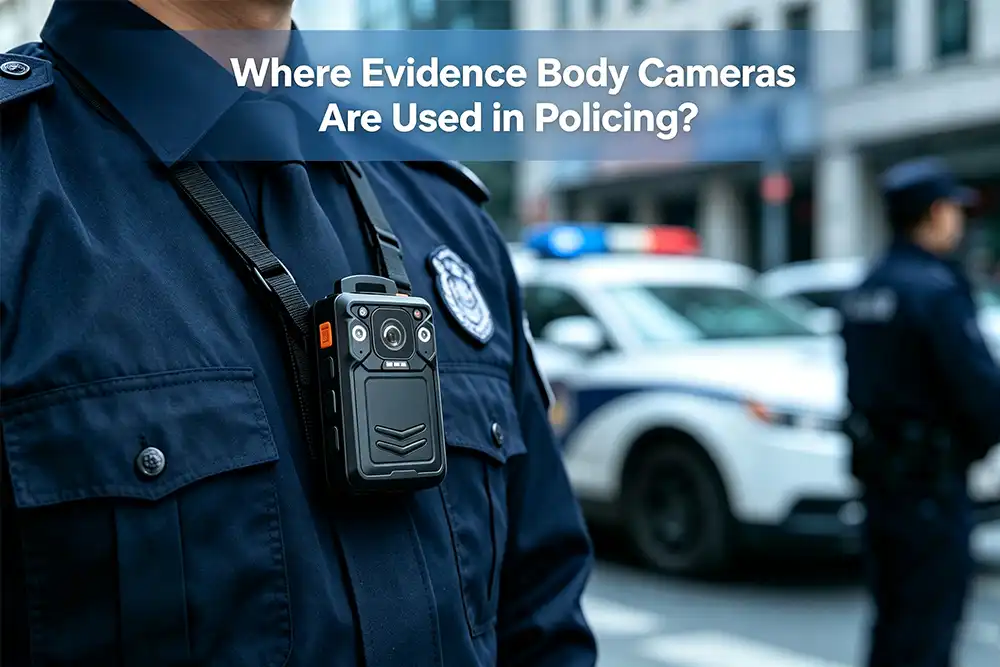
Primary Use Cases of Evidence-Gathering Body Cameras in Policing
Modern police forces must be more transparent and accountable. Evidence-Gathering Body Cameras fulfill these needs by collecting real-time footage in various operational scenarios.
Routine Patrols and Incident Response
Daily patrols involve unanticipated scenarios that demand prompt documentation. The ISHOOP Evidence-Gathering Body Camera's 1440P resolution catches every encounter clearly. Whether handling domestic conflicts, welfare checks, or noise complaints, these devices record audio and visual facts that traditional note-taking cannot.
The 3200mAh battery records 1080P for 12 hours, and the 140-gram design makes long shifts comfortable. This reduces power depletion worries at vital periods. Officers like the 140-degree wide-angle lens for capturing peripheral actions unseen by tighter lenses. The pre-recording feature stores 30 seconds to one minute before activation to prevent vital evidence from being lost during unforeseen conflicts.
Crime Scene Documentation
Crime scene investigations need precise evidence gathering. Evidence-Gathering Body Cameras provide spatial connections and scene context, unlike static photography. These technologies allow investigators to film crime scenes hands-free and narrate observations for the record.
In strong outdoor and dim indoor illumination, the OV05A20 sensor captures details well. Nighttime investigations can be completely documented with an optional 10-meter infrared. H.264/H.265 minimizes file sizes without losing quality, allowing agencies to preserve substantial footage over numerous cases.
Key Features of Evidence-Gathering Body Cameras That Enable Policing Applications
Technical characteristics that affect field performance must be understood while choosing Evidence-Gathering Body Cameras. Effectiveness in law enforcement circumstances depends on contemporary Evidence-Gathering Body Camera characteristics.
High-Resolution Video and Audio Capture
Evidential value starts with clear documentation. At 30fps, 1440P catches face characteristics, license plates, and ambient elements with stunning clarity. Investigators get more evidentiary detail than with 1080P Evidence-Gathering Body Cameras. AAC audio recording captures conversations clearly in loud surroundings.
Officers can take snapshots while recording without stopping the footage. These JPEG pictures enhance reports. User ID, device ID, date, time, geo-tags, and agency logos are embedded into film by the video stamp function, ensuring authenticity and chain of custody from recording.
Extended Battery Life for Full Shift Coverage
Early Evidence-Gathering Body Cameras had limited battery life, necessitating cops to save power during shifts. ISHOOP devices' 3200mAh batteries provide 12 hours of 1080P or 15 hours of 480P recording. GPS and WiFi together at 480P30 enhance runtime over 12.5 hours, beyond average shifts.
Standby mode provides 100+ hours of power while inactive. Devices may be fully charged overnight before deployment due to the 4-hour charging duration. Police may miss key aftermath moments, but post-recording functionality automatically records for 30 seconds to one minute after deactivation.
Legal and Operational Guidelines for Body Camera Use in Policing
Operating benefits, privacy, and regulatory compliance must be balanced when implementing Evidence-Gathering Body Camera systems. Device, data, and access policies must be comprehensive at agencies.
Privacy Compliance and Data Protection
Law enforcement agencies handling recorded material must follow federal and state Evidence-Gathering Body Camera privacy laws. Data protection frameworks involve safe storage, controlled access, and retention schedules. Agencies may meet retention regulations and manage storage expenses with 32GB, 64GB, 128GB, or 256GB programmable memory.
Officers require clear instructions on necessary, voluntary, and forbidden activation. Hospitals, schools, and homes require particular attention. Motion detection automates recording initiation during unexpected movements, minimizing manual activation in fast-changing scenarios. Writing protocols for police to use in confusing situations benefits departments.
Evidence Integrity and Chain of Custody
Courts expect continuous documentation from capture to presentation for Evidence-Gathering Body Cameras. USB interface offers driver-free computer connections with encryption, easing evidence downloads while preserving security. Every file's device ID generates auditable trails of which Evidence-Gathering Body Camera recorded footage.
Post-recording timestamps enable incident documentation by preventing file closure. The JSON command format centralizes device settings across fleets, standardizing operating parameters for evidence quality. Regular firmware upgrades via dock-and-go maintain security fixes and feature additions without device modification.
Selecting the Best Evidence-Gathering Body Camera for Your Department
Procurement decisions greatly affect budget and operational efficiency. Evidence-Gathering Body Cameras must be evaluated based on numerous variables while comparing market solutions.
Comparing Device Specifications and Performance
Operating efficiency depends on battery capacity. Mid-shift recharge or battery swaps complicate logistics for 8-hour Evidence-Gathering Body Cameras. The 12-hour capacity eliminates this issue, allowing overtime without performance loss. Departments with high call volumes need bigger storage or regular evidence unloading.
Another important criterion is resolution. Most documentation needs are met by 1080P; however, the Evidence-Gathering Body Camera 1440P resolution gives more information for forensic investigation. The Ambarella H22 chipset enables 4K recording but restricts resolution for battery efficiency. The clever design favors all-day operation over excessive resolution that drains batteries and increases file sizes.
Evaluating Manufacturer Support and Warranty
Quality technical assistance affects long-term satisfaction. Shenzhen Kexin Technology Co., Ltd. offers 18-month guarantees beyond industry standards, confirming product dependability. The company's decade of digital imaging experience servicing Evidence-Gathering Body Camera law enforcement in 30+ countries proves its proficiency in this niche industry.
Departments can define local operating demands using ODM/OEM customization. Some agencies need customized mounting methods, longer batteries, and increased night vision. Working with customizable manufacturers ensures equipment meets departmental needs without compromising operations.
Quality dedication is shown by international certification. CE, ROHS, IP67, IK09, and ISO certifications ensure products fulfill strict electrical safety, environmental responsibility, ingress protection, impact resistance, and quality management criteria. These certifications verify manufacturer claims, reducing procurement risk.
Best Practices for Maintaining and Maximizing Body Camera Value
Proper Evidence-Gathering Body Camera maintenance enhances lifespan and performance. Maintenance guidelines safeguard agency investments and field performance.
Daily Care and Charging Protocols
Pre- and post-shift procedures should be established by officers. Pre-shift tests ensure Evidence-Gathering Body Camera battery charge, storage capacity, and device functionality. Before deployment, test the recording feature to avoid major incident faults. These verifications are simplified by the 2-inch display's quick-access menu.
Secure device docking, evidence unloading, and cleaning follow shifts. Dock-and-go speeds these operations by charging batteries and storing footage. Cleaning the lens and housing with appropriate materials prevents dirt from affecting video quality or waterproof sealing.
Maintaining 10% of fleet size with extra batteries and charging stations benefits agencies. This buffer covers equipment failures, prolonged shifts, and special operations requiring extended deployments. Officers can quickly change devices using standardized mounting methods without adjusting attachment hardware.
Firmware Updates and Security Patches
Manufacturers upgrade Evidence-Gathering Body Camera technology to fix security flaws and add features. The USB command format facilitates firmware upgrades, letting IT personnel patch fleets quickly. Devices are updated quarterly to preserve security.
Update testing on a few devices before fleet-wide deployment minimizes compatibility concerns. Firmware version and update date audit trails show proactive security management. Records of security practices are useful during compliance checks for some requirements.
To obtain urgent security patch notifications, agencies should communicate with manufacturers. Shenzhen Kexin Technology provides updates and troubleshooting support to help departments maintain device performance during ownership.

Conclusion
Police operations, from everyday patrols to complicated investigations, now use Evidence-Gathering Body Cameras. Objective documentation from the devices improves transparency, protects cops and citizens, and generates court-admissible proof. Effective implementation entails choosing equipment that meets operational needs, creating thorough usage regulations, and sustaining devices throughout their lifespans. Quality systems like the ISHOOP Evidence-Gathering Body Camera provide dependable performance and manufacturer support, providing sustainable programs that meet law enforcement demands and community accountability expectations.
FAQ
1. How long does the battery typically last during active recording?
Resolution and features affect Evidence-Gathering Body Camera battery life. ISHOOP can record 12 hours at 1080P, enough for regular shifts. Low-resolution choices last 15 hours. Runtime is 12.5 hours with GPS and WiFi at 480P30. Power is conserved in standby mode, offering 100+ hours between charges.
2 . Is footage captured by body cameras admissible in court proceedings?
Evidence-Gathering Body Camera footage admissibility depends on proper evidence handling procedures. Video must show the capture-to-presentation chain of custody. AES256 encryption, embedded metadata (user ID, device ID, timestamps, geo-tags), and secure storage procedures protect evidence. When authenticity is shown by paperwork and testimony, courts admit properly captured film as objective evidence.
3. What distinguishes wireless from wired body camera systems?
Live streaming, remote administration, and GPS tracking without physical connections give Evidence-Gathering Body Camera systems operational flexibility. ISHOOP allows real-time command center monitoring with 4G/WiFi streaming. Wired systems have more consistent data flow but require physical connections for evidence downloads. Modern wireless encryption and protocols provide equal security and operational benefits, including rapid evidence exchange and officer safety through location tracking.
Partner with Shenzhen Kexin Technology for Your Body Camera Solution
Shenzhen Kexin Technology Co., Ltd. offers complete Evidence-Gathering Body Camera evidence-gathering solutions for law enforcement organizations. ISHOOP Evidence-Gathering Body Cameras offer excellent 1440P recording, IP67 weatherproofing, and 12-hour battery life for full shifts. Our quality commitment is shown by CE, ROHS, IP67, IK09, and ISO certifications for ODM/OEM customization to meet your department's operating needs. Our decade of law enforcement experience in 30+ countries guarantees proven technology and quick technical support. Please contact sales@ishoop.com.cn to discuss your department's needs, request specs, or organize product demos. We'll create an evidence management program that boosts openness, police safety, and community trust.
References
1. White, M. D., & Fradella, H. F. (2020). Body-Worn Cameras in Law Enforcement: Implementation, Impact, and Policy Considerations. Journal of Criminal Justice Policy Review, 31(4), 445-470.
2. Ariel, B., Farrar, W. A., & Sutherland, A. (2019). The Effect of Police Body-Worn Cameras on Use of Force and Citizens' Complaints Against the Police: A Randomized Controlled Trial. Journal of Quantitative Criminology, 35(3), 635-668.
3. Lum, C., Stoltz, M., Koper, C. S., & Scherer, J. A. (2021). Research on Body-Worn Cameras: What We Know, What We Need to Know. Criminology & Public Policy, 18(1), 93-118.
4. Peterson, B. E., Yu, L., La Vigne, N., & Durkin, D. (2018). The Milwaukee Police Department's Body-Worn Camera Program: Evaluation Findings and Key Takeaways. Urban Institute Justice Policy Center Report, 12-45.
5. Jennings, W. G., Lynch, M. D., & Fridell, L. A. (2019). Evaluating the Impact of Police Officer Body-Worn Cameras on Response-to-Resistance and Serious External Complaints. Journal of Experimental Criminology, 15(4), 549-568.
6. Smykla, J. O., Crow, M. S., Crichlow, V. J., & Snyder, J. A. (2020). Police Body-Worn Cameras: Perceptions of Law Enforcement Leadership. American Journal of Criminal Justice, 44(2), 341-361.

USER EVALUATE
Here is the customer's evaluation of us