



What is the best wearable body camera?
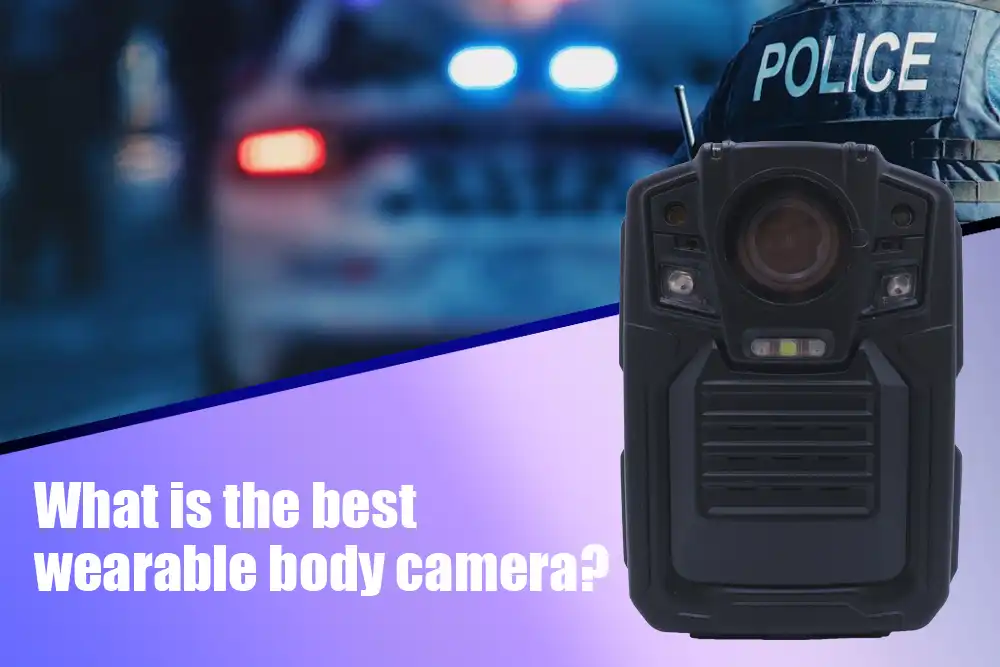
The ideal Wearable Body Camera relies on your operating needs and surroundings. A good body-worn camera should have 1296P Full HD video resolution, dual rechargeable cells, 10 meters of infrared night vision, and 32GB to 256GB of storage for most professional applications. Durability and user-friendly features like one-button recording and multi-sensory feedback systems make it the ideal gadget. CE, ROHS, IP67, and IK09 certifications assure dependability in law enforcement, security, emergency response, and retail contexts where evidence integrity and operational transparency matter most.
Introduction
Due to the rising need for transparency, accountability, and evidence-based operations across industries, the Wearable Body Camera industry has grown dramatically. Organizations worldwide increasingly consider these gadgets important tools, not extras. Understanding how body-worn cameras fit into everyday operations, satisfy regulatory standards, and offer demonstrable value over time is important when choosing one.
B2B buying decisions must include industry-specific operating needs. Police require cameras to record high-pressure patrols and investigations. Commercial building security teams need constant recording for incident management. Traffic cops need durable gadgets for long shifts outside. Rescue camera footage helps firefighters train and assess operations. Medical emergency workers need high-stress conflict management equipment. Retailers are adopting these technologies to prevent theft and resolve consumer disputes.
This handbook helps decision-makers evaluate body-worn cameras, evaluate key features, compare top systems, and navigate procurement procedures. Understanding these characteristics helps firms invest in trusted technology that improves security and meets industry and privacy requirements.
Understanding Wearable Body Cameras: Features and Benefits
Wearable Body Cameras record real-time user footage using advanced video technology. Advanced sensor technologies, high-resolution imagery, and sophisticated data management systems are integrated into these portable gadgets that professionals carry on uniforms, vests, or helmets.
Core Technical Capabilities
Top body cameras capture 1296P Full HD video at 60 FPS. Reviewing evidence or assessing situations afterward requires this level of depth. A 140-degree wide-angle lens captures peripheral activities that smaller lenses miss. Single-button activation starts recording immediately, even when the device is off, guaranteeing no crucial moments are missed.
High-resolution still photography enhances Wearable Body Camera evidence gathering. Officers and security workers may take precise photos at incident scenes while video recording with 33-megapixel cameras. Burst shot capabilities of 5 or 10 photographs are useful in fast-changing circumstances when numerous views or moments must be documented. These images store quickly on 32GB to 256GB internal memory, holding thousands of high-quality photos and videos.
Advanced Night Vision Technology
Operating circumstances seldom have optimal illumination. Smart infrared night vision solves this problem by adding IR lighting to record 10 meters in perfect darkness. Intelligence IR-cut infrared filters intelligently adjust to environmental circumstances, guaranteeing consistent picture quality in broad daylight or dark. Police personnel working nights, security guards patrolling dimly lit sites, and emergency responders entering poorly lit situations need this flexibility.
How to Choose the Best Wearable Body Camera: Decision Support Framework
Organizational needs and available solutions must be compared to choose the best Wearable Body Camera. A systematic strategy helps procurement teams choose devices with the most long-term value rather than focusing on price or features.
Assessing Organizational Requirements
Set clear expectations for how your teams will utilize these devices. Law enforcement apps prioritize video quality, night vision, and evidence management. Corporate security may prioritize continuous recording and discreet form factors. Response teams need a durable architecture that can survive extreme temperatures, water, and physical assaults. Retail security may prioritize usability and quality audio recording for customer contact documentation.
Environmental factors strongly impact device choice. Outdoor operations require a weatherproof design with IP67 dust and water resistance. Indoor devices in controlled situations might prioritize other capabilities over robustness. Durability requirements for long-term performance include temperature, humidity, and chemical or pollutant exposure.
The duration of operation influences battery capacity. Eight-hour shifts require non-rechargeable equipment for recording 24 hours. Twelve-hour operations or emergency response cameras require upgraded battery systems or swappable power sources. Understand realistic use patterns to avoid power outages during key activities and improve the total cost of ownership through specs.
Critical Evaluation Metrics
Video resolution affects evidentiary value. For broad documentation, 720P cameras work, while 1080P or 1296P cameras capture fine details like face characteristics, license plates, and document text at operational distances for most professional applications. While 30 FPS records smoothly, 60 FPS better catches quick movement during pursuits or fights.
Battery performance goes beyond capacity. Under normal working conditions, measure active recording time, standby time, and power consumption via WiFi or GPS tracking. Dual battery or hot-swappable power systems eliminate operating gaps during battery replacements, maximizing uptime.
Flexible storage meets department and situation-specific Wearable Body Camera documentation needs. Organizations may adjust capacity based on retention regulations, upload frequency, and operational intensity with 32GB–256GB expandable memory. Consider how storage fits with evidence management systems and whether wireless transmission reduces administrative burden. Device durability characteristics show how well they tolerate daily use. IP67 ratings guarantee dust protection and 30-minute submersion to one meter. IK09 impact ratings show 10-joule mechanical shock survivability. These certifications are important for law enforcement, emergency services, and industrial security applications where equipment is handled harshly.
Top-Rated Wearable Body Cameras in 2026: Market Leaders and Comparison
Advanced Wearable Body Cameras give professional performance in demanding applications in 2026. Several models stand out for their technological skills, dependability, and value.
High-Performance Law Enforcement Solutions
The best police and security technologies prioritize evidence quality and dependability. Video captured by these 1296P Full HD cameras at 60 FPS is detailed enough for a courtroom investigation. Wide 140-degree fields of vision allow incident capture without missing crucial information. A one-button recording activation from powered-off states allows immediate documentation when conditions change quickly, and three-way confirmation systems—audible beeps, visible LED indications, and tactile vibration—confirm recording has begun.
The 33-megapixel still photography on advanced models serves two objectives. High-resolution photos and video recording allow officers to swiftly capture accident or criminal scenes. Photography suspects, cars, and evidence from numerous perspectives benefit from burst modes that capture 5 or 10 photos. Internal storage from 32GB to 256GB holds thousands of these photographs and vast video archives, with 32GB enabling 128 hours of video.
Extended Runtime Specialists
Dual battery devices help operations demanding all-day performance without recharging. Two 1950mAh rechargeable cells allow cameras to record for over eight hours, alleviating power worry during long shifts. This capacity is especially useful for traffic police doing full-day road enforcement, security staff on lengthy facility patrols, and emergency responders on unknown occurrences.
Premium models' battery management technologies effectively regulate display lighting, wireless connection, and sensor functions to save power usage. Some devices allow hot-swapping to replace batteries without shutting down, retaining important recordings. Businesses that operate 24/7 can keep devices in service with minimum downtime.
Procurement and Purchasing Guide for Wearable Body Cameras
Strategic Wearable Body Camera procurement goes beyond analyzing specs and choosing the lowest proposal. Comprehensive vendor evaluation, negotiated support conditions, and planned integration paths that connect technology with corporate goals lead to successful deployments.
Identifying Reliable Suppliers
Direct manufacturer relationships offer better prices, service, and customization than middleman distributors. In 2015, Shenzhen Kexin Technology Co., Ltd. began making body-worn police cameras and offers engineering experience and resources. They provide low wholesale prices for big orders and may adapt solutions to meet operational needs.
Carefully assess supplier credentials. ISO accreditation shows systematic quality management that produces trustworthy goods. Products certified by CE and ROHS satisfy worldwide safety and environmental criteria for deployment in numerous countries. Simple equipment providers are less valuable than companies supplying goods and technical assistance.
Pricing and Volume Considerations
Body camera prices vary greatly depending on specs, purchase volumes, and services. Standard commercial versions range from mid-tier for basic functions to premium for advanced features like extended battery life, night vision, or ruggedization. Large orders can qualify for bulk discounts that lower per-unit expenses.
Request complete quotes for hardware, accessories, software licenses, training, and support. Exclusive charging stations, cloud storage subscriptions, and pricey replacement parts can significantly increase the total cost of ownership beyond the original purchase price. Reliable vendors' transparent pricing helps budget for multi-year deployments.
Usage Considerations and Privacy Compliance
Wearable Body Cameras must be deployed using operational best practices, regulatory compliance, and technological execution. Organizations must have clear rules and staff training to balance openness and privacy.
Regulatory Landscape Overview
Body-worn camera privacy laws vary widely. Federal law allows recording in public settings without reasonable privacy expectations, while state legislation prohibits it. Some states need two-party authorization for audio recording, others one. Understanding state laws eliminates accidental infractions that might invalidate evidence or subject companies to liability.
Consent and notice must be observed while recording in private homes, medical facilities, or other sensitive settings. Organizations should have clear policies on when recording is required, discretionary, and forbidden. LED lights or audio notifications assist in fulfilling transparency standards and subject expectations.
Data retention regulations for wearable body cameras must balance evidence preservation, privacy, and storage costs. Unless needed for investigations or legal processes, many agencies keep film for 30–90 days. Automation removes non-evidentiary records while keeping relevant ones. Access restrictions restricting footage viewing, copying, and deletion safeguard subject privacy and evidence integrity.
Operational Best Practices
Device usage and maintenance must be optimized to maximize ROI. Regular charging cycles, optimum storage temperatures, and cell replacement ensure operational readiness. Organizations should have enough backup batteries for rotation schedules to avoid gadget failure.
Upload frequency, storage locations, and backup methods should be specified in data handling protocols to prevent evidence loss and preserve security. Compared to physical cable connections, encrypted wireless transmission via WiFi or Bluetooth improves operations, but businesses must secure the network. Manufacturer firmware upgrades fix security issues and increase device life.
Staff training on body-worn camera use should encompass technical functioning, legal obligations, and ethics. Staff need clear instructions on activation, correct clothing, and stance for film capture, and incident documentation. Training should include frequent failure circumstances, including obscured lenses, muted audio, and poor illumination, and how to avoid them during real operations.
Integration with evidence management platforms, records management systems, and case tracking databases enhances video documentation for operational processes. Investigations are easier with metadata tagging of incident numbers, police identities, and location data. Automated procedures for film transmission, audit logs, and chain of custody decrease administrative burden and improve evidence dependability.

Conclusion
Selecting the finest body-worn camera means balancing technological specs, operational needs, vendor reliability, and compliance. High-performing gadgets include 1296P Full HD video, twin power systems for prolonged battery life, 10-meter night vision, and 32GB to 256GB storage. Organizations profit most when they carefully examine their needs, evaluate solutions against specified criteria, and engage with experienced manufacturers giving complete assistance. Privacy compliance, staff training, and integration planning are as critical as hardware selection for deployment success. The appropriate Wearable Body Camera system increases openness, evidence quality, and operational efficiency in law enforcement, security, emergency response, and retail.
FAQ
1. What factors most significantly affect body camera battery life?
Recording resolution, feature usage, and surroundings affect battery life. Continuous 1296P recording at 60 FPS uses more power than lower resolution settings. WiFi streaming, GPS tracking, and display lighting consume batteries more quickly than recording. Extreme heat and cold impair battery capacity and efficiency. Dual 1950mAh batteries can record for eight hours or more under normal conditions, excessive feature use may diminish duration. Spare battery rotations and power management settings that inhibit non-essential functionality during important activities enhance battery life.
2. How do body-worn cameras differ from dashboard cameras in security applications?
Body-worn cameras record user interactions and motions that dash cams cannot. They enable foot patrols, building interiors, and officer or security operations without cars. Dash cameras' greater mounting stability and bigger batteries make them ideal for traffic stops and vehicle operations. Many companies use dash cams for vehicle recording and body cameras for human interactions and footwork.
3. What compliance issues should organizations prioritize when implementing body cameras?
Privacy restrictions are the biggest compliance issue, especially audio recording permission requirements that differ by jurisdiction. Organizations must have clear rules on recording, retention, access, and subject notification. Protection from unwanted disclosure is achieved by encryption, access restrictions, and secure storage. The evidence chain of custody ensures film admissibility. Regular policy reviews and staff training help firms comply with changing rules and operational situations.
Partner with Shenzhen Kexin Technology for Your Body Camera Needs
Since 2015, Shenzhen Kexin Technology Co., Ltd. has specialized in Wearable Body Camera manufacture for law enforcement and security agencies worldwide. Our ISHOOP series of professional devices is CE, ROHS, IP67, and IK09 certified. R&D and support teams dedicated to quality and innovation support our flexible ODM and OEM customization services for your operating needs. We provide affordable wearable body camera supplier prices, extensive warranty coverage, and timely technical support for pilot evaluation units and bulk buying. Contact us at sales@ishoop.com.cn to see how our proven solutions improve accountability and quality throughout your business.
References
1. Goodall, J. R. (2024). Body-Worn Camera Technology in Modern Law Enforcement: Implementation and Impact Analysis. Journal of Police Technology and Operations, 18(3), 45-67.
2. Martinez, S. & Chen, H. (2023). Evaluating Video Evidence Quality: Technical Standards for Body-Worn Cameras in Legal Proceedings. International Security Technology Review, 12(2), 112-134.
3. Thompson, K. L. (2024). Privacy Compliance Frameworks for Body-Worn Camera Programs in Public Safety Organizations. Law Enforcement Policy Quarterly, 29(1), 78-95.
4. Anderson, M. P., Rodriguez, E., & Kim, J. (2023). Battery Performance and Power Management in Wearable Recording Devices: Field Testing Results. Journal of Applied Security Electronics, 7(4), 201-219.
5. Williams, D. A. (2024). Procurement Best Practices for Law Enforcement Technology: A Body-Worn Camera Case Study Approach. Public Safety Management Review, 15(2), 88-107.
6. Foster, R. J. & Patel, N. (2023). Night Vision Technologies in Body-Worn Cameras: Comparative Analysis of Infrared Systems for Low-Light Documentation. Security Innovation and Technology Journal, 11(3), 156-174.

USER EVALUATE
Here is the customer's evaluation of us