



5 Reasons Why Body Cameras Are Essential for Law Enforcement
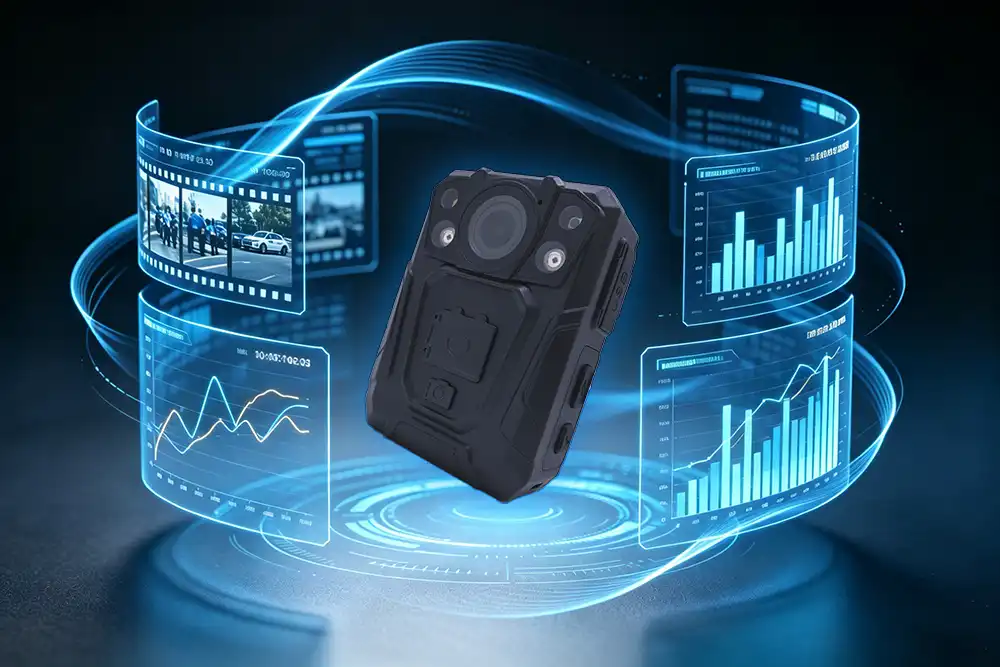
Body worn cameras have revolutionized US police. These small devices, usually attached to cops' uniforms, record real-time video and audio during public interactions. The technology improves transparency, evidence collection, operational efficiency, and police and civilian safety through precise recordkeeping. These devices are essential for organizations that value professionalism and community confidence, with high-resolution recording, secured storage, and live broadcasting. Understanding body-worn camera systems' strategic benefits is crucial for law enforcement officers navigating today's complicated operational context, as procurement decisions emphasize accountability and performance.
Reason 1 – Enhancing Transparency and Accountability
Building Public Trust Through Objective Documentation
Police relationships with the community are scrutinized like never before. Body Worn Cameras record confrontations impartially, protecting everyone. Officers record patrols, investigations, and emergency responses to clarify disputed situations and avoid misunderstanding. Instead of using conflicting testimony, this objective perspective allows internal affairs divisions, oversight bodies, and legal systems to analyze circumstances with context.
Reducing Complaints and Misconduct Allegations
Camera deployment regularly reduces citizen complaints against cops, according to research. Recording technology promotes professionalism in police enforcement and community relations. These gadgets show officers' transparency, which boosts public trust. Comprehensive camera programs reduce excessive force and misbehavior claims, saving agencies money on complaint investigations and lawsuits.
Reason 2 – Providing Reliable Evidence for Investigations and Trials
Capturing High-Quality Video and Audio for Court Proceedings
Successful prosecutions and fair trials depend on reliable evidence. Advanced camera systems with the Ambarella H22 chipset capture essential event details in 1440P30 footage. H.264 and H.265 compression standards optimize file size and image quality for storage and transmission. Audio recordings of conversations, cautions, and remarks help investigators and prosecutors understand camera evidence.
Professional-grade Body Worn Cameras equipment's technological specs affect their evidence value. High-resolution sensors like the OS05A20 collect face characteristics, license plates, and ambient factors for case analysis. Photo capabilities of 4M to 40M pixels allow cops to capture scenes in great detail. These technological features reduce data loss and preserve footage from capture to trial presentation.
Supporting Faster Case Resolutions and Corroborating Witness Accounts
Video evidence clarifies incident sequences and participant activities, speeding up investigations. Camera video supports witness accounts, suspect identification, and case timelines for prosecutors. Defense counsel gain from thorough documents that may exonerate clients or disclose procedural flaws. This thorough documentation speeds up plea bargains and improves judgments, lowering court backlog and expenses.
Pre- and post-recording features record events before and after cops activate their cameras, capturing crucial moments. These capabilities save evidence with customizable buffer durations from 5 seconds to 2 minutes. This is especially useful in fast-changing scenarios when cops cannot quickly activate recording features.
Reason 3 – Improving Officer and Public Safety
Enabling Real-Time Monitoring and Rapid Emergency Response
Modern camera systems with GPS and live streaming change how command centers help field personnel during critical emergencies. Officers in difficult situations can receive tactical assistance and additional resources from supervisors remotely. This real-time communication improves emergency response situational awareness and coordination, potentially reducing escalation and improving results.
Wi-Fi connection eliminates physical docking delays by sending footage to central control systems instantly. Officers may upload vital material in the field, speeding up investigations and command staff decision-making. SOS lets cops notify supervisors of possible dangers, adding a safety layer.
Ensuring Functionality in Challenging Operational Environments
Police labor in varied settings that require robust, reliable gear. Public safety Body Worn Cameras are IP67-waterproof to withstand rain, snow, and humidity. IK09-rated shock-resistant designs safeguard internal components from falls and collisions during foot chases and fights. Rough characteristics provide continuing functioning in any environment.
The 3200mAh battery provides over 10 hours of continuous recording, covering patrol shift needs without mid-shift recharge. Extended shift or special assignment officers can attach external power sources to prolong operational time indefinitely. This dependability enables complete recordkeeping throughout duty periods without gaps that might compromise evidence or officer safety.
Reason 4 – Streamlining Operations and Training
Enhancing Performance Reviews and Procedural Assessments
Body worn camera footage is objective for assessing officer performance and finding areas for improvement. Supervisors may evaluate tactical judgments, communication skills, and department policy compliance more accurately by reviewing field encounters rather than written reports or secondhand stories. This evidence-based performance management method improves professional growth and organizational responsibility.
Scenario-based training methods benefit greatly from incident video. Trainees and veterans can be shown real-world scenarios to demonstrate successful procedures, avoid blunders, and explore tactical options. Practical teaching is more effective than classroom lectures or hypothetical scenarios at speeding skill development and field preparation.
Integrating With Digital Evidence Management Systems
Body Worn Cameras and complete management platforms integrate seamlessly, simplifying footage storage, retrieval, and sharing. Docking station uploading minimizes manual labor and maintains the chain of custody. Centralized systems allow authorized people to instantly find occurrences using timestamps, officer identities, or case numbers, saving time during investigations.
Efficient archiving systems handle agency-wide camera installations' enormous data volumes. Configurable retention policies manage storage costs and legal compliance. H.265 compresses files without losing quality, boosting storage space and reducing infrastructure costs.
Reason 5 – Return on Investment and Procurement Advantages
Evaluating Long-Term Value and Operational Savings
Body worn camera systems cost initially, but their long-term worth is high. Fewer lawsuits and speedier complaint resolutions lower litigation costs for agencies. Comprehensive documentation may lower insurance costs as carriers acknowledge its risk reduction benefits. Increased officer safety reduces workers' comp claims and sick leave. Financial benefits complement intangible benefits like better community connections and departmental reputation.
Procurement managers must consider device pricing, software licensing, storage infrastructure, maintenance contracts, and replacement cycles. Comparing providers shows warranty, technical support, and accessory ecosystem differences. Requesting full offers that include all expenses across estimated deployment lifespans helps agencies budget and make educated purchase decisions.
Leveraging Customization and Bulk Purchase Options
B2B distributors and OEM partners give agencies with unique operating needs flexibility. Departments can customize devices with mounting attachments, battery capacity, and software features to match their mission profiles. Traffic enforcement may prioritize GPS accuracy and battery life, while tactical squads may prefer tough construction and night vision. Directly collaborating with manufacturers lets procurement managers propose optimal combinations.
Bulk purchases save money and standardize agency equipment rollout. Standardized devices simplify training, maintenance, and spare parts management, while volume discounts lower unit prices. Having reputable vendors provides product availability for future expansions and replacement cycles, eliminating compatibility difficulties from mixing equipment generations or brands.
Shenzhen Kexin Technology Co., Ltd. exceeds Body Worn Camera manufacturers by delivering ODM and OEM services for varied law enforcement needs. Our products satisfy CE, ROHS, IP67, IK09, and ISO requirements for dependable performance in harsh operational conditions. Flexible modification meets the demands of police, traffic enforcement, security, and emergency response teams in diverse locations and jurisdictions.

Conclusion
Body worn cameras have gone from pilot initiatives to crucial equipment for transparent, accountable, and effective police enforcement. Improved transparency, accurate evidence, safety, simplifying operations, and good return on investment are why these gadgets are standard equipment in modern police. High-resolution recording, secured storage, prolonged battery life, and live streaming meet field operations and legal and administrative needs. As public expectations for police accountability rise, agencies that invest in quality camera systems improve community relations, liability exposure, and operational efficiency for officers, citizens, and the legal system.
FAQ
1. How long does the battery last on a typical body-worn camera?
Professional devices with 3200mAh batteries can record for over 10 hours, covering regular patrol shifts without recharging. Extended-duty officers can attach external power sources to prolong operating time indefinitely, assuring complete documentation for the Body Worn Camera.
2. What video resolution is necessary for legal evidence?
Modern law enforcement cameras should have at least 1080P resolution, but 1440P reveals faces, license plates, and environmental conditions better. Higher resolutions keep film clear when magnified for courtroom presentations or investigations, bolstering evidence.
3. How is recorded footage kept secure from tampering?
Video is encrypted using AES256 throughout the evidence lifecycle to prevent tampering. Secure docking stations, chain-of-custody mechanisms, and access recording systems track every film viewing or transfer, ensuring legal admissibility.
Partner With a Trusted Body Worn Camera Manufacturer
Companies seeking dependable wearable recording solutions should assess vendors based on product quality, customisation, and support. Shenzhen Kexin Technology Co., Ltd. makes professional gadgets using the Ambarella H22 chipset, AES256 encryption, 1440P video resolution, and Wi-Fi, GPS, and live streaming. Our commitment to innovation and customer satisfaction guarantees your department high-performance, durable, and compliant equipment. Our ODM and OEM services meet different law enforcement operating needs. Talk to sales@ishoop.com.cn about how our Body Worn Camera solutions may improve your agency's transparency, evidence collection, and officer safety.
References
1. Miller, L., Toliver, J., & Police Executive Research Forum. (2014). Implementing a Body-Worn Camera Program: Recommendations and Lessons Learned. Washington, DC: Office of Community-Oriented Policing Services.
2. White, M. D., & Fradella, H. F. (2016). Stop and Frisk: The Use and Abuse of a Controversial Policing Tactic. New York: New York University Press.
3. Ariel, B., Farrar, W. A., & Sutherland, A. (2015). The Effect of Police Body-Worn Cameras on Use of Force and Citizens' Complaints Against the Police: A Randomized Controlled Trial. Journal of Quantitative Criminology, 31(3), 509-535.
4. Goodall, M. (2017). Guidance for the Police Use of Body-Worn Video Devices. London: Home Office Centre for Applied Science and Technology.
5. Jennings, W. G., Lynch, M. D., & Fridell, L. A. (2015). Evaluating the Impact of Police Officer Body-Worn Cameras on Response-to-Resistance and Serious External Complaints. Journal of Criminal Justice, 43(6), 480-486.
6. Lum, C., Stoltz, M., Koper, C. S., & Scherer, J. A. (2019). Research on Body-Worn Cameras: What We Know, What We Need to Know. Criminology & Public Policy, 18(1), 93-118.

USER EVALUATE
Here is the customer's evaluation of us