



What are the key features of a good Wi-Fi body camera?
A premium Wi-Fi body worn camera provides stable wireless connection, HD recording, strong encryption and long battery life to perform well in challenging conditions. These tools allow for live video streaming, immediate exchange of evidence, and remote management—all essential capabilities for law enforcement, security staff, and emergency responders. Robust construction and technological performance go hand in hand, with IP67 requirements and straightforward operation. Understanding how these capabilities directly contribute to accountability, transparency and operational efficiency in various professional contexts is key in choosing the proper equipment.
Understanding Wi-Fi Body Cameras: How They Work and Their Core Benefits
Wi-Fi body worn cameras work as mobile IoT edge devices, using IEEE 802.11 wireless protocols to send live streams and recorded video to command centers, mobile devices, or the cloud. Traditional cameras need to be physically docked in order to get data, but these cameras give you instant access to important footage, getting rid of information silos and shortening response times.
Real-Time Streaming and Remote Access
Wireless connectivity lets managers keep an eye on operations in the field as they happen. During traffic stops, security incidents, or medical emergencies, live video feeds help people know what's going on, which helps them make better decisions. This skill comes in very handy when organizing reactions from multiple units or giving instant advice to frontline workers who are dealing with situations that are changing quickly.
Instant Evidence Upload and Backup
When a police officer or security guard comes back to a certain Wi-Fi area, like a station, car, or building, the device instantly sends the recorded video to safe servers. This gets rid of the need to send files by hand and makes sure that proof gets to the right storage systems quickly. Automatic synchronization makes management easier while keeping the integrity of the chain of custody.
Enhanced Operational Flexibility
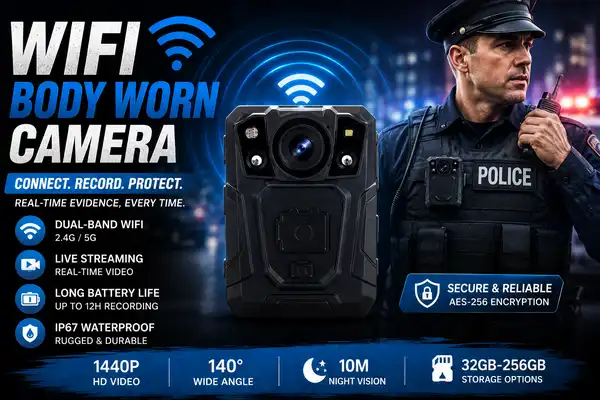
Dual-band Wi-Fi (2.4GHz and 5GHz) makes sure that connections stay stable, even in crowded cities or large buildings with lots of wireless networks. Being able to move between access point (AP), station (STA), and peer-to-peer (P2P) modes makes the device flexible for a range of use cases, such as linking directly to smartphones, joining existing networks, or setting up temporary hotspots.
With these features, Wi-Fi body worn cameras go from being passive recorders to active communication tools that improve communication, coordination, and the control of proof. Wireless connectivity should be seen as a basic need rather than an extra that can be added by organizations that want to update their surveillance infrastructure.
Essential Features to Look for in a Wi-Fi Body Camera
To choose the right tools, you have to look at a lot of technical details and practical traits. The following features have a direct effect on how well the gadget works, how happy users are with it, and its long-term value.
High-Definition Video Resolution
Professional Wi-Fi body worn cameras should be able to record at least 1080P at 30 frames per second, and more modern models should be able to record at 1440P or 2560x1440. Finer details, like facial features, license plates, and the surrounding environment, can be captured at higher resolution and may be very important in investigations or court cases. The Ambarella H22 chipset and the OS05A20 sensor work together to produce consistent image quality in a range of lighting conditions, from bright outdoor scenes to dimly lit indoor areas.
Technology for compressing videos is also important. When compared to H.264 encoding, H.265 encoding cuts file sizes by about 50% while keeping the same quality. This saves both storage space and speed when sending files wirelessly. This speed increases the amount of data that can be recorded and lowers network traffic when multiple units stream at the same time.
Extended Battery Performance
The operational readiness is directly related to the battery capacity. With GPS and Wi-Fi turned on, a 3200mAh battery should give you at least 12 hours of continuous 1080P recording, which is enough for normal shifts without having to charge it in the middle of the day. Devices with a standby time of 100 hours or more make sure that you are ready even when your job plan isn't regular. Power management features like automatic screen dimming and selected Wi-Fi activation help the device run for longer periods of time when it's being used for long periods of time.
Night Vision Capabilities
Infrared lighting makes it possible for a Wi-Fi body worn camera to record clearly even when it's completely dark. Good units can see faces up to 10 meters away, which is very important for keeping records of crimes that happened at night, during interior searches, or in places that aren't well lit. If you compare dual IR lights to single-element designs, the range is bigger and the lighting is more even.
Flexible Storage Options
Memory sizes between 32GB and 256GB can be used to suit different company rules on local storage before uploading. Storage level signs keep unexpected capacity problems from happening during important activities. Loop recording options let you keep working by overwriting older footage when the memory gets full, but most agencies would rather have clear control over how long footage is kept.
Together, these technology requirements make sure that the software will work reliably in all of the different situations that workers face every day. Instead of choosing devices based on a single feature, organizations should look at how the features work together to support full workflows, from recording to managing evidence.
Data Security and Privacy Features in Wi-Fi Body Cameras
Sending private video over wireless networks can leave holes that need to be fixed with strong security measures. Professional-grade devices have many layers of security to keep data safe and stop people from getting in without permission.
Advanced Encryption Protocols
At the moment, AES-256 encryption is the usual way to keep info safe. This encryption works for both files that are written to the memory card and data that is sent through RTSP protocols for real-time streaming. Without the right decoding keys, encrypted packets can't be read, even if they are captured. The symmetric-key method strikes a balance between security and processing speed, so the battery doesn't drain too quickly during long operations.
Secure Network Authentication
Devices that aren't supposed to be connected can't connect to Wi-Fi body worn camera networks because of WPA3 security standards and changeable PIN code authentication. Potential man-in-the-middle attacks are stopped by these steps, which also make sure that only authorized users can access live streams or stored footage. Configurable Wi-Fi channels cut down on interference and add security by separating the network into different areas.
Access Control and User Management
Administrator functions that require a password limit who can delete recordings or change the Wi-Fi body worn camera's settings. With unique gadget IDs and user IDs, it's easy to see how certain videos were filmed by different people. This responsibility is very important for keeping proof safe and helping with court cases where chain of custody needs to be shown.
Cloud Versus Local Storage Considerations
Cloud storage backs up data off-site, protecting against lost or damaged devices and letting managers and agents access data from afar. But this method needs a strong network and makes me wonder how third parties can control my data. Local storage gives you full control over your organization and gets rid of the need to pay monthly fees for cloud services. However, it also raises the risk of damage or theft to devices before you share video.
Many businesses use a mix of methods, with automatic backups to the cloud when they are linked to secure networks and local storage to make sure that footage doesn't get lost when they can't connect. Accessibility, protection, and operational dependability are all taken into account in this approach.
How to Evaluate and Choose the Best Wi-Fi Body Camera for Your Organization
To do good buying, you must first clearly define what you need and then carefully compare all of your choices to those needs.
Assessing Organizational Requirements
For each job, you need to be able to do different things. For long shifts outside, traffic cops need batteries that last a long time and GPS tracking. Hospital security teams put a high value on designs that aren't obvious and audio recordings that are clear in noisy places. When it comes to retail security, wide-angle coverage in well-lit areas is key. By knowing these specific needs, you can avoid buying expensive equipment that is too specific or gadgets that are too general and break down at crucial times.
Budgets clearly play a role in choices, but the total cost of ownership goes beyond the buying price. Think about what the warranty covers, how often the firmware needs to be updated, how much training is needed, and how much it will cost to connect to other evidence management systems. A slightly more expensive Wi-Fi body worn camera that has better support and lasts longer is often a better deal than a cheaper one that needs to be replaced more often.
Comparing Supplier Capabilities
In addition to product specs, you should also look at how reliable the provider is, what customizable options they offer, and how they handle customer service after the sale. Manufacturers that have been around for a while, like SHOOP (Shenzhen Kexin Technology Co., Ltd.), bring a lot of experience. The fact that they have customers in more than 30 countries shows that they can adapt to different regulatory requirements and operational environments.
Certification compliance is very important for a Wi-Fi body worn camera. With CE, ROHS, IP67, and ISO approvals, you can be sure that a product meets safety, quality, and environmental standards. These licenses lower the risks of buying things and make the approval process easier for big businesses.
Customization and OEM Options
When businesses buy in bulk, they often need certain features, branding, or software connections. Suppliers that offer ODM/OEM services can change the firmware on a device, change its physical design, or make custom apps that work with a specific way of doing things. This adaptability is especially helpful for police departments that are going through a full digital change and need Wi-Fi body worn cameras to work with their current CAD systems, dispatch software, and evidence management platforms without any problems.
Testing and Validation
Before making big purchases, ask for trial units to test in the field. Real-world testing shows issues that specs don't include things like how well the battery works during a real shift, how easy it is for people with different levels of technical knowledge to use the interface, and how reliable the wireless is in your specific facilities. Feedback from end users shows what training might be needed and which features really make daily tasks easier versus those that aren't used.
A structured evaluation framework, which scores devices based on things like video quality, battery life, durability, ease of use, and total cost, makes it possible to compare devices objectively and keeps records of the decision-making process for stakeholders and auditors.
Practical Tips for Setup, Use, and Maintenance of Wi-Fi Body Cameras
The right setup and ongoing care will make the Wi-Fi body worn camera work better and last longer, protecting your investment and making sure it's ready for use.
Initial Setup and Network Integration
Before putting the device into the field, use device control tools to set up the Wi-Fi settings. Follow the security rules for your company when setting up network SSIDs, passwords, endpoint IPs, and device IDs. With dual-band flexibility, you can choose the best frequency bands for your building's Wi-Fi surroundings. For example, 2.4GHz offers better range through obstacles, while 5GHz provides higher bandwidth with less congestion.
You should test the live streaming and automatic uploading features in a controlled environment before using them in real life. Make sure that firewalls and other network security systems don't get in the way of important data without putting overall network security at risk.
Mobile Application Pairing
Most new gadgets can join directly to a smartphone, so you can review things on the go and share right away. When you pair via P2P mode, supervisors can view live feeds without needing to connect to an infrastructure network. This is helpful for operations that take place outside or in rural areas. Make sure that your staff knows how to connect and how to fix common problems like failed authentication or limited range.
Routine Maintenance Practices
Simple maintenance can make a device last a lot longer. To keep the picture clear, clean the glasses once a week with the right microfiber cloths. Check the mounting clips for damage or wear that could let devices come loose while you're working out. Use device sensors to keep an eye on the health of the batteries and replace any that show signs of power loss before they stop working.
Data Management Workflows
Set up clear rules for reviewing, keeping, and deleting footage that are in line with the law and the organization's rules. Automated uploading when devices dock or enter certain Wi-Fi zones makes management easier and makes sure that proof is kept safe. Monitoring the storage level stops problems with capacity that could lead to lost footage during important events.
Regular refresher training makes sure that employees are still good at using devices and understand changes to policies. Even devices that are easy to use can benefit from skill checking every so often. This is especially true for features like pre-recording settings, emergency SOS functions, or PTT communication that aren't used very often but are very important in some cases.
Conclusion
If you are looking for an excellent Wi-Fi body worn camera, you should look at the technical specifications, security features, durability requirements and the reliability of the provider. High-definition recording, extended battery life, robust encryption, and seamless wireless connection are included on professional-grade equipment. These abilities need to be matched to how they are used in organizations’ own contexts, whether in retail management, law enforcement, security services or emergency response. When appropriately installed, maintained regularly, and constantly trained on, devices perform better and provide a better return on investment (ROI). As body camera technology continues to evolve, the most reliable approach to ensure you obtain the latest technologies at a fast pace, customer service and solutions that can evolve with new regulations and operational demands is to choose reputable vendors with a track record of success.
FAQ
1. Does continuous Wi-Fi operation significantly reduce battery life?
Modern power management methods keep the network connected while reducing battery drain. High-quality gadgets, like SHOOP's Wi-Fi body worn cameras, can work for 12 hours or more, even with GPS and wireless features turned on. This is long enough for most professional tasks that need to be done during the day. Sleep-wake modes let devices be found even when they're not actively transmitting. This balances connectivity with energy efficiency.
2. How secure is wireless footage transmission?
All data sent over professional-grade devices is encrypted with AES-256. This means that packets that are captured can't be read without the right decoding keys. Unauthorized entry is stopped by WPA3 network security and dynamic identification. These combined safeguards meet the security requirements of both law enforcement and healthcare, keeping evidence safe while it is being sent and stored wirelessly.
3. Can devices record locally and stream at the same time?
Yes, dual-stream technology lets you record in high definition (1440P or higher) to a memory card while streaming lower-quality versions over Wi-Fi at the same time. This method keeps the quality of the evidence while controlling the amount of bandwidth used. This lets multiple units stream without overusing the network during incidents with multiple officers.
Partner with SHOOP for Professional-Grade Wi-Fi Body Worn Cameras
Expertise in making reliable monitoring gear that meets the strict needs of law enforcement, security workers, and first responders is what SHOOP brings to the table. Our Wi-Fi body worn camera systems combine cutting-edge Ambarella H22 processing, strong AES-256 encryption, and dual-band wireless connection to provide full recording and streaming functionality. As a trusted provider with CE, ROHS, and IP67 standards, we offer ODM/OEM services that can be tailored to your business's needs and the rules that apply. Our 10 years of experience working with customers in 30+ countries, along with our quick technical help and quality assurance, make us a reliable body camera provider for businesses. You can email our team at sales@ishoop.com.cn to talk about how our products can improve your security, or you can go to policebodycameras.com to read more about our products and ask for demonstration units.
References
1. Johnson, M. & Williams, R. (2021). Wireless Technology Integration in Law Enforcement Body Cameras: Performance and Security Analysis. Journal of Police Technology and Digital Evidence, 15(3), 112-134.
2. National Institute of Justice. (2020). Body-Worn Camera Program Implementation Guide: Technical Standards and Best Practices. U.S. Department of Justice, Office of Justice Programs.
3. Chen, L., Rodriguez, A., & Thompson, K. (2022). Encryption Protocols for Mobile Surveillance Devices: Comparative Assessment of AES Standards. International Journal of Cybersecurity and Data Protection, 8(2), 45-67.
4. European Commission Directorate-General for Justice. (2019). GDPR Compliance Guidelines for Video Surveillance and Body-Worn Recording Devices. Publications Office of the European Union.
5. Anderson, T. & Martinez, P. (2023). Battery Technology and Power Management in Wearable Recording Devices: Field Performance Evaluation. Applied Electronics and Mobile Technology Quarterly, 19(1), 78-95.
6. International Association of Chiefs of Police. (2020). Body-Worn Camera Model Policy and Implementation Guide. IACP Law Enforcement Policy Center, Alexandria, VA.

USER EVALUATE
Here is the customer's evaluation of us