



How to choose an evidence-gathering body camera for security professionals
Technical specifications, operational needs, and regulatory compliance criteria must be considered when choosing an evidence-gathering body camera for your security team. These wearable recording devices collect tamper-proof, high-fidelity forensic evidence that preserves chain of custody integrity, unlike consumer cameras. The correct body camera keeps patrol police, security guards, traffic enforcement teams, firemen, and emergency medical staff accountable and protects the public. This thorough guide covers video quality, encryption techniques, battery endurance, and real-world durability to help you choose devices that improve transparency and function well in challenging operating conditions.
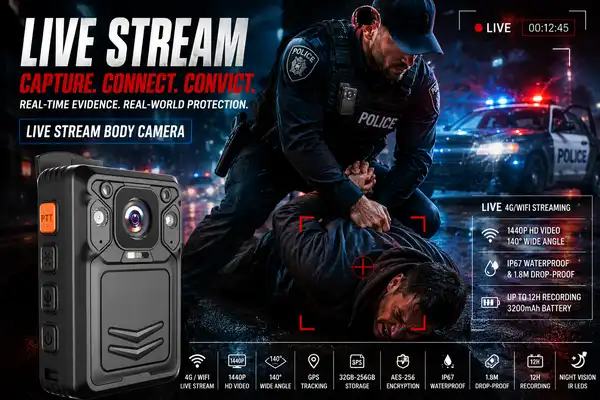
Understanding Evidence-Gathering Body Cameras: Definition and Functionality
What Sets Body-Worn Cameras Apart from Traditional Surveillance
Body-worn recording devices are different from fixed CCTV systems or dash cameras that are mounted on cars. Stationary surveillance watches over certain areas, but wearable cameras follow people around and record first-person views during interactions that are always changing. This ability to move around is very useful for foot pursuits, building searches, and medical emergencies where fixed cameras can't follow. The human-centered view adds context that aerial surveillance lacks, recording not only what happened but also how things went from the point of view of the police officer or security guard.
Core Recording Technologies and Data Storage Methods
Modern evidence-gathering body camera gadgets use advanced sensor technology to record audio and video data that is in sync. When used with processors like the Ambarella H22 chipset, the OV05A20 camera produces clear images even when lighting is poor. Recording can happen continuously or when an event happens. Some systems have pre-recording gaps that record 30 to 60 seconds before the record button is pressed, making sure that important lead-up moments aren't missed. The internal memory cards can hold anywhere from 32GB to 256GB of data, so you can record for longer periods of time. The H.264 and H.265 video compression codecs reduce the size of files without lowering the quality. This means that you can store more videos per gigabyte.
Legal Frameworks and Chain of Custody Requirements
Recorded evidence has to meet strict rules before it can be used in court. Different places have different privacy rules. For example, some states need two people to agree to record a voice message, while others only need one person to be notified. Data protection laws require that personally identifiable information that is recorded be handled safely. AES-256 encryption methods use fixed-length data blocks that are changed by substitution and permutation processes to keep files safe from people who shouldn't be able to see or change them. The data is encrypted and decrypted using the same symmetric key, which makes sure that only authorized people can see the footage. With the right paperwork, you can keep track of every time a file is transferred, making sure that the evidence stays valid from the time it is captured until it is presented in court.
Key Features and Technologies to Evaluate When Choosing a Body Camera
Video Resolution and Low-Light Performance
How useful recorded proof is for investigations or trials depends on how clear the images are. Resolution standards range from 720P to 4K, but 1440P is the best compromise between quality and file size. With 1440P quality and 30 frames per second, the ISHOOP body camera can clearly record details of faces, license plates, and the surroundings. Wide Dynamic Range sensors can handle scenes with a lot of contrast, like going from a bright outdoor area to a dark building interior, without losing detail in the shadows or washing out the highlights. The infrared LED feature makes recording possible in almost total darkness, which is important for overnight jobs or places with bad lighting. A 140-degree field of view is about the same as human peripheral vision, so it can show what's going on around the main subject without distorting it.
Battery Capacity and Operational Endurance
Losing power in the middle of a shift leaves dangerous gaps in the documentation, especially for an evidence-gathering body camera. Professional-grade gear needs batteries that can last for 10 to 12 hours of recording without needing to be charged again. The 3200mAh lithium-ion battery in good units lets you record in 1080P for up to 12 hours or 480P for up to 15 hours. At lower quality settings, you can expect about 12.5 hours of tracking with GPS and WiFi on. When standby time is more than 100 hours, gadgets can stay charged for several days without running out of power. Quick charging—full charging in about 4 hours—cuts down on downtime between jobs. Smart power management turns screens down or puts them into low-power modes when they're not being used, which increases the amount of time that can be recorded.
Connectivity Options and Evidence Management Integration
When body cameras are connected wirelessly, they go from being simple recorders to real-time contact tools. WiFi devices that work with both 2.4GHz and 5GHz bands let you connect to a local network, and 4G LTE support, which is optional, lets you watch over-the-air from far away. Live video transmission lets command centers keep an eye on what's happening and plan responses based on what's really happening on the ground. GPS tracking shows where officers are, adding geographic information to recordings so that the route can be played back during the investigation. Bluetooth lets remote controllers and accessories work with each other. Compatible with evidence management software makes it easier to add data, tag it automatically, store it securely, and get it back. This gets rid of the need to move files by hand and makes administration easier.
Matching Body Camera Solutions to Security Professional Needs
Operational Context Determines Feature Priorities
Patrol officers in law enforcement agencies gain most from longer battery life, better performance in low light, and strong impact resistance during foot chases and physical altercations. For recording accident scenes and roadside stops in all kinds of weather, traffic cops put weatherproofing and GPS accuracy at the top of their list of priorities. Private security guards who work on business properties need devices that can record clear audio of speaking arguments and threats against trespassing. To record relief operations in smoke-filled rooms, firefighters need cameras that can handle high temperatures and have wide viewing views. Emergency medical workers like small designs that don't get in the way of caring for patients while they record permission and treatment processes. Retail loss prevention teams can catch theft attempts without looking like they are trying to be rude with discreet form factors and continuous recording modes.
Budget Considerations and Return on Investment
The initial buying price is only one part of the total costs of owning an evidence-gathering body camera. Think about how much it costs to store and manage all of your videos: local computer hardware versus cloud subscription models. Think about the licensing for evidence management software, like whether it's a one-time fee or a monthly fee. Include the cost of training to make sure that employees know how to use devices correctly and follow instructions. Long-term costs are affected by warranty coverage and the availability of expert help when repairs or replacements are needed. Quality devices lower liability risks by giving clear evidence during contested events, which could lower insurance costs. Better accountability and openness can cut down on the costs of investigating complaints and going to court, providing real benefits above and beyond basic daily functionality.
Decision Framework for Procurement Managers
First, use real-world examples to figure out what features are must-haves and what features are nice to haves. The quality of the video should meet the standards for evidence in your area; 1440P resolution usually meets all legal needs. The battery's size should be enough to cover your longest normal shift plus a little extra. Ratings for durability should match the extremes of the environment that are encountered during operations. Check your team's connectivity needs—does it need real-time streaming, or is post-shift upload enough? Analyze how much storage space is needed based on the amount of data being stored and the retention policies. Compare the guarantee terms and how quickly different makers respond to customer service requests. Check to see if the certifications are being followed. Standards like CE, ROHS, IP67, IK09, and ISO show that the production process is good. Ask for demonstration units to be tested in the field before making large purchases. This way, end users can see how well the ergonomics and functionality work in real-life working conditions.
Comparing Top Evidence-Gathering Body Cameras in 2026
Leading Manufacturers and Model Specifications
In the market for body-worn cameras, both well-known brands and new companies are competing on how well their technology works and how reliable it is. Axon offers full ecosystem integration with evidence management tools that are widely used by police forces in North America. Motorola Solutions uses its knowledge of telecommunications to provide strong wireless connectivity. Panasonic focuses on making products that are tough and can be used in industrial and public safety settings. In this very competitive market, SHOOP has set itself apart by focusing on what it does best and offering solutions that can be changed to fit different protection situations. Our ISHOOP body camera has a 1440P resolution, is waterproof up to IP67, can withstand a 2-meter drop, and can store anything from 32GB to 256GB. The Ambarella H22 chipset offers stable performance and effective H.265 encoding that makes the most of storage space while keeping forensic-quality video.
Certification Standards and Quality Assurance
When you buy an evidence-gathering body camera professionally, you have to make sure that it meets quality standards. When something has CE approval, it means that it meets safety standards and is compatible with electromagnetic fields in European economic areas. The IP67 grade for ingress protection goes through standard testing procedures that prove promises of dust and water resistance. IK09 impact scores prove that a machine is strong enough to withstand hard hits. Getting ISO quality management certification shows that a company is dedicated to consistent production processes and constant improvement. These certificates aren't just marketing gimmicks; they're proof that the products work as claimed and are made well by a third party. Before sending any ISHOOP devices out to customers around the world, Shenzhen Kexin Technology makes sure they are made in a dust-free setting and follow strict quality control procedures. The 18-month warranty time is longer than the norm in the business and shows that the company is confident in its long-term dependability.
Real-World Performance and User Testimonials
Details are less important than how well something works in the field when it's under stress. Law enforcement agencies in 30 countries use ISHOOP cameras for daily patrols, high-risk warrant service, and interactions with the public. Security teams that watch over transportation hubs say that devices can handle constant movement, changing temperatures, and small bumps without breaking. In rain, snow, and very hot weather, traffic cops catch consistently high-quality audio during accident investigations and police stops. These validations from real life are more important than lab tests because they show that devices work reliably when jobs and safety rely on correct paperwork. In user feedback, the easy-to-use interface, comfortable wearing ergonomics, and clear recorded sounds are constantly praised as the practical details that separate good tools from great solutions.
Procurement Best Practices and Where to Buy Certified Body Cameras
Sourcing Through Authorized Channels
When making a purchase choice, reliability should come before the lowest starting cost. Authorized distributors and direct relationships with manufacturers make sure that the products they sell are real and come with valid warranties and technical support. Third-party resellers sometimes have good deals, but the units they sell may be used, imported from the gray market, or fakes that don't have the right certifications. Working directly with manufacturers like Shenzhen Kexin Technology gives you access to ODM and OEM customization services, which let you change specifications to fit your specific needs. Established companies keep spare parts on hand and offer software updates for as long as a gadget is in use. This continuity in the relationship is very helpful when expanding deployments or looking for ways to make them work with new evidence management platforms.
Negotiating Volume Purchases and Support Agreements
Municipalities and businesses with security offices that put cameras in more than one place can save money by buying in bulk and getting a full range of services, especially for the evidence-gathering body camera. When negotiating a bulk buy, you should talk about unit prices, training requirements, software licensing for proof management, and longer warranty terms. Service level agreements that spell out when technical help will respond and what replacement devices will be available while fixes are being done protect against interruptions in operations. Some companies let you trade in old equipment to get money off of new equipment as technology improves. Costs can be spread out over a longer period of time with flexible payment terms and multi-year buying contracts. Talk about the options for customization, such as custom firmware configurations, agency-specific mounting hardware, or pre-programmed operational settings that make deployment easier and make sure that everyone uses the device the same way.
Post-Purchase Support and Lifecycle Management
The purchase of a device is not the end of a seller relationship, but the start of one. As part of comprehensive help, you will receive basic training on how to operate, maintain, and create policies. Technical support can help you fix problems with connectivity, improve the way you manage evidence, and fix firmware conflicts. Regular software changes fix security holes, add new features, and keep programs compatible with new versions of operating systems. Manufacturers should make it clear how to get help when you need it right away and make sure they have enough service capacity during warranty periods. As devices get close to the end of their useful life, responsible providers offer help with moving data, advice on how to properly dispose of devices in a way that doesn't harm the environment, and upgrade paths that protect current infrastructure investments. With these continued services, buying a camera goes from being a one-time thing to a strategic relationship that helps mission-critical operations run smoothly.
Conclusion
The ideal body-worn recording choice depends on technology, company demands, budget, and regulatory restrictions. Choose devices with crisp 1440P video, IP67 weatherproofing, full-shift batteries, and chain-of-custody encryption. Along with physical specifications, consider the manufacturer's reputation, accreditation, and after-sales assistance. The correct evidence-gathering body camera promotes accountability, protects workers from false allegations, provides incident review training, and builds public confidence via operational openness. This guide helps procurement managers choose solutions that will protect people and property for years by learning about core technologies, matching features to field needs, comparing certified options, and building strong vendor relationships.
FAQ
1. How long do body camera batteries typically last during active recording?
The battery life depends on the resolution settings, how often you use wireless connectivity, and the weather. Professional-grade devices with 3200mAh batteries can record continuously at 1080P for 10 to 12 hours or up to 15 hours at 480P. When GPS tracking and WiFi are turned on at the same time, the runtime is slightly cut down to about 12.5 hours. When looking at the specs, make sure that the makers say the performance will be best in a lab or in the real world, with normal feature use during operations.
2. What legal restrictions affect body camera usage in different jurisdictions?
Laws about recording are very different in different states and countries. Some places need permission from both people involved in a talk before it can be recorded, while others only need one person to be aware that the conversation is being recorded. People have different ideas about privacy in public places compared to their own homes. Law enforcement and private security guards usually work to different sets of rules. Talk to a lawyer who knows the local laws and the most recent court decisions that explain how to use a recording device. A lot of government agencies make clear rules about when to record, how long to keep video, and who can see saved proof.
3. How do modern cameras prevent footage tampering or unauthorized deletion?
Professional devices have multiple layers of protection to protect the accuracy of the data. Wearers can't delete files locally because the storage systems are locked. Only authorized workers using evidence management software and safe authentication can handle recordings. Using AES-256 encryption when writing a file makes it possible to find changes that were not made by the owner. Digital signatures and hash values give each file a unique identifier that shows if it has been changed. Audit logs that can't be changed keep track of every access attempt and record who viewed footage and when. These technical safeguards keep up the chain of custody standards needed for legal entry.
Partner with SHOOP for Professional-Grade Recording Solutions
Are you ready to improve accountability and the quality of your evidence across all of your security operations? Its main business is making certified body-worn cameras that are used by police, private security companies, and emergency services in over 30 countries. We are an experienced supplier of evidence-gathering body cameras. Our products have advanced 1440P recording technology, military-grade IP67 durability, and the ability to be customized in a number of ways to meet a wide range of operational needs. Our ISHOOP devices have 18-month warranties and quick technical help. They have 12-hour battery life, safe AES-256 encryption, and seamless evidence management integration. You can talk to our team at sales@ishoop.com.cn about your specific needs, ask for demo units, or look into volume pricing for deployments across departments. We offer full ODM/OEM services that let you change any feature to fit your exact needs. This makes sure that the solutions we provide are great for the field and meet all legal requirements.
References
1. International Association of Chiefs of Police. (2020). Body-Worn Camera Model Policy. Alexandria: IACP Law Enforcement Policy Center.
2. Miller, L., Toliver, J., & Police Executive Research Forum. (2019). Implementing a Body-Worn Camera Program: Recommendations and Lessons Learned. Washington: Office of Community Oriented Policing Services.
3. White, M.D. & Fradella, H.F. (2021). Stop and Frisk: The Use and Abuse of a Controversial Policing Tactic. New York: NYU Press.
4. Bureau of Justice Assistance. (2018). Body-Worn Camera Toolkit: Planning for Implementation. Washington: U.S. Department of Justice.
5. Goodison, S.E., Davis, R.C., & Jackson, B.A. (2019). Digital Evidence and the U.S. Criminal Justice System. Santa Monica: RAND Corporation.
6. National Institute of Standards and Technology. (2022). Digital Evidence and Forensics: Video Quality Standards for Law Enforcement Applications. Gaithersburg: NIST Special Publication Series.

USER EVALUATE
Here is the customer's evaluation of us