



Wearable Body Camera OEM: Benefits, Features, and Supplier Tips
If your business is in need of a trustworthy wearable body camera solution, knowing the OEM environment will be vital to make educated purchase choices. These little, professional-grade gadgets are digital witnesses for law enforcement, security, fire fighters, medical teams and retail workers throughout the United States. By working with a qualified OEM supplier like SHOOP you are guarantyd of tailored solutions that fit your operating needs and are manufactured to strict quality standards including CE, ROHS, IP67, IK09 and ISO certifications. This article takes you thru the key advantages, technical features and supplier selection criteria to assist your company make a soundly based investment in body-worn camera equipment.
Understanding Wearable Body Cameras: Key Benefits and Features
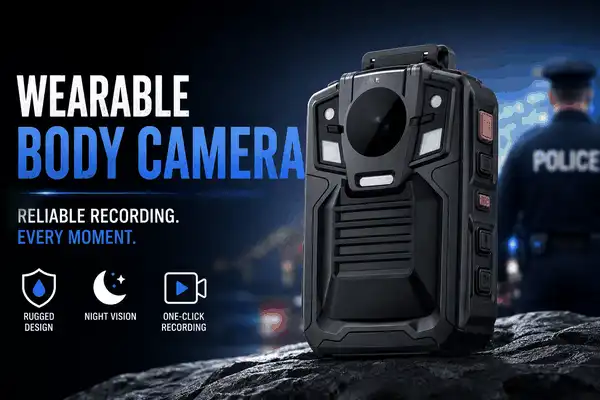
Wearable body cameras are more than just recording devices; they protect both the people who work directly with the public and the people who work in areas where they work. The technology solves a fundamental problem: it makes it possible to keep an objective, unchangeable record of interactions that could otherwise lead to "he said, she said" arguments. This feature is very useful in many areas, from police offices keeping records of traffic stops to hospital security teams handling fights between patients.
Enhanced Transparency and Accountability
Modern wearable body cameras record very clear footage that helps the public trust law enforcement and keeps officers from being falsely accused. Our police model ISHOOP wearable body camera records video at up to 2560x1080P30 quality, which means that license plates and faces can still be seen even in bad lighting. Embedded watermark technology adds a User ID and date/time to every video frame instantly. This keeps up the chain of custody standards needed for legal procedures. With this feature, there are no more doubts about when or who recorded the video. This makes it solid proof that courts and review boards can trust.
Extended Battery Performance for Full Shifts
Those who labour on the front lines work long hours, and their tools must be able to do so. Two 1950mAh batteries in professional machines allow for continuous recording for around eight hours, which is enough to cover a whole shift without interruption. This additional power means police officers coming to the rescue in situations or security guards working the nightly shift will not have to worry about batteries failing at critical moments. It's compact (84x54x29mm) and light (165 grams), so it's simple to wear all day without feeling heavy.
Intelligent Pre-Recording and Post-Recording Functions
In the field, it's easy to make mistakes, and if you miss the initial few seconds of anything, your video may not be any use as evidence at all. It has a pre-record function that captures footage for the 30 seconds before you push the record button. This ensures you never lose the context. The 300-second post-recording feature also continues to capture video after you select “stop,” so you may preserve a record of how events were handled. These intelligent features understand that pushing buttons isn’t always in harmony with life, so they include a time lag that captures the whole tale.
Superior Night Vision Capabilities
About 40% of interactions between police and security incidents happen at night or when there isn't much light. The two infrared LEDs give you clear night vision up to 10 meters away, and the IR-cut filter adjusts itself automatically for the best performance whether you're working day or night shifts. The 33MP CMOS sensor keeps the picture quality even when lighting is bad, so it can recognize faces and record details that regular cameras miss. This better visibility helps both officers on overnight patrols and emergency workers going into dark buildings. It also improves the quality of the records.
Wearable Body Cameras vs. Traditional Body Cameras: Making the Right Choice
The change from old-fashioned wearable body cameras to newer ones shows how far technology has come. Older models often had big bodies, short battery lives, and simple recording features that weren't up to par with modern needs. Today's gadgets are made with ergonomics in mind and have advanced features that help security and law enforcement workers deal with real-world problems.
Ergonomic Design and Mounting Flexibility
Modern models use high-quality metal clips that can rotate 360 degrees. This lets workers change where the camera is placed for the best field of view without having to change their uniform. The light weight makes it easier to wear for long periods of time, and the different mounting choices, such as shoulder, chest, and helmet attachments, make it easy to fit different uniforms and tactical tastes. In the past, cameras often forced users to stay in one position while mounting them, which could lead to blind spots or an uncomfortable distribution of weight that modern designs have fixed.
Advanced Video Resolution and Storage Capacity
In earlier camera generations, users had to choose between video quality and recording time for their wearable body camera because of limited storage space. Modern units have storage options ranging from 32GB to 128GB, so they can hold multiple jobs of HD footage without having to release data all the time. The H.264 MPEG4 video format efficiently reduces file size without losing quality. It also offers multiple resolution options, such as 1920x1080P30 and 2560x1080P30, so organizations can find the best balance between quality and storage needs based on the application.
Integrated Communication Features
In professional settings, people in the field and people in command centers often need to work together. With PTT (Push-To-Talk) connection, wearable body cameras can talk to different kinds of radios, making contact channels that work well together without the need for extra devices. The speaker and microphone built into the camera record high-quality sound and allow two-way communication. This turns the camera from a passive recording device into an active communication hub that improves situational awareness and response coordination.
How to Choose a Wearable Body Camera OEM Supplier: Criteria and Best Practices
Choosing the right manufacturing partner will determine whether your camera investment is worth it in the long run or becomes a pain to use. The relationship with the OEM supplier goes beyond the initial purchase. It includes ongoing technical support, the ability to get replacement parts, firmware updates, and the chance to make changes as your needs change.
Verify Technical Expertise and Production Capacity
OEM providers with a good reputation have research and development teams that are always coming up with new ideas. Shenzhen Kexin Technology Co., Ltd. started SHOOP in 2015. It has over ten years of experience in digital image and ISO-certified, dust-free production facilities. This manufacturing environment makes sure that the quality stays the same whether you order 50 or 5,000 units. Ask possible providers about the chipsets they offer. Professional cameras use processors like the Ambarella A7L50 that work well even in tough conditions, instead of consumer-grade parts that break down in the field.
Assess Quality Certifications and Compliance Standards
Wearable body cameras work in tough conditions and have to handle drops, weather, and everyday wear and tear that would break most consumer gadgets. The IP67 rating for waterproofing makes sure that devices will still work after being exposed to rain or getting submerged in water by mistake. The IK09 rating for impact resistance makes sure that the housing can handle drops and crashes that happen on the job. In addition to making sure the products are durable, make sure the suppliers have CE and ROHS certifications that show they follow international safety and environmental rules. These certifications are more than just pieces of paper; they show that the manufacturing process meets established quality standards.
Evaluate Customization Capabilities and ODM Services
Every business has its own specific operational needs that may not be fully met by off-the-shelf solutions. Strong OEM partners let you change things like the amount of storage space, the ability to connect to Wi-Fi, the GPS, and even the mounting hardware so that it fits certain types of uniforms or car setups. A basic product can be turned into a custom-built solution by adding custom watermarks, changing the length of pre-recordings, or connecting to other evidence management systems. Original Design Manufacturing (ODM) suppliers can make completely new camera models based on your specifications. This gives you a competitive edge by giving you features that no one else has.
Procurement Tips: How to Buy Wearable Body Cameras Online and in Bulk
Strategic procurement strikes a balance between short-term budget constraints and the total cost of ownership over the long term. If you know your whole financial picture, you can avoid situations where low initial purchase prices lead to expensive surprises like hidden costs, accessories that don't work with the device, or devices that break down early and need to be replaced.
Calculate Total Cost of Ownership Beyond Purchase Price
The price of the camera is only one part of your total expense. Accessories like vehicle mounts (for police car recording), multi-camera charging docks, spare batteries, and software licenses for evidence management should also be taken into account. Subscriptions to cloud storage for automatic backups of video can add a lot to the ongoing costs, so for big deployments, it's cheaper to use local storage. Ask for detailed quotes that list all the parts that are needed for the full functionality, then figure out how much each device will cost over its expected lifespan, which is usually between 3 and 5 years for professional cameras. This test often shows that mid-range cameras with cheaper add-ons are a better deal than cheap models that need pricey unique add-ons.
Negotiate Volume Discounts and Customization Options
Bulk purchases give you more power to negotiate prices and make requests for customizations for your wearable body camera that might be too expensive for small orders. Suppliers usually use tiered pricing, which means that the price per unit goes down a lot as you buy more, like 100, 500, or 1,000 units. More than just lower prices, bulk orders are a good reason to spend money on customizations like pre-set watermark templates, custom firmware with features that are specific to the agency, or branded packaging. Having a partnership mindset instead of a transactional one can lead to better payment terms, pilot programs for trying new features, and early access to next-generation models while they are still being developed.
Ensure Integration with Existing Infrastructure
Cameras shouldn't create separate data silos; they should work with your overall security and IT system. Check to see if the video formats from your camera (H.264 MPEG4 is widely supported) work with your evidence management system or software for analyzing videos. While USB 2.0 and HDMI 1.3 make it easy to move data and play videos, you might want to think about whether Wi-Fi or cellular connection would work better for your business. Organizations that already have radio communication systems should make sure that the PTT wire will work with those systems so that they don't run into problems when they try to integrate the new system. Before committing to full-scale deployment, ask for sample units to test in your real operational environment.
Review Accessory Packages and Expansion Options
USB cords, chargers, mounting hardware, and thorough user guides should all come in standard accessory packages. Optional parts like shoulder lights (improve police sight and safety), remote controls (for discreet operation), and tiny cameras (for specific views) make the device more useful without having to buy a whole new one. Docking stations for multiple cameras that can charge and download data from ten units at once make administrative tasks easier for bigger teams. Suppliers that offer complete ecosystems of accessories show that they are committed to supporting the whole lifecycle of a device, not just the sale.
Future Trends and Innovations in Wearable Body Camera Technology
As artificial intelligence, better sensors, and faster connections change what wearable body cameras can do, the market for them is also changing quickly. When companies are making strategic investments, they should think about not only what their current systems can do, but also how new technologies will change organizational needs and the lifespan of their devices over the next few years.
AI-Powered Incident Detection and Analytics
Wearable body cameras go from being inactive recorders to active safety monitors with the help of AI. New systems look at video feeds in real time and automatically find possible threats, such as people drawing their weapons, raising their voices to show that a fight is getting worse, or making sudden movements that could mean a fight. When things get dangerous, these smart alerts let supervisors step in and send out backups more quickly. Post-incident analytics can find training opportunities by pointing out communication trends or tactical approaches that are linked to good or bad outcomes. This creates data-driven growth paths that manual video review couldn't study on a large scale.
Enhanced Connectivity Through 5G Networks
With next-generation wireless connection, you can do things that you couldn't do with older technology. Real-time video streaming from multiple officers to command centers lets bosses see what's going on right away during live events. This helps them better allocate resources and give tactical advice. Cloud-based evidence management with automatic wireless upload gets rid of the need to manually send data, and it also makes sure that video is kept even if a camera is lost or broken. 5G networks have low latency, which makes "see-what-I-see" cooperation possible for specific scenarios that need expert input from people who are not on-site.
Privacy-Focused Features and Encryption
More people are buying cameras with advanced data protection features because they are worried about their privacy. Unauthorized people can't see the footage because it's encrypted at the hardware level with AES-256, and only authorized people can delete recordings using the right evidence management systems because the administrator controls the passwords. Automatic facial blurring technology can protect the privacy of bystanders in public recordings while keeping the primary subjects' evidence value high. With geofencing, recording can be stopped immediately in sensitive areas like hospitals or schools where it's not allowed. This shows respect for privacy while still holding people accountable in the right situations.
Conclusion
Picking the right OEM partner for a wearable body camera is a long-term decision that will affect officer safety, the organization's liability, and the public's trust for years to come. The combination of tried-and-true technical specs, like better night vision, longer battery life, and smart recording features, with dependable supplier traits, like the ability to customize and full support, makes for a solid base for long-term deployment. When buying things for police, security teams, first responders, or store employees, it's important to know all the benefits, technical details, and criteria used to judge suppliers. This will help you make smart purchasing decisions. The market for wearable body cameras keeps growing thanks to AI integration and better connectivity. To stay ahead of the competition as technology changes, it's important to work with innovative manufacturers.
FAQ
1. How does waterproof rating affect camera reliability?
With the IP67 rating, devices can handle being covered in dust and water up to 1 meter deep for 30 minutes. This protection makes sure that cameras work properly even if they get wet or fall into a puddle by chance, which can happen during outdoor patrols or emergency reactions. Without proper waterproofing, internal parts rust quickly, which causes devices to break down and makes it harder to get evidence at crucial moments.
2. Can users delete recorded footage?
Professional cameras use password protection that is controlled by an administrator so that users in the field can't delete recordings. Keeping the chain of custody standards necessary for legal proceedings means that only authorized personnel with access to the right evidence management software can delete footage. This security feature stops both accidental removals and deliberate changes to proof.
3. What storage capacity suits different deployment scales?
Smaller police departments with 10 to 20 cops usually find that 64GB is enough to store several days' worth of footage before they need to share the data. Larger departments or groups with few IT resources can benefit from 128GB or 256GB storage, which increases the amount of time they have to wait before they have to send data. Figure out how many you need based on how many cops work each shift, how long sessions are usually recorded, and how often you need to handle evidence.
Partner with SHOOP for Customized Body Camera Solutions
Your company should have wearable body camera technology that fits its specific needs instead of having to change how things are done to work with general equipment that doesn't work well with them. As a well-known company that makes wearable body cameras, SHOOP offers a wide range of customization options and strict quality controls. Since 2015, they have helped law enforcement and security professionals in more than 30 countries. Our ODM/OEM services turn your special needs into products that are ready for production and have CE, ROHS, IP67, IK09, and ISO certifications. Whether you're looking for a test program or a full-scale rollout, our engineering team can help with technical questions and make sure that the new system works well with the ones you already have. Get in touch with our experts at sales@ishoop.com.cn to talk about big discounts, customization options, and how our years of experience in production can help you get professional-grade gear that your teams can depend on when it matters most.
References
1. International Association of Chiefs of Police. (2020). Body-Worn Camera Model Policy. Alexandria, VA: IACP Law Enforcement Policy Center.
2. Miller, L., Toliver, J., & Police Executive Research Forum. (2014). Implementing a Body-Worn Camera Program: Recommendations and Lessons Learned. Washington, DC: Office of Community Oriented Policing Services.
3. National Institute of Justice. (2019). Body-Worn Camera Program Evaluation: Technical Specifications and Market Survey Findings. Washington, DC: U.S. Department of Justice.
4. Peterson, B. E., Yu, L., La Vigne, N., & Hickman, D. (2018). The Role of Body-Worn Cameras in Law Enforcement Accountability and Transparency. Journal of Police and Criminal Psychology, 33(4), 394-409.
5. White, M. D., & Coldren, J. R. (2017). Body-Worn Police Cameras: Separating Fact from Fiction. PM Magazine: Public Management, 99(6), 18-21.
6. Yokum, D., Ravishankar, A., & Coppock, A. (2019). Evaluating the Effects of Police Body-Worn Cameras: A Randomized Controlled Trial. Washington, DC: Lab @ DC, Executive Office of the Mayor.

USER EVALUATE
Here is the customer's evaluation of us