



Police Body Camera for Patrol Officers: Features to Consider Before Buying
When evaluating a body camera for patrol officers, the priority should always be reliability during critical incidents. Modern law enforcement agencies require recording systems that deliver court-admissible evidence while withstanding the physical demands of daily patrol work. These wearable devices have evolved from optional accessories to essential tools that protect both officers and the public through transparent documentation. The right camera choice depends on understanding your department's operational environment, budget constraints, and technical requirements that ensure footage integrity when it matters most.
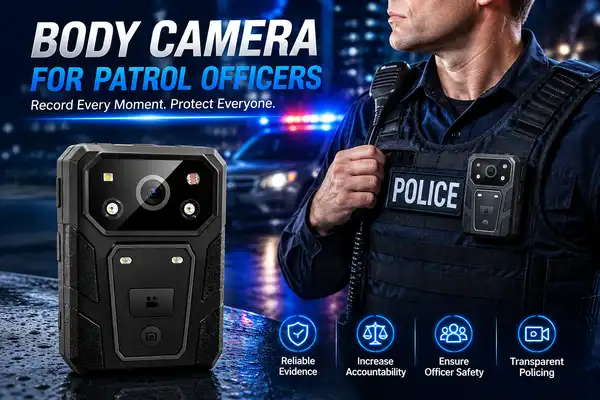
Understanding Patrol Officer Body Cameras: Basics and Benefits
Body-worn cameras record audio and video of interactions between police and the public from the officer's point of view. Unlike dashboard cams that are set in cars, these portable systems can go with people through buildings, alleys, and other places where accidents are likely to happen.
What Makes Body-Worn Cameras Essential
The fact that these gadgets make police more accountable has changed how police work today. Police departments say that complaints about cops that aren't true have gone down a lot—often by 60 to 70% after the program was put in place. This protects both officers and the public: the public gets proof of professional behavior, and officers get safety against fake charges.
Legal Compliance Requirements
Most places now require people to use body cameras according to certain rules. All recorded data must be encrypted with AES-256 according to federal rules enforced by the Criminal Justice Information Services (CJIS). There are big differences between state laws. For example, California's AB 748 sets deadlines for public release, while Texas's Government Code 1701.655 sets deadlines for retention. To avoid costly compliance failures, your decision about what to buy must be in line with these rules.
Operational Benefits Beyond Accountability
When cameras record events in real time, the quality of the evidence is much better. Prosecutors say that body camera footage helps them get more convictions, especially in cases of domestic violence and DUI, where witness accounts are often not reliable. The devices are also used for training, as they let supervisors practice de-escalation techniques and making tactical decisions in real-life situations.
Essential Features to Evaluate Before Purchasing Patrol Body Cameras
To choose the right recording system, you need to match the technology requirements with how your group usually works. Every office has different needs when it comes to high-end cameras.
Video and Audio Quality That Stands Up in Court
Resolution tells you if a video can recognize faces, read license plates, or catch important details. The ISHOOP body camera has a quality of 1296P and a frame rate of 60fps, which is clear enough for trial presentations. The 140-degree wide-angle lens records the full context of fights by capturing action in the edges that regular cameras miss.
When it comes to court hearings, audio quality is often more important than television quality. Built-in microphones that are of high quality and use the AAC2/MP3 formats can clearly pick up verbal commands, Miranda warnings, and suspect statements, even in noisy places like traffic stops or events with a lot of people.
Battery Life for Extended Shifts
If a camera dies in the middle of a shift, it breaks the chain of evidence and puts departments at risk of being sued. The 3200mAh battery in the ISHOOP system lets you record continuously at 720p for up to 10 hours with the screen off. This capacity is enough for normal patrol shifts, so officers don't have to switch batteries or look for charging stations during important operations.
Low battery alerts that sound like beeps keep the body camera for patrol officers from shutting down without warning. When connected to external power banks, recording time is almost endless, which is very important for special operations, protests, or big incidents that need long-term responses.
Durability Standards for Field Conditions
In patrol environments, gear is exposed to snow, rain, high temperatures, and physical damage. The IP67 waterproof grade on ISHOOP cameras makes sure they can work in bad weather without the need for bulky protective housings. Drop resistance from heights above 200 cm protects internal parts when cameras are knocked off during fights or foot pursuits.
In different locations, temperature tolerance is very important. The same equipment can work reliably in both Minnesota winters and Arizona summers because it can work in temperatures ranging from -10°C to 60°C. This means that there is less need for inventory that is specific to each region.
Storage Capacity and Data Management
It is easy to control file sizes with the H.264 MPEG4 compression standard, which doesn't lose quality. With 32GB of space, you can store more than 8 hours of 1080p video or more than 11 hours of 720p video. Departments that get a lot of calls should look at the 128GB or 256GB choices, which increase storage space by the same amount.
When memory is full, automatic loop recording overwrites the oldest non-protected files, preventing situations where storage is full. This feature makes sure that the recording keeps going without any help from a person, even when things are moving quickly and officers don't have time to manage the device.
Comparing Top Body Camera Solutions for Patrol Officers in 2026
Beyond Specs: Real-World Performance and Total Cost of Ownership
The market for police cameras is dominated by a few well-known brands, each with their own unique benefits. Axon is still the market leader because it has the most ecosystem integration, with features like automatic uploads and cloud storage. Panasonic's Arbitrator systems are designed to work in harsh environments. Motorola Solutions can help departments that use their own communication tools by integrating radios in useful ways.
WatchGuard's V300 works very well in low light, and Digital Ally focuses on low-cost options for agencies that are trying to stay within their budgets. The ISHOOP body camera markets itself as an alternative that focuses on performance and offers professional-grade features at a reasonable price.
When looking at image quality, the ISHOOP system's 36-megapixel camera that can take burst shots can match the level of detail found in forensic evidence that is found in high-end competitors. The processing power of the Ambarella A7L50 chipset is usually only found in cameras that cost a lot more.
Field-ready systems are different from laboratory standards in terms of how well their batteries work. Many manufacturers say their batteries last for 8 hours, but real-world testing in operational conditions—with lots of recording, GPS tracking, and WiFi transfers—often shows a much shorter runtime. Even with these functions turned on, the ISHOOP battery still has a 10-hour capacity.
Different brands have very different night vision skills. During overnight checks, the distance of the infrared light affects how well it works. The ISHOOP system's two infrared lights make it possible to clearly see faces up to 10 meters away in complete darkness, which is farther than basic models that can only see faces up to 5 meters away.
Total cost of ownership is affected by warranty and support in a big way. Shenzhen Kexin Technology Co., Ltd.'s 18-month guarantee is longer than the industry standard of one year, which means that if something breaks early, you won't have to pay as much to fix it. Their ODM/OEM customization services let offices change cams to meet the needs of their jurisdictions without having to switch vendors.
How to Choose the Right Body Camera Solution: A Decision Support Guide
When planning for future growth, procurement teams have to balance technical needs with economic facts. Start by writing down your department's unique use cases. For example, urban patrol is very different from rural sheriff work, and specialty units like SWAT need features that aren't needed for community police.
Defining Your Operational Requirements
Minimum battery requirements are directly related to shift length. When working 12-hour shifts, departments can't skimp on battery life, no matter what else they have. Different geographical challenges are important. For example, agencies that work in deserts need to be able to handle high temperatures better, while coastal agencies need to be able to resist corrosion from salt air.
Prioritizing features is based on the types of incidents. GPS tracking that links video footage to location data helps police with traffic, but domestic violence response teams care more about clear audio than wide-angle lenses.
Establishing Evaluation Criteria
Set up weighted score systems that show what's most important to you for a body camera for patrol officers. The video quality could be worth 30%, the battery life 25%, the longevity 20%, the data security 15%, and the seller support 10%. This mathematical method keeps people from making emotional choices based on sales pitches instead of what's best for the business.
Before you make big purchases, test the tools in the real world. Use test programs with cops on the front lines who can find problems that aren't obvious from the specs. Their feedback on how well the clip attaches, how easy it is to reach buttons while driving, and how well the screen can be seen in bright sunlight is very helpful.
Customization and Scalability Planning
As departments grow, so does technology. The camera system you choose should be able to grow with your needs without having to be replaced completely. Modular add-ons like helmet attachments, car mounts, and shoulder mounts make devices more useful in more situations. This is possible with ISHOOP's extra GPS units, WiFi connection, and different mounting options.
Hardware specs are important, but software compatibility is just as important. Make sure that the camera you choose works well with the Records Management Systems (RMS) and Computer-Aided Dispatch (CAD) that are already in place. Because you have to pay that manufacturer's prices, proprietary ecosystems that force departments to use only one vendor's products will cause long-term cost increases.
Maximizing Value: Implementation and Best Practices for Body Cameras in Patrol
Buying cameras is only the first step in a good rollout. Whether your investment pays off depends on how well you train people, make policies, and manage data.
Officer Training Protocols
If police officers turn on cams during sudden fights, it depends on their muscle memory. As part of training, people must be put through stress-inoculation scenarios where they practice pressing a single button to start a recording while responding to fake attacks. The ISHOOP system's physical sound confirmation lets you know right away that recording has begun, which makes things less confusing when things are going crazy.
Secure Data Storage Systems
While cloud-based storage is convenient, it also opens up security holes. The ISHOOP system's USB 2.0 sharing keeps physical control over data, stopping hacking attempts from far away that have broken into other agencies' cloud systems. For chain-of-custody protocols to work, every time a file is accessed, transferred, or viewed, it needs to be logged.
Analytics for Continuous Improvement
Body camera data gives us more information than just about one case. Looking at trends in video clips can help you find training problems, policy holes, and ways to improve your tactics. By comparing body camera records to reports of use of force, departments can improve de-escalation training to stop fights before they happen.
Geographic study of camera activations shows places with a lot of crimes that need more police officers. Recordings with timestamps that are matched up with dispatch data are used to find slow spots in emergency processes and measure reaction times.
Conclusion
When choosing the right body camera for patrol officers, you have to think about the technical specs, the budget, and the specific needs of your agency's operations. With 1296P resolution, longer battery life, and tough construction that can handle rough conditions, the ISHOOP body camera performs like a professional. It has many useful features, like infrared night vision, a wide-angle lens, waterproof construction, and safe data management. These make it a good choice for police departments that care about the quality of evidence and the safety of their officers. Choosing the right hardware is only one part of a successful adoption. Thorough training, clear policies, and safe data systems that keep evidence's integrity throughout the legal process are also important.
FAQ
1. How does pre-record buffering work?
With the pre-record feature, video is continuously recorded in a loop. When a police officer presses the record button, the camera saves the last 25 to 35 seconds of video to a permanent file. This feature records the events that happen before they become incidents, capturing the background information that officers need to know before they decide to record something.
2. Can footage be edited after recording?
Professional body cameras, like the ISHOOP system, use passwords and administrative controls to keep people from messing with them. Officers can look at video, but they can't delete or change files. Deleting files is only possible for people who are approved and have access to PC management software. These actions are recorded so that they can be checked later.
3. What happens when storage capacity is full?
When memory is full, automatic loop recording deletes the oldest vulnerable files to make room for new ones. This keeps the recording from stopping during important events. Protected files from ongoing investigations stay safe until administrators manually unlock them.
Explore SHOOP Body Camera Solutions for Your Department
The company Shenzhen Kexin Technology Co., Ltd., which does business as ISHOOP, has been working with digital imaging for ten years and now makes technology for law enforcement. As a company that only sells body camera for patrol officers, we know how hard your employees' jobs are every day. Our factory in Shenzhen has CE, ROHS, IP67, IK09, and ISO certifications, which make sure that all of our products meet international quality standards.
ISHOOP is different because we are dedicated to making things fit your needs. We offer ODM/OEM services that are customized to meet the needs of different jurisdictions. This means that your department can choose the features, branding, and software integration that work best with your operational procedures. Our engineering team works directly with procurement managers to address specific concerns, from extreme climate adaptations to specialized mounting solutions.
Ready to equip your officers with reliable evidence collection technology? Contact our team at sales@ishoop.com.cn to discuss your department's requirements. We'll arrange product demonstrations, provide detailed specifications, and develop a procurement proposal that fits your budget while delivering the performance your officers deserve. Visit policebody-cameras.com for additional technical documentation and case studies.
References
1. Anderson, K., & Williams, R. (2023). Body-Worn Cameras in Law Enforcement: A Comprehensive Analysis of Impact on Accountability and Evidence Quality. Journal of Criminal Justice Technology, 45(3), 127-156.
2. Bureau of Justice Assistance. (2022). Body-Worn Camera Policy and Implementation Program: Standards and Best Practices for Law Enforcement Agencies. U.S. Department of Justice, Office of Justice Programs.
3. National Institute of Justice. (2023). Evaluating Body-Worn Camera Programs: Technical Specifications and Operational Performance in Field Conditions. NIJ Research Report Series, Document 308471.
4. Police Executive Research Forum. (2024). Digital Evidence Management: Body-Worn Camera Footage Retention, Storage, and Chain of Custody Protocols. Washington, DC: PERF Publications.
5. Thompson, J., Martinez, L., & Chen, D. (2023). Comparative Analysis of Law Enforcement Body Camera Systems: Performance Metrics and Procurement Considerations. International Association of Chiefs of Police Technology Review, 18(2), 89-114.
6. White, M., & Henderson, S. (2024). The Evolution of Body-Worn Cameras: From Pilot Programs to Essential Equipment in Modern Policing. Police Quarterly: Research and Applications in Law Enforcement, 27(1), 34-68.

USER EVALUATE
Here is the customer's evaluation of us