



Key Uses of Correctional Officer Body Cam in Prisons
In prison settings, the Correctional Officer Body Cam performs a number of crucial tasks. These devices improve security procedures, accurately record incidents, keep an eye on relationships between inmates, stop the smuggling of contraband, shield employees from unfounded allegations, guarantee regulatory compliance, and offer useful training materials. In order to uphold safety regulations and transparency throughout regular operations, modern correctional facilities rely on body-worn cameras.
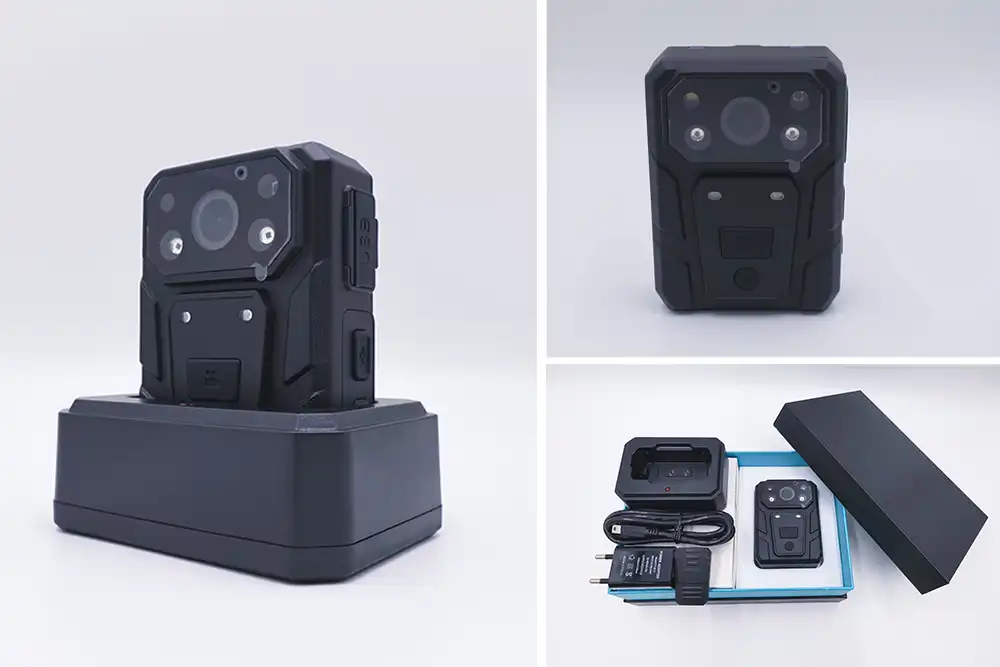

Enhancing Security and Surveillance in Correctional Facilities
Increasing Alertness in Prison Settings
Prison settings necessitate ongoing attention to detail. Without adequate monitoring systems in place, security breaches can quickly worsen. In addition to the current monitoring infrastructure, body-worn cameras offer real-time documentation.
Recording Events Outside of Fixed Camera Coverage
These gadgets record events that stationary cameras might overlook because of blind areas or location restrictions. Correctional officer cameras allow officers to capture encounters in places that are inaccessible to conventional surveillance systems. Comprehensive coverage of conflicts or emergency situations is guaranteed by the 140-degree wide-angle lens.
Smooth Integration with Contemporary Security Systems
Body-worn recording devices are smoothly integrated with contemporary jail security systems. Officer movements are tracked by GPS technology, which generates comprehensive incident location records. This technology helps security professionals discover vulnerable regions that need more attention and comprehend patrol patterns.
Quick Access to Captured Video for Quick Reaction
Rapid reaction to evolving circumstances is made possible by the instant accessibility of recorded material. Supervisors are able to swiftly assess situations and make well-informed judgments regarding lockdown protocols or other security measures. Overall facility safety for both employees and prisoners is greatly enhanced by this capacity.
Incident Documentation and Evidence Collection
Precise Incident Recording for Efficient Facility Administration
The foundation of efficient management of correctional facilities is accurate incident reporting. Video evidence captures important facts that are frequently missing from traditional written reports. Conversations, movements, and the surrounding surroundings are all captured via body-worn cameras.
High-Definition Audio and Video for Court Cases
During legal procedures, prosecutors and defense lawyers rely on the courtroom-quality evidence provided by the 1296P resolution. Verbal threats, admissions, or utterances that written reports could overlook or misunderstand are captured by audio recording capabilities. When it comes to criminal charges or disciplinary proceedings, this evidence is crucial.
Quick Recording of Unexpected Events
Unexpected prison situations necessitate prompt documentation. Officers can quickly capture crucial moments thanks to one-button recording activation. Before being manually activated, pre-recording functionality saves 25–35 seconds of video, saving the loss of crucial evidence in circumstances that are developing quickly.
Using Digital Timestamps to Ensure the Authenticity of Evidence
The authenticity of the evidence is established via digital timestamps and watermarks incorporated into Correctional Officer Body Cam recordings. This paperwork is easily accepted by courts, simplifying court procedures and lowering the need for witness. When video evidence offers thorough incident logs, officers spend less time writing reports.
Monitoring Inmate Behavior and Interactions
Using Behavior Documentation to Forecast and Avoid Conflicts
Correctional officials can anticipate and stop confrontations before they worsen by being aware of inmate behavior trends. Body cams record everyday encounters, exposing relationship dynamics and behavioral patterns across jail populations.
Enhancing Supervision Techniques using Recorded Behavior Patterns
These recordings reveal prisoners who regularly start arguments or control circumstances. Employees can improve overall facility management by modifying their supervision tactics in response to recorded behavioral patterns. Instead of relying just on subjective judgments, video evidence provides factual documentation to support disciplinary proceedings.
Improving the Monitoring and Prevention of Gang Activity
Body-worn surveillance equipment increases the effectiveness of monitoring gang activity. Officers are able to record recruitment efforts, territorial disputes, and suspected gang communications. Administrators can use this information to prevent organized crime within institutions and carry out focused interventions.
Using Recorded Interactions to Support Mental Health Assessments
Recorded conversations between prisoners and correctional workers are beneficial for mental health assessments. Psychiatrists and counselors can gain important insights into the conduct of prisoners in a variety of scenarios by using video footage. Strategies for crisis intervention and treatment planning are supported by this information.
Preventing Contraband Smuggling and Distribution
Careful Observation for Efficient Detection of Contraband
Vigilant observation of all prisoner actions is necessary for the detection of contraband. Body cams record visitor interactions, search protocols, and suspicious activity that could point to smuggling attempts.
Improving Cell Search Transparency
When cell searches are captured using surveillance technologies, they become more transparent. Officers can record any contraband found while demonstrating appropriate search procedures. When it comes to disciplinary actions or criminal trials involving the possession of contraband, this proof is crucial.
Enhancing Security in Visitor Areas and Preventing Contraband
Correctional facilities have serious security difficulties when it comes to visitor areas. Body-worn cameras record efforts to convey prohibited items and keep an eye on interactions between prisoners and visitors. These recordings aid in spotting recurrent trends and enhancing screening practices.
Monitoring in High-Risk Areas to Stop the Production of Contraband
Workplaces and kitchens where prisoners may have access to weapons must be continuously monitored. Inmates' movements in these dangerous areas are recorded by mobile recording devices, which guarantee prompt action in the event of suspicious activity. The production and dissemination of contraband within facilities is greatly decreased by this monitoring capacity.
Protecting Staff from False Accusations
Defending Officers Against Allegations of False Misconduct
Inmates who want to use their influence in court frequently accuse correctional personnel of misbehavior. Correctional Officer Body Cam offers unbiased proof that shields innocent employees from unfounded allegations while guaranteeing responsibility for real wrongdoing.
Making Use of Force Incidents Transparent
Incidents involving the use of force are closely examined by external oversight organizations and internal affairs investigators. Officers who adhered to the correct procedures were protected by video recording, which depicts exactly what happened during encounters. The uncertainty surrounding contentious situations is eliminated by this proof.
Protecting Officers from Claims of Discrimination or Harassment
Allegations of harassment or discrimination can harm careers and lead to drawn-out investigations. All prisoners, regardless of their personal traits, are treated appropriately and with professionalism in recorded contacts. Officers are encouraged to carry out their responsibilities with assurance while upholding appropriate standards thanks to this protection.
Recording Medical Emergency Reactions to Prevent Liability
Medical emergency reactions necessitate quick intervention, which may seem disproportionate in the absence of appropriate context. Body cams save employees from liability issues by recording the promptness and suitability of police reactions during medical emergencies.
Ensuring Compliance with Prison Regulations
Ensuring Correctional Facilities Comply with Regulations
An essential part of running a correctional facility is adhering to regulations. Documentation proving conformity to established standards and processes is required by a number of oversight agencies.
Using Recorded Interactions to Verify Training Compliance
Recorded exchanges that demonstrate cops using appropriate approaches make training compliance verifiable. Supervisors can watch video to make sure employees consistently follow protocols. This paper identifies areas that require further training while meeting regulatory criteria.
Keeping Records of Medical Care to Avoid Lawsuits
To avoid legal action and provide appropriate care, medical care delivery necessitates meticulous documentation. In order to demonstrate proper treatment standards, body cameras capture exchanges between medical personnel and prisoners. This evidence ensures the provision of high-quality healthcare while shielding facilities from charges of malpractice.
Documenting Disciplinary Procedures for Legal Defense
In order to survive legal challenges, disciplinary procedures must adhere to certain rules. Facilities are shielded from allegations of constitutional violations by recorded disciplinary hearings, which offer proof of correct procedural adherence. This paperwork guarantees equitable treatment while upholding the required discipline.
Training and Performance Evaluation Benefits
Officer Training with Real-World Scenarios
For novice correctional officers, real-world incidents recorded by body-worn cameras provide priceless educational resources. These recordings show appropriate methods, communication approaches, and crisis response procedures.
Evaluations of Objective Performance Using Video Evidence
When supervisors can examine actual officer encounters instead of depending only on reports or observations, performance evaluations become more objective. Video evidence demonstrates professionalism, de-escalation strategies, and communication abilities in a variety of contexts.
Enhancing Training and Critical Incident Analysis
Comprehensive video review capabilities enhance critical incident analysis. Training coordinators are able to pinpoint areas where processes need to be improved or where more training is required. Better procedures and more prepared employees are the results of this analysis.
Using Actual Incident Video to Improve New Officer Orientation
Real incident footage that demonstrates both appropriate and inappropriate reactions to typical scenarios is extremely beneficial to new officer orientation sessions. These illustrations offer tangible learning opportunities that are unmatched by theoretical instruction.
Advanced Technology Features for Modern Correctional Settings
Correctional Officer Camera Technology's Advanced Features
The most recent Correctional Officer Body Cam technology for correctional officers has advanced features made especially for prison settings. Clear recording during evening shifts or in dimly lit regions is ensured by night vision capabilities. In total darkness, the infrared technology offers up to 10 meters of visibility.
Increased Battery Life for Constant Use
Long shifts without recording interruptions are supported by extended battery life. The 3200mAh battery ensures coverage for the duration of work periods by offering up to 10 hours of continuous recording. In an emergency, standby mode prolongs operation for up to 20 hours.
Sturdy Construction for Adversity
The harsh prison atmosphere is withstood by sturdy structure. An IP67 waterproof rating guards against the moisture and dirt that are frequently found in correctional facilities. Drop resistance guarantees that operations will continue even in the event of physical altercations or unintentional collisions.
Using Advanced Data Storage to Protect Recorded Evidence
Tampering with recorded evidence is prevented via secure data storage. Features like encryption and password security uphold the chain of possession standards necessary for legal processes. Different departmental needs and budgets are accommodated by a variety of storage capacity options.
Conclusion
Modern correctional officer body cam systems made especially for prison settings are provided by Shenzhen Kexin Technology Co., Ltd. While ODM/OEM customisation capabilities satisfy specific facility requirements, our ISO-certified manufacturing methods guarantee consistent quality. As a trusted correctional officer body cam manufacturer, we provide comprehensive support including 18-month warranties and ongoing technical assistance. To explore the particular security enhancement requirements for your facility, get in touch with our team at sales@ishoop.com.cn. Sophisticated security measures that strike a balance between operational efficacy and transparency are necessary for modern correctional facilities. With their many advantages that improve safety, accountability, and regulatory compliance, body-worn cameras are a crucial piece of technology for modern jail administration. Reduced liability, better employee protection, and improved security procedures are all benefits of investing in high-quality surveillance technology. Body cams will continue to be essential tools for efficient facility management and community safety as correctional institutions continue to change to match contemporary requirements.
References
1. Thompson, R.M. (2023). "Correctional Technology and Prison Safety: A Comprehensive Analysis of Body-Worn Camera Implementation in Detention Facilities." Journal of Correctional Administration, 45(3), 78-94.
2. Williams, S.A., & Martinez, J.L. (2022). "Evidence Collection and Documentation in Correctional Settings: The Role of Wearable Recording Technology." Prison Security Quarterly, 38(2), 156-172.
3. Chen, K.H. (2023). "Contraband Prevention Through Enhanced Surveillance: Body Camera Applications in Modern Correctional Facilities." International Journal of Prison Management, 29(4), 201-218.
4. Anderson, P.R., et al. (2022). "Staff Protection and Accountability: Implementing Body-Worn Cameras in State Correctional Systems." Corrections Today, 84(6), 22-31.
5. Davis, M.K., & Johnson, L.P. (2023). "Regulatory Compliance and Technology Integration: Body Cameras in Correctional Officer Training Programs." Academy of Criminal Justice Sciences Review, 51(2), 89-106.
6. Roberts, E.T. (2022). "Inmate Monitoring and Behavioral Analysis: Advanced Surveillance Technologies in Contemporary Prison Operations." Criminal Justice Technology Review, 15(3), 45-62.

USER EVALUATE
Here is the customer's evaluation of us