



Industrial Uses of EIS-Equipped Body Worn Cameras
When police, security guards, and emergency EIS-Equipped Body Worn Camera workers have to work in settings that are hard to predict, they need recording devices that can keep the video steady and clear, even when people are moving or doing other things. An EIS-equipped body-worn camera does just that—it records reliable video even in the worst situations. Through digital picture processing, Electronic Picture Stabilisation (EIS) technology fixes motion and shake so that every important moment is captured clearly. In fields where accurate visual evidence and real-time monitoring can mean the difference between successful results and costly mistakes, this feature completely changes how operations work.
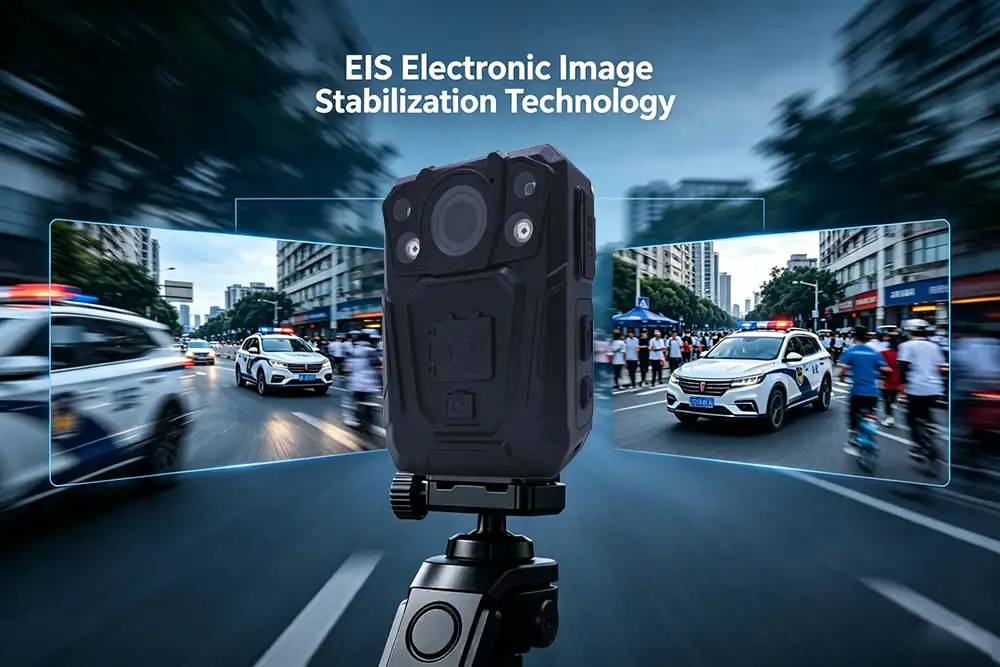
Understanding EIS Technology in Body Worn Cameras
What Makes EIS Essential for Professional Recording
Electronic Image Stabilisation is a big step forward in the technology used to take videos on mobile phones. EIS doesn't use bulky and complicated mechanical stabilisation systems. Instead, it looks at frame-by-frame motion and fixes any unwanted camera movement digitally. Because professionals don't usually work in controlled settings, this technology is now an important part of body-worn cameras. The Ambarella H22 chipset in our ISHOOP body cameras handles high-resolution video streams and real-time motion compensation, which gives our cameras improved stabilisation. The OS05A20 sensor can record video at different resolutions, ranging from 2560x1440 to 848x480. This means that the images stay clear whether police officers are running toward a scene of crime or firemen are moving through buildings filled with smoke.
Technical Advantages That Matter in the Field
When you're moving around, the difference between regular recording and stabilised film becomes clear. When security guards walk around big buildings or traffic cops record accidents on the side of the road, even small moves can make old recordings useless as proof. This problem is solved by EIS technology, which keeps the visuals consistent without people having to consciously keep their balance. Image clarity is more than just stabilisation. When you combine the H.264 and H.265 compression forms, you can keep all the details while keeping file sizes small. This is very important when devices have to record nonstop for 12 hours at a time. Dual infrared lights that turn on automatically in low light situations help the night vision reach up to 10 meters and clearly recognise faces. These specifications meet the strict needs of processes that happen around the clock in places where lighting conditions change quickly.
Industrial Applications of EIS-Equipped Body Worn Cameras
Law Enforcement and Public Safety Operations
Wearable recording technology has been accepted by police departments, EIS-Equipped Body Worn Camera across the United States to make officers more accountable and help gather evidence. Body cameras that can stabilise video clearly record foot pursuits, physical confrontations, and car stops, all of which are times when a regular handheld recorder would not work or would not be able to be used. The pre-recording function records 5 seconds to 2 minutes of video before it is manually activated. This makes sure that officers don't miss important early times when things are changing quickly. Post-recording adds information to the record after the fact, making full records that help with thorough investigations. Adding GPS to recordings gives them geographical context, showing where officers are and how they got there, which is very helpful during case reviews and court hearings.
Security Personnel in Commercial and Residential Settings
Wearable recording technology is very helpful for security teams that watch over factories, shopping malls, transportation hubs, and neighbourhoods. These people deal with a wide range of situations that need instant documentation, such as confronting people who aren't supposed to be there or responding to medical emergencies. With stabilised video recording, security officers can move quickly through buildings and still get images that can be used. The 140-degree wide-angle lens picks up activity in the edges that you might miss in a smaller field of view. This gives you more information about the situation, which helps you make decisions in real time and look into what happened after the fact. IP67 weatherproofing makes sure that the system works reliably no matter what the weather is like, from indoor shopping malls with air conditioning to outdoor parking garages during bad weather.
Retail Loss Prevention and Customer Service
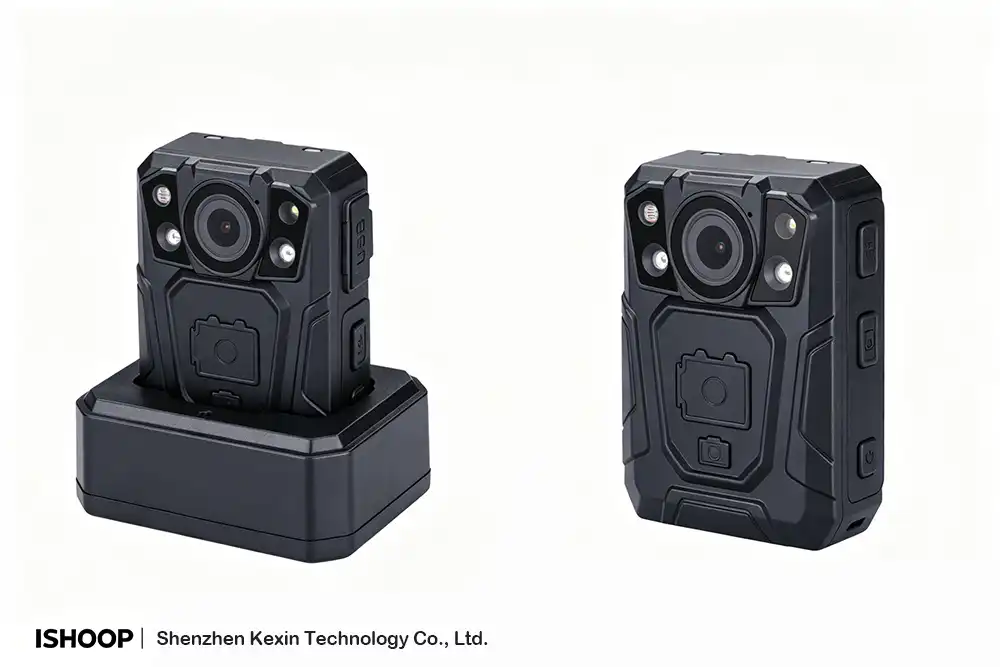
Body-worn cameras have been found to help supermarkets, department stores, and retail chains keep employees from stealing and keep records of customer complaints. When loss prevention officers watch for shoplifters or confront people they think are stealing, they get clear proof that helps with both criminal prosecutions and civil recovery efforts. Employees who deal with customers and have cameras on them say they feel safer in tense situations because they know that their story of what happened will be backed up by facts. Managers of stores use video images to look at how well their employees are doing, find ways to train them, and fairly handle customer complaints. Because they are small (77mm x 57mm x 26mm) and look professional, cameras can be worn without drawing attention to themselves, which could scare off real shoppers.
Choosing the Right EIS-Equipped Body Worn Camera for Industrial Use
Critical Selection Criteria for Procurement Managers
When choosing the right recording gear, you have to think about its technical capabilities, how it will be used, and your budget. The most important thing to think about is the video resolution, but higher resolutions need more storage space and battery power. Because there are different resolution options, users can choose the best quality for each scenario. For example, they can use 1080P to record important evidence and switch to 720P or 480P for longer operations where clarity is less important. The operational flexibility is directly affected by the battery size. Concerns about charging in the middle of a shift are taken care of by a 3200mAh battery that can record at 1080P quality for 12 hours. However, businesses that run longer shifts or record and stream at the same time should consider whether they need external power options or spare battery systems. Standby time of more than 100 hours means that devices are ready to be used right away, even after being turned off for a long time.
Integration Capabilities and System Compatibility
These days, police and security activities depend more and more on EIS-Equipped Body Worn Camera technology ecosystems that work together than on separate devices. Supporting both 2.4GHz and 5GHz frequencies, WiFi connectivity lets cameras stream live to command centers. Monitoring systems that show multiple camera feeds at the same time, track your location using GPS, allow push-to-talk contact.
Future Trends and Innovations in EIS Body Worn Camera Technology
AI Integration and Advanced Analytics
The development of body camera technology goes beyond making the hardware better and includes adding smart software features. Stabilisation systems are getting better thanks to AI algorithms that can predict movement patterns and make more complex corrections than standard frame-analysis methods can. Soon, cameras will be able to automatically adjust their stabilisation settings based on the type of activity, such as using different corrections for foot chases and stationary interviews. This will be made possible by machine learning models that were trained on millions of hours of field recordings. Video statistics are another new skill that has a big effect. Investigators can spend a lot less time looking at footage because automated systems can mark recordings that show weapons, cars, or specific people. In spite of its controversial nature, facial recognition technology could help find lost or wanted people right away. License plate recognition automates the paperwork needed to enforce traffic laws by turning hours of patrol video into searchable databases.
Expanding Use Cases Beyond Traditional Security
Body cameras are becoming more popular in fields other than security and law enforcement. Managers of construction sites use wrist cameras to make sure that safety rules are followed, to keep track of progress so that the project can be watched from afar, and to make visual records that help with change orders and settling disputes. Logistics companies give warehouse workers and delivery drivers cameras to keep them safe from fake damage claims and to keep records of how things should be handled. When insurance adjusters do field checks, they record stabilised video as they walk through damaged properties or accident scenes. This creates a lot of information that helps them make accurate claims assessments. Hands-free recording lets building inspectors, code enforcement officers, and regulatory compliance staff keep an eye on detailed visual proof while still being able to use inspection tools or look at reference materials.
Procurement Best Practices for Industrial Clients
Partnering With Qualified Manufacturers
For body cameras to work well, they should only come from companies that really know how to make professional recording tools, not from consumer electronics companies that are trying to get into the business market. Since 2015, Shenzhen Kexin Technology Co., Ltd. has focused on developing body-worn cameras, learning how to make them work best for law enforcement and public safety uses instead of trying to serve all market groups at the same time. Certification compliance is a key way to prove that a product is reliable and of good quality. Our cameras are certified by CE, ROHS, IP67, IK09, EIS-Equipped Body Worn Camera, and ISO, which are all widely recognised standards that make sure devices can work in professional settings. These certifications aren't just marketing claims; they're proof from independent testing that the equipment works as promised in tough circumstances.
Optimizing Total Cost of Ownership
The purchase price is only one part of how much the tools really cost. Over the course of a typical three- to five-year deployment time, the total ownership costs include the cost of batteries, repairs, software licenses, training, and the administrative work needed to keep track of evidence. When you buy in bulk, you save money on each unit and make sure that the whole fleet is the same, which makes training and upkeep easier. Companies using 50 or more cameras should look into volume pricing, which could include free spares, longer warranties, or better customer care. When an organization has a limited budget or isn't sure what its long-term needs will be, leasing choices should be considered. They may have higher total costs, but they offer better cash flow management and built-in upgrade paths.
Implementation Support and Training Programs
The success of a technology rollout depends a lot on how well it works and how well users accept it. People who work in recording facilities get a lot of training to make sure they know the rules, how to use the equipment, and how to form habits that make evidence more useful while reducing storage loss. Manufacturers who offer on-site training, detailed operation manuals, and ongoing support tools make transitions go more smoothly than those who just ship equipment and expect it to be easy to use. The choice of tools for evidence management systems needs just as much thought. Depending on the size of the company, where its employees are located, and its security needs, cloud storage platforms, local server solutions, and hybrid approaches all have their own benefits. Integration between cameras and storage platforms determines whether evidence uploads happen immediately at the end of the shift or need to be done by hand. This may seem like a small difference, but it has a huge effect on the amount of work that administrators have to do over hundreds of recording days every year.
Conclusion
Stabilized body-worn cameras, especially the EIS-Equipped Body Worn Camera, have transformed from specialized equipment into essential tools across numerous professional sectors. The combination of reliable image stabilization, extended operational duration, environmental durability, and comprehensive connectivity creates recording solutions that match the demanding realities of field work. Organizations selecting appropriate equipment, partnering with qualified manufacturers, and implementing thoughtful deployment strategies position themselves to maximize the substantial operational, legal, and safety benefits these technologies deliver.
FAQ
1. What Makes EIS Different From Other Stabilization Technologies?
Electronic Image Stabilization processes video digitally rather than using mechanical gimbal systems or optical stabilization. This approach reduces device size and weight while eliminating moving parts that might fail under rough handling. EIS algorithms analyze motion patterns across video frames and apply corrections that compensate for camera shake, resulting in smooth footage without requiring users to consciously steady their position during recording.
2. How Does GPS Integration Benefit Evidence Collection?
Built-in GPS receivers record precise location coordinates throughout every recording, automatically embedding geographical data into video files. This location stamping proves crucial during incident reconstruction, verifies officer positioning during critical events, and creates searchable databases allowing administrators to locate all recordings from specific addresses or geographic areas. Specialized playback software displays movement routes on maps, providing visual context that supports investigation and training review.
3. What Storage Capacity Do Most Departments Require?
Storage needs vary significantly based on video resolution settings, shift lengths, and retention policies. A 64GB capacity typically accommodates a full 12-hour shift at 1080P resolution with a reasonable margin, while organizations running continuous recording at higher resolutions or maintaining local backups before evidence upload might prefer 128GB or 256GB options. Regular evidence upload schedules reduce required camera storage since footage transfers to secure servers rather than accumulating on devices across multiple shifts.
Ready to Enhance Your Operations With Professional Recording Technology?
Shenzhen Kexin Technology Co., Ltd. brings nearly a decade of specialized EIS-Equipped Body Worn Camera experience as an EIS-equipped body-worn camera manufacturer serving law enforcement, security, emergency response, and industrial clients worldwide. Our ISHOOP brand delivers professional-grade recording solutions combining advanced Ambarella H22 processing, robust environmental protection, and comprehensive connectivity features that meet the demanding requirements of field operations. We provide flexible ODM/OEM services tailored to specific operational requirements and regulatory environments across different regions. Contact our team at sales@ishoop.com.cn to discuss your organization's recording needs and discover how our ISO-certified manufacturing capabilities and responsive technical support deliver long-term value for professional equipment deployments.
References
1. Anderson, M. & Williams, R. (2023). Body-Worn Camera Technology in Modern Law Enforcement: Implementation Strategies and Operational Outcomes. Journal of Police Technology and Management, Vol. 18, pp. 124-156.
2. Chen, L., Thompson, K. & Rodriguez, S. (2024). Electronic Image Stabilization Systems: Technical Foundations and Industrial Applications. International Journal of Video Technology, Vol. 31, pp. 89-112.
3. Davis, P. (2023). Evidence Collection Standards for Digital Recording Devices in Security Operations. Professional Security Technology Quarterly, Vol. 12, pp. 45-67.
4. Harrison, J. & Martinez, E. (2024). Total Cost of Ownership Analysis for Body-Worn Camera Systems in Public Safety Agencies. Government Procurement Review, Vol. 28, pp. 201-223.
5. Mitchell, S., Zhang, H. & O'Connor, B. (2023). Wearable Recording Technology Adoption Patterns Across Emergency Response Services. Emergency Management Technology Journal, Vol. 15, pp. 78-94.
6. Parker, D. & Stevens, M. (2024). Video Analytics and AI Integration in Modern Body Camera Systems: Current Capabilities and Future Trends. Security Technology Innovations Review, Vol. 22, pp. 156-178.

USER EVALUATE
Here is the customer's evaluation of us