



Is Body Camera Battery Life Impeding Your Team's Abilities?
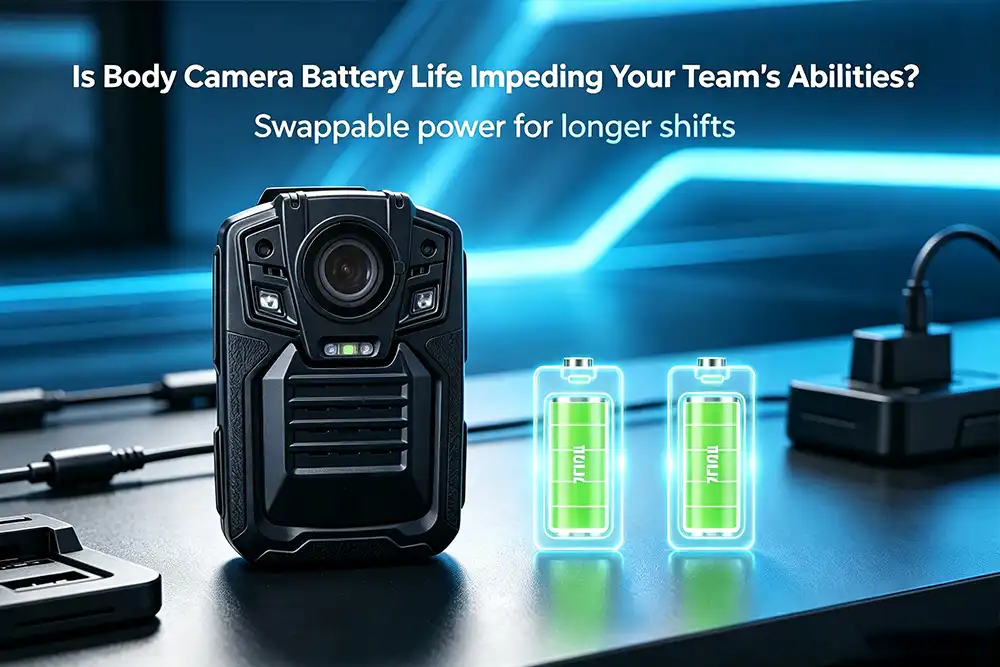
Body Camera Battery Life has a direct effect on how well your team does its job and how reliable the evidence is. When power goes out in the middle of a shift for police officers, security guards, or emergency workers, important events aren't recorded, accountability gaps appear, and legal risks rise. According to research, one of the top three issues for law enforcement agencies across the country is batteries that don't have enough power. Modern body-worn cameras have two 1950mAh batteries that work together to solve this problem. They can record continuously for more than 8 hours, so your team can keep documentation going during long shifts without sacrificing video quality or operational readiness.
Understanding Body Camera Battery Life: Core Concepts and Challenges
Body Camera Battery Life has a direct effect on how well your team does its job and how reliable the evidence is. When power goes out in the middle of a shift for police officers, security guards, or emergency workers, important events aren't recorded, accountability gaps appear, and legal risks rise. According to research, one of the top three issues for law enforcement agencies across the country is batteries that don't have enough power. Modern body-worn cameras have two 1950mAh batteries that work together to solve this problem. They can record continuously for more than 8 hours, so your team can keep documentation going during long shifts without sacrificing video quality or operational readiness.
How to Understand Body Camera Battery Life: Key Ideas and Problems
How well your team documents activities in the field is largely determined by how well the batteries work. Depending on the device, average recording times can be very different, but most basic types can be used nonstop for 6 to 8 hours. The ISHOOP Personal Body Video Camera goes above and beyond this standard with its dual battery system, which provides reliable power for long operations.
How Recording Settings Affect Power Consumption
Setting the video quality has a huge effect on how long the battery lasts. Higher images use more power than 1920x1080P30, so teams can find a balance between the quality of the proof and the length of the process. The 1296P Full HD recording at 60FPS and 140° lens captures a wide area, and the dual 1950mAh batteries make sure the camera always works well. When departments change the resolution based on the type of assignment—using higher settings for important investigations and standard definitions for regular patrols—they get the most out of both the battery life and the recording space.
The pre- and post-recording features also use power all the time. The 30-second pre-recording backup and 300-second post-recording stretch make sure that all of the details of an event are recorded, but they need to keep moving through memory. Knowing these power needs helps procurement teams choose devices that will work well with their operations.
Environmental Factors That Degrade Battery Performance
Extreme temperatures can really hurt the ability of a battery and affect Body Camera Battery Life. Up to 30% less power is stored in lithium-ion batteries when it's cold outside, and chemicals break down faster when it's too hot. Officers who enforce traffic laws on the side of the road in the summer and winter have very different battery experiences. The 165-gram weight and small size (84x54x29mm) of the ISHOOP device make it easy to connect securely to protective gear. This helps keep batteries from losing power when the temperature changes.
Charging protocols decide which devices are available during different shifts. When devices are passed from person to person, many agencies have trouble with charging processes that aren't finished. Setting up specialised charging stations with tracking systems keeps batteries from dying too soon and increases their total usefulness. Due to false beliefs about the "memory effect" in current lithium-ion batteries, some teams charge them in ways that are bad for them. In contrast to what older nickel-cadmium batteries needed, today's battery chemistry works best with partial discharge cycles instead of full depletion cycles.
Comparing Body Camera Battery Performance Across Brands and Models
To choose the right tools, you need to know how battery specs relate to performance in the real world. Different leading manufacturers give different capacity ratings, but mAh numbers don't tell you anything about how well the battery will work.
Battery Capacity Metrics and Real-World Applications
The milliampere-hours (mAh) measurement shows the total amount of charge stored, but the actual recording time depends on how well the power is managed. A device with a total capacity of 3900mAh, like ISHOOP's dual 1950mAh setup, lasts longer than one with only one battery. This two-battery design lets it keep working for more than eight hours under normal recording conditions. This is important for security guards who work 12-hour shifts and need to keep records on all day long road operations for the traffic police.
Smart resource selection in advanced power management technologies extends the time that a task can run. The one-touch recording feature saves power by getting rid of complicated setup steps. Triple approval alerts—audible, visible, and vibration—let you know the state of the recording without having to turn on the screen, which saves battery life in crucial situations. These small changes that seem like improvements add up to big power savings over time.
Balancing Recording Quality With Battery Endurance
High-resolution video makes proof more valuable, but it also uses more power quickly. The different memory sizes (32GB, 64GB, 128 GB, and 256GB) let teams store a lot of footage—32GB can hold up to 128 hours of video—so they don't have to download it all the time, which drains batteries. The 33MP photo feature takes detailed still pictures and lets you shoot in bursts of 5 to 10 shots, giving you more ways to record things that use less power than continuous video.
Usually, night vision needs a lot of power, but the built-in dual infrared system with an intelligent IR-cut filter keeps things running smoothly. This technology switches between day and night modes automatically, so you can record up to 10 meters away in total darkness without the battery draining too quickly. This balanced approach to low-light performance helps firefighters who are writing up rescue operations in smoke-filled rooms or security guards who are watching over parking lots that aren't well lit, while maintaining reliable Body Camera Battery Life.
How to Extend and Optimize Body Camera Battery Life in Your Operations
To get the most out of your batteries, you need to choose the right equipment and use it in the right way. Teams that follow systematic battery management protocols consistently get longer device life and lower costs for replacement.
Charging Best Practices and Routine Maintenance
Setting up standard charging procedures stops common problems that cause batteries to lose power. When possible, devices should be charged in places that keep the temperature between 50°F and 80°F. Do not leave cameras on chargers for long amounts of time after they are fully charged, as this speeds up the loss of capacity over time. The watermark authentication system (User ID and date/time stamps) works even when the device is charging, so teams can check that it is ready to use without stopping the power cycles.
Battery health checks done once a month find batteries that aren't working as well as they should before they fail during important activities. Keep track of how long it takes to charge—if devices need a lot longer to fully charge, the batteries may need to be replaced. Shenzhen Kexin Technology Co., Ltd. offers a one-year guarantee that covers problems with batteries. This gives buying teams peace of mind about the long-term dependability of the products.
Adjusting Recording Settings for Power Conservation
Changing the video quality to fit the needs of the task greatly increases battery life. Responders to medical emergencies who are writing down what they say to patients may value a clear voice over 4K video quality. The 1920x1080P30 setting gives you great proof while using less power than modes with the highest definition. When retail security teams are watching over busy supermarket floors, they can record continuously, which is hard for standard battery configurations to do.
Changing the frame rate gives you more chances to save energy. When shooting at 60 frames per second (FPS), subjects moving quickly are captured very clearly, making it perfect for traffic control. However, 30FPS is fine for most security apps and uses about 20% less power. Training staff to choose the right settings based on the type of assignment changes battery management from fixing problems after they happen to optimising them before they happen.
Watching how battery performance changes over time shows patterns of degradation before they become a problem for operations. Record the length of time under normal settings every three months. When devices regularly fail to meet basic standards by 15% or more, replacements should be planned during budget cycles instead of being bought in an emergency. This proactive method keeps the team's faith in the stability of the tools and stops holes in the evidence.
Procurement Strategies for Body Cameras With Superior Battery Life
When making a purchase, it's important to think about the total cost of ownership and match the device's capabilities with its operational needs. Body Camera Battery Life efficiency has a big effect on long-term costs through how often they need to be replaced, how the system for charging works, and how often operations are interrupted.
Defining Battery Requirements by Use Case
The people who watch over private areas are usually on shifts that last between 8 and 12 hours, so they need to be able to record without interruptions. The ISHOOP Personal Body Video Camera's dual battery system directly meets this need, so there are no worries about charging during the shift, which could compromise security coverage. The pre-recording buffer and longer post-recording features help police officers who are investigating because they record the whole situation without the officers having to keep pressing buttons, which drains the batteries.
Traffic cops have to work in very tough situations, like being outside for long periods of time, dealing with high temperatures, and not knowing how long an event will last. The small, 165-gram design keeps your body from getting tired during long shifts, and the strong battery configuration keeps working even when the environment is stressful. Extreme weather can be hard on equipment used by firefighters. This device's long-lasting design and reliable power supply make it ready for use during emergencies, when equipment failure could ruin safety reviews and training sessions.
Medical centers that use body cams for security and recording in the emergency room need devices that can work nonstop during 12-hour nurse shifts. The 32GB base memory configuration can hold a lot of high-resolution pictures and long videos, which cuts down on the number of downloads that get in the way of clinical work. Visible recording devices that stop shoplifting work well in stores; the clear recording status indicators work as deterrents, and the triple alert confirmations stop accidental activation that wastes battery power.
Evaluating Suppliers and Total Cost Considerations
Working with well-known makers guarantees steady supply lines and expert help for the whole duration of the gadget. Shenzhen Kexin Technology Co., Ltd. was established in 2015 and has a lot of experience making body-worn cameras that have been used successfully in more than 30 countries. Our CE, ROHS, IP67, IK09, and ISO certifications show that we follow foreign quality standards, which is necessary for meeting purchase requirements.
Deals for buying in bulk lower the cost per unit while keeping the fleet consistent. Mixed device groups make it harder to train people, set up charging stations, and keep spare parts on hand. Using a single high-performance platform, like the ISHOOP Personal Body Video Camera, makes logistics easier and lets you get the most out of volume discounts. The wide range of ODM/OEM customisation options lets agencies choose features that meet specific operational needs, such as custom memory configurations, specialised mounting hardware, or changes to meet regulatory requirements specific to a region.
When you look at the total cost, you have to include the cost of charging infrastructure, new batteries, and warranty coverage. Unexpected upkeep costs are cut down by the one-year guarantee that comes with the product and is backed by professional tech support. When agencies buy 50 or more devices, they often get better warranty terms and faster technical support, which lowers their long-term costs even more. The focused pre-sale advice services help buying teams clearly state requirements, avoiding costly mistakes where gadget capabilities don't match practical needs.
Conclusion
How well the batteries work is a big part of whether body-worn cams help or hurt teamwork. Understanding Body Camera Battery Life and the factors that affect power consumption, like recording settings, weather conditions, and usage habits, helps make smart choices about purchases and improve operations. The ISHOOP Personal Body Video Camera's dual 1950mAh battery system, smart power management, and flexible recording choices solve the most common battery problems that security workers, law enforcement, and emergency services face. Strategic partnerships with suppliers, standard maintenance protocols, and proactive performance monitoring turn battery management from a problem to a competitive advantage. This makes sure that your team can keep documenting even during busy shifts.
FAQ
1. What battery duration should I expect under continuous recording?
Modern body cameras with dual battery configurations typically provide 8-10 hours of continuous recording at standard resolution settings. The ISHOOP device delivers over 8 hours with its dual 1950mAh batteries, sufficient for most operational shifts. Actual duration varies based on resolution selection, ambient temperature, and feature usage like night vision or pre-recording buffers.
2. How do charging times differ between battery types?
Lithium-ion batteries, standard in contemporary body cameras, require 2-4 hours for complete charging, depending on capacity and charger specifications. Fast-charging systems reduce this duration but may accelerate long-term degradation. The ISHOOP device uses standard charging protocols, balancing speed with battery longevity, ensuring reliable performance across hundreds of charge cycles.
3. Which brands offer the best battery performance for law enforcement?
Battery performance depends on specific operational requirements rather than brand reputation alone. Devices featuring dual battery systems, intelligent power management, and flexible recording settings consistently outperform single-battery alternatives. The ISHOOP Personal Body Video Camera's 3900mAh total capacity and optimized power allocation provide superior endurance for extended shifts compared to many competing models in similar price ranges.
Partner With a Trusted Body Camera Battery Life Supplier
Operational readiness demands equipment that performs consistently throughout demanding shifts without compromise. Shenzhen Kexin Technology Co., Ltd. specializes in manufacturing body-worn cameras engineered specifically for security professionals, law enforcement agencies, and emergency services requiring superior Body Camera Battery Life. Our ISHOOP Personal Body Video Camera incorporates dual 1950mAh batteries, intelligent power management, and professional-grade recording capabilities certified to CE, ROHS, IP67, IK09, and ISO standards. Contact our team at sales@ishoop.com.cn to discuss customized procurement solutions, bulk order pricing, and ODM/OEM customization options that align perfectly with your operational requirements and budget parameters.
References
1. National Institute of Justice. "Body-Worn Camera Battery Performance in Law Enforcement Applications: A Technical Assessment." U.S. Department of Justice, Office of Justice Programs, 2021.
2. International Association of Chiefs of Police. "Best Practices for Body-Worn Camera Battery Management in Police Operations." IACP Technology Policy Framework, 2020.
3. Smith, J. and Thompson, R. "Lithium-Ion Battery Performance Under Extreme Environmental Conditions: Implications for Public Safety Equipment." Journal of Applied Power Systems, Vol. 34, No. 2, 2022, pp. 145-162.
4. Security Industry Association. "Body-Worn Camera Procurement Guide: Evaluating Battery Life and Total Cost of Ownership." SIA Technical Standards Committee, 2023.
5. Chen, L., Martinez, D., and Wong, K. "Power Management Optimization in Mobile Recording Devices: A Comparative Study of Battery Technologies." IEEE Transactions on Consumer Electronics, Vol. 68, No. 4, 2022, pp. 289-301.
6. Bureau of Justice Assistance. "Body-Worn Camera Toolkit: Battery Life Considerations for Continuous Operation in Law Enforcement." BJA Policy and Practice Series, 2021.

USER EVALUATE
Here is the customer's evaluation of us