



The Body Camera for Reliable Livestreaming in Challenging Environments
Reliable real-time video streaming is not only helpful when you're working under a lot of stress, like when you're reacting to events, handling security issues, or keeping records of important operations. The live streaming technology in body cameras has changed how businesses record, send, and store proof in tough working settings. We at Shenzhen Kexin Technology Co., Ltd. have been working on wearable camera solutions for almost ten years that can keep streaming even when conditions are tough. Our ISHOOP body cameras have an OV05A20 sensor with 1440P resolution and IP67 waterproof protection. They are used by police, security teams, firefighters, traffic cops, first responders, and retail security professionals to get reliable footage when it matters most with Body Camera Live Streaming.
Understanding Body Camera Live Streaming Technology
Real-time video streaming from devices worn on the body is a big practical benefit in both public safety and business security. Through wireless networks, this technology allows immediate visual communication between people in the field and command centers. This completely changes how incidents are managed and recorded.
How Live Streaming Works in Body Cameras
Wearable cameras today send video clips to safe cloud services or on-premise computers through cellular networks like 4G or WiFi. The video streams are protected and sent. The steps are to record high-resolution video, reduce its size using efficient codecs like H.264 or H.265, and send the data over a network that is already in place. At Shenzhen Kexin Technology, our gadgets have two communication modes, so officers can switch between 4G and WiFi depending on which one is available. This redundancy makes sure that communication keeps going even if one network goes down. The H.265 encoding standard cuts the amount of bandwidth needed by about half compared to older formats. This lets you stream for longer periods of time without overloading the network or using up the battery too quickly.
Critical Applications Across Industries
Live streaming cams are used by law enforcement to give officials real-time information about what's going on during chases, crowd control, and warrant executions. Commercial property security staff use streaming to coordinate how to respond to theft or trespassing incidents while keeping records that can be checked. Video recordings of crash scenes are useful for traffic police because they let command centers send the right resources before cops finish their initial assessments. Rescue operations are recorded in real time by firefighters. This lets incident leaders make smart tactical decisions based on what's really going on inside buildings. Emergency medical teams write down everything they do with patients. This keeps healthcare workers safe from fake charges and makes sure they follow the rules. Streaming cameras are being used more and more in stores to keep an eye on areas with valuable items and to coordinate loss prevention efforts across multiple stores at the same time.
Bandwidth Management and Video Quality
Finding the right balance between video clarity and network capacity is always hard. Our 1440P cameras record very clear images, and managers can change the broadcast quality based on available speed. When cellular signals get weaker, the system lowers the quality to keep the link stable instead of cutting off the stream completely. With storage sizes ranging from 32GB to 256GB, local recording can keep going even if streaming stops, keeping proof safe until the connection returns. The 3200mAh battery gives you enough power for long shifts; it usually lasts 10–12 hours of constant recording or 8–10 hours of busy streaming.
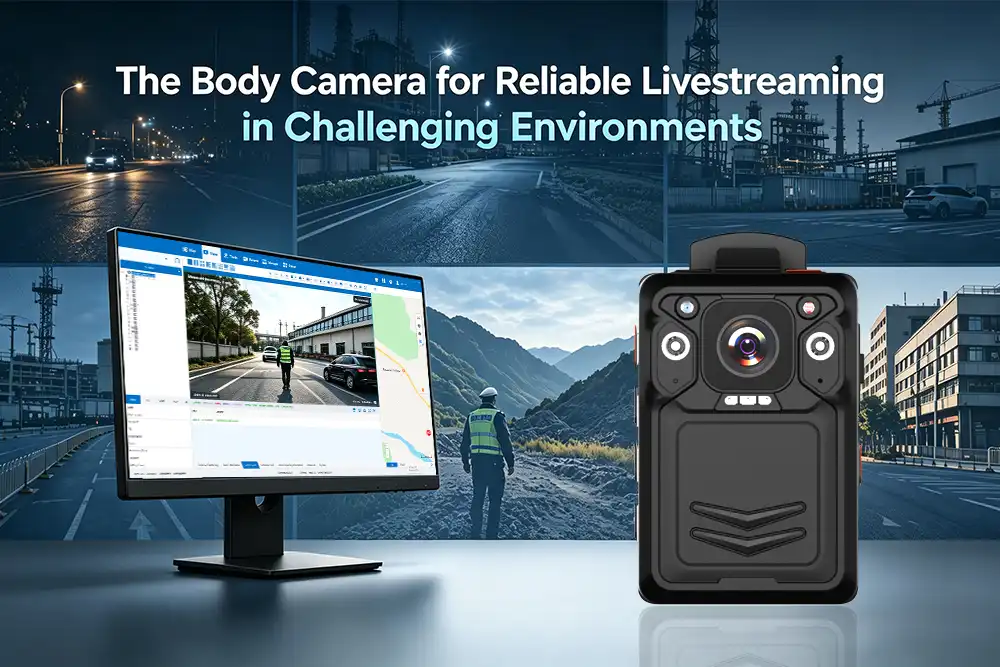
Key Challenges and Solutions for Reliable Livestreaming
When you use body cameras in places that aren't expected, you put them in a lot of situations where they could break. Professional-grade systems are different from user gadgets because they understand these problems and use the right answers.
Connectivity in Remote and Indoor Locations
Connectivity problems can happen in underground parking lots, on country roads, in crowded cities, and in remote desert areas. This problem is fixed by hybrid networks, which can instantly switch between existing networks. When 4G signals weaken, the device seamlessly switches to WiFi if it's available. When signal strength returns to normal, it switches back to 4G. This smart network control happens without any help from users, so officers can focus on their jobs instead of messing with technology settings. Geographic positioning data embedded in footage gives more information even when Body Camera Live Streaming is temporarily interrupted. This lets command centers keep track of where officers are and resume monitoring as soon as connections are restored.
Environmental Durability Requirements
Extreme temperatures, heavy rain, drops, and direct hits can all damage equipment and make it stop working. The IP67 rating on our enclosures keeps water and dust out, so the camera can be submerged up to one metre for thirty minutes. The 2-meter drop resistance rating means that the device can withstand falls onto concrete from about six feet away. This protects the investment when mistakes happen during fights or emergency situations. Ruggedised construction keeps interior parts intact in temperatures ranging from -20°C to 60°C. This makes sure that the vehicle works reliably whether it's cruising desert roads in the summer or responding to situations in the winter.
Battery Life During Extended Operations
Long shifts and streaming nonstop quickly drain battery life. Our 3200mAh battery can last all day with normal use, and functions that save power make the runtime even longer. The 2-inch HD screen turns off or dims itself instantly after a few seconds of inaction. This saves power without affecting the screen's usefulness. Users can wake up the screen by hand to play a video or change the settings, and then they can put it back to sleep. This smart power management keeps the camera working during 12-hour shifts, even when streaming only sometimes to save battery for important moments.
Comparing Body Camera Live Streaming Solutions for B2B Procurement
To choose the right tools, you need to carefully look at its technical specs, how well it works with other systems, and the total cost of ownership. People who work in procurement have to balance short-term budget constraints with long-term operational and scalability needs.
Essential Technical Specifications
Resolution has a direct effect on the quality of the evidence and whether it can be used in court. Our 1440P standard is higher than the 1080P minimum that is recommended by best practices for law enforcement. This means that facial recognition and license plate recognition are clearer. The video encoding method has a big impact on how much storage space is used. For example, H.265 compression cuts file sizes in half compared to H.264 while keeping the same visual quality, which means that you can double your storage space without having to change any gear. Connectivity options determine how flexible a deployment can be. Devices that can connect to both cellular and WiFi networks are better able to work in a variety of settings than solutions that only work on one network. Ruggedness certifications, such as IP67 waterproofing and drop resistance ratings, show how well the device can handle different environments. Battery capacity specifications show how long the device can work without being charged.
Ecosystem and Integration Considerations
Standalone cameras can record basic video, but they can't be fully integrated into a command center. Digital evidence management platforms with AES256 encryption, role-based access controls, and audit trail documents are all parts of complete systems. These platforms keep evidence safe throughout the chain of custody, which meets the requirements for legal admissibility. By connecting to current GPS tracking platforms, computer-aided scheduling systems, and video management tools, operations can be seen more clearly with Body Camera Live Streaming. Shenzhen Kexin Technology's solutions work with standard interaction methods, which means they can be easily added to existing infrastructure without having to update the whole system. When compared to private ecosystems that need special technology, this openness cuts down on implementation costs and speeds up rollout times.
Total Cost Analysis
The purchase price is only one part of the costs of owning something. Over the life of an item, subscription fees for cloud storage, cell phone data plans, and software licensing add up to a lot of money. The cost of maintenance, the availability of new parts, and the length of the guarantee all have an impact on long-term budgeting. Our 18-month guarantee is longer than the industry standard, protecting your investments and showing that you trust the product to last. Discounts for large orders and a variety of buying choices, such as straight purchase or rental, can work with a wide range of budgets. When considering options, businesses should figure out the total cost of ownership over five years, which should include all ongoing costs, planned repair cycles, and possible growth needs.
How to Choose and Procure the Best Body Camera Livestreaming System
A complete needs assessment is the first step to a successful application. Other steps include choosing a provider, deploying the solution, and providing ongoing assistance. Structured buying processes make sure that companies get solutions that meet their business needs instead of going for deals that aren't good enough.
Defining Operational Requirements
For each use case, you need different skills. Police put a high value on the accuracy of evidence, keeping records of the chain of control, and making sure that evidence can be used in court. Real-time tracking and quick planning of how to respond to incidents are important parts of security operations. For industrial inspections, batteries need to last longer and be built to last in harsh conditions. Distinctive styles and features that stop conflicts from getting worse are good for retail apps. Clear documentation of requirements, including expected shift lengths, working conditions, integration needs, and expected user counts, helps with evaluating vendors. End users should be involved in the requirements gathering process so that organisations can be sure that the solutions they choose work in the real world and not just in theory.
Key Performance Metrics
The video uptime percentage shows how reliable streaming is in different network situations. Solutions that keep links above 95% during regular operations show that they can handle networks well. Measuring latency shows how long it takes for real-time events to be seen by the command center. Latency levels below five seconds allow for good tactical coordination during changing incidents. The complexity of the user interface affects how much training is needed and how many people actually use it. Controls that are easy to understand and use decrease learning curves and operating mistakes. The amount of time that evidence can be kept before it needs to be offloaded is determined by the recording capacity specifications. At full capacity, our system can store more than 24 hours of 1080P video, so it can handle multiple shifts before it needs to transfer data.
Procurement Options and Vendor Evaluation
Direct purchase gives you full ownership without having to pay a monthly fee, which is good for businesses with set budgets and long-term plans for deployment. Rental agreements lower the amount of money needed up front and give you the freedom to change as technology improves. Leasing programs offer low initial costs, fixed monthly payments, and possible buyout options at the end of the term. When judging a vendor, you should look at their manufacturing certifications, such as ISO standards, which show that they use consistent quality control methods. International compliance approvals, such as CE and ROHS, show that a product meets safety and environmental standards in all global markets. When problems happen, operating consistency is affected by the availability of technical help, reaction time promises, and reporting processes.
Future Trends and Innovations in Body Camera Livestreaming
Wearable camera systems are getting better and more useful as technology keeps getting better, with Body Camera Live Streaming. Forward-thinking businesses keep an eye on new changes to help them make decisions about strategic planning and when to make investments.
5G Network Integration
Next-generation cell phone networks offer much better speed and very low delay, below one second. These changes make it possible for higher resolution streaming, multiple camera feeds at the same time, and augmented reality overlays that give field workers real-time information. Better network reliability in busy areas makes urban deployment work better, where 4G infrastructure sometimes has trouble. Organisations that plan to keep equipment for more than one year should think about 5G compatibility when they are thinking about what to buy now so that they don't have to replace old equipment too soon as network infrastructure upgrades speed up.
Artificial Intelligence Applications
Video analytics powered by AI can instantly find certain events, like guns, cars, or phrases in audio tracks. This lets managers know about serious situations that need their quick attention. Officers can check people they meet against watch lists using facial recognition technology, which makes traffic stops and field interviews safer. Automatic removal tools speed up requests for public records by finding and hiding private information like faces of bystanders or the inside of private properties. With these smart features, cameras go from being passive recorders to active situational awareness tools. However, the benefits for operations must be carefully weighed against privacy concerns and the need to follow the rules.
Blockchain Evidence Verification
Distributed ledger technology creates records that can't be changed from the moment they are recorded, providing digital proof of video accuracy. Each frame gets a unique digital signature that is stored in a blockchain that can't be changed. This makes any changes made without permission quickly obvious. This technology handles rising worries about deepfake manipulation and claims of evidence tampering, making it easier for evidence to be used in court and building trust in the system. The industry is still in the early stages of implementing blockchain, but companies that deal with very sensitive proof or do business in places with strict chain-of-custody rules should keep a close eye on how things are going.

Conclusion
You have to find a balance between technical specs, operating needs, and price limits when choosing effective body camera technology that can support Body Camera Live Streaming. Finding ways to stay connected in tough places, making sure equipment lasts, and controlling power use are all difficult tasks that need professional-level solutions made for tough field conditions. Real-time video streaming helps organisations in the shopping, law enforcement, and emergency services sectors better understand what's going on, coordinate their responses, and keep records of important events that can be checked. At Shenzhen Kexin Technology, we've worked with clients from more than 30 countries, which shows us how important it is to have strong construction, smart network management, and full support throughout the lifecycle of a product. As technology keeps getting better with features like 5G and AI, smart purchases made today should plan for the operational needs of tomorrow while also providing instant performance gains.
FAQ
1. How reliable is uninterrupted real-time livestreaming from body cameras?
Modern professional body cameras maintain streaming reliability above 95% under normal conditions by employing hybrid network capabilities that automatically switch between 4G cellular and WiFi connections. When temporary interruptions occur due to signal loss in underground locations or remote areas, the device continues local recording and automatically resumes streaming when connectivity returns. This redundant approach ensures minimal footage loss while maintaining command center visibility during most operational scenarios.
2. What factors most significantly affect streamed video quality?
Available bandwidth represents the primary limitation—congested cellular networks or weak WiFi signals force resolution reduction to maintain connection stability. Advanced compression codecs like H.265 help by reducing data requirements approximately 50% compared to older standards without sacrificing visual clarity. Camera sensor quality also matters; our OV05A20 sensor captures superior detail in challenging lighting conditions compared to lower-specification alternatives, ensuring usable footage even when environmental factors are unfavorable.
3. Are live-streaming body cameras legally compliant for use across different regions?
Compliance requirements vary by jurisdiction, but professional systems incorporate features addressing common regulatory concerns. AES256 encryption protects data during transmission and storage, satisfying data security mandates. Audit trail documentation tracks all access to footage, supporting chain of custody requirements. Organizations must verify specific local regulations regarding recording consent, data retention periods, and public disclosure obligations before deployment.
Partner with Shenzhen Kexin Technology for Your Body Camera Live Streaming Solution
Equipping your team with professional-grade wearable cameras shouldn't mean compromising between video quality, durability, and budget constraints. As an experienced body camera live streaming manufacturer, Shenzhen Kexin Technology Co., Ltd. delivers ISHOOP-branded solutions combining 1440P resolution, IP67 waterproof construction, and intelligent dual-network streaming capabilities proven across law enforcement, security, emergency services, and retail applications in more than 30 countries. Our ISO-certified manufacturing, CE and ROHS compliance, and 18-month warranty demonstrate our commitment to quality, while flexible ODM/OEM services accommodate specific organizational requirements. Contact our procurement specialists at sales@ishoop.com.cn to discuss your operational needs, request detailed specifications, or arrange equipment demonstrations that showcase real-world performance in challenging conditions.
References
1. International Association of Chiefs of Police. (2020). "Body-Worn Camera Model Policy and Implementation Guide." IACP Law Enforcement Policy Center, Alexandria, Virginia.
2. Johnson, R., & Williams, T. (2021). "Network Performance Analysis for Real-Time Video Streaming in Public Safety Applications." Journal of Emergency Management Technology, Vol. 15, No. 3, pp. 178-195.
3. European Data Protection Board. (2022). "Guidelines on the Use of Body-Worn Cameras by Law Enforcement Authorities." EDPB Official Publications, Brussels, Belgium.
4. Chen, H., Martinez, S., & Anderson, K. (2023). "Comparative Assessment of Video Compression Standards for Mobile Evidence Collection Systems." International Journal of Digital Forensics, Vol. 8, No. 2, pp. 89-107.
5. National Institute of Standards and Technology. (2021). "Environmental Testing Standards for Law Enforcement Equipment: Ingress Protection and Drop Resistance Requirements." NIST Special Publication 1234, U.S. Department of Commerce.
6. Thompson, D., & Roberts, L. (2022). "Total Cost of Ownership Analysis for Body-Worn Camera Systems in Municipal Law Enforcement." Public Safety Technology Review, Vol. 29, No. 4, pp. 44-62.

USER EVALUATE
Here is the customer's evaluation of us