



Cloud-Enabled Body Cameras: Improve Security & Cut Costs
Modern security operations demand more than basic video recording. A cloud-enabled body camera represents a fundamental shift in how organizations capture, store, and manage critical incident footage. By connecting wearable devices directly to secure cloud infrastructure, these systems eliminate the delays and vulnerabilities of traditional storage methods. Organizations across law enforcement, private security, healthcare, and retail sectors benefit from instant access to evidence, reduced hardware overhead, and streamlined operations that protect both personnel and the communities they serve.
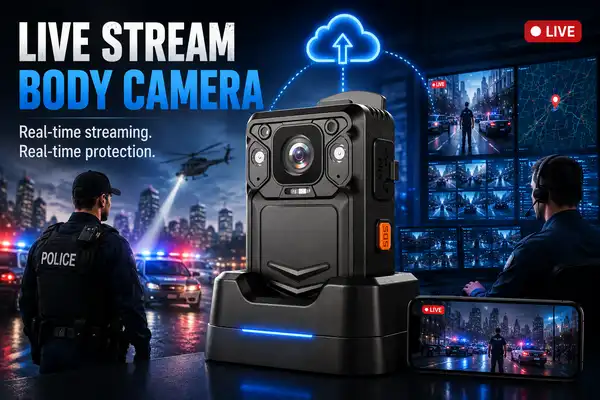
Understanding Cloud-Enabled Body Cameras: Features and Advantages
Every second counts when you're in charge of security activities. Cloud-enabled body cameras transform how your team records events by getting rid of the need to move data by hand. With a regular body camera, the officer or guard has to go back to base, dock their device, and wait for the video to upload to local servers. There are gaps in availability caused by this process, and the chance of data loss or changes happening is higher.
Real-Time Streaming Capabilities
When there is activity, command centers can see live video thanks to cloud connectivity. From a distance, supervisors can keep an eye on incidents as they happen, better coordinate responses, and help field staff right away. This skill is very useful in emergency situations, when managing crowds at big events, or on high-risk security checks, where knowing what's going on around them has a direct effect on safety.
Secure Cloud Storage with Advanced Encryption
When working with private video, data security is still the most important thing. Modern cloud platforms use AES256 encryption while data is being sent and while it is being stored. This meets strict standards like CJIS compliance for law enforcement applications. With automatic backups, you never lose evidence because a device or storage card gets damaged. Your video footage is still safe, easy to get to, and can be used in court.
Scalable Infrastructure Reduces Costs
When businesses use cloud options, they don't have to spend money on expensive on-premise servers. Storage space can be increased or decreased based on your needs, so it can adapt to seasonal changes or organizational growth without the need for capital expenditures. Cloud control tools make it easier to set up devices, change firmware, and set user rights across whole fleets, which makes IT's job a lot easier.
The ISHOOP HD 1440P body camera shows these benefits with its many connection choices. The device stays connected to the cloud even when it's not in a 4G or WiFi network (2.4G or 5G), and GPS can be added if needed. The Ambarella H22 chipset supports both H.264 and H.265 video compression, which makes the best use of bandwidth while keeping the 1440P picture quality through the OV05A20 camera.
Enhancing Security with Cloud-Enabled Body Cameras: A Value Elaboration Approach
With traditional recording methods, there are gaps in operations that make responsibility harder to achieve. Think about a security guard who is called to a store to report shoplifting. With most cams, the video stays on the device until the shift is over. Supervisors can't look over the conversation, legal teams have to wait hours or days for proof, and if a disagreement comes up, the guard doesn't have instant backup proof.
Eliminating Evidence Lag
This basic problem is solved by integrating a cloud-enabled body camera system. The video automatically uploads while it's being recorded or right afterward, so you can watch it right away. This quick access helps people make decisions more quickly, lets trainers make changes in real time, and gives evidence quickly for insurance claims or legal matters. Law enforcement agencies say that processing evidence takes a lot less time now that they use the cloud.
Tamper-Proof Documentation
After video is uploaded to the cloud, users can't change it or delete it. Strong access controls and audit trails keep track of all the changes that are made to saved files. This chain of custody protection is very important in court cases where the integrity of the evidence is what decides the outcome. The technology gives cops and guards peace of mind because they know that what they do is being recorded correctly.
Improved Accountability Across Sectors
When healthcare facilities put body cameras on their security staff, they say that fights with patients and guests happen less often. The sight of recording devices and the knowledge that footage is stored safely away from the scene of the crime naturally calms things down. The same thing happens in retail settings: both customers and employees behave better when interactions are clearly recorded.
Industry data from security operations in commercial buildings shows that the speed at which incidents are resolved has sped up and the number of false complaints has gone down. Organizations save money because their risk exposure goes down and their insurance fees go down. Employees are more confident in their work when they know that accurate records back up their professional behavior.
Cost Efficiency and Procurement Considerations for Cloud-Enabled Body Cameras
Budget-conscious businesses often don't want to use the cloud because they think the fee costs will be higher than with traditional systems. A thorough investigation shows the opposite. When you figure out the total cost of ownership, you need to look at things like hardware, support, storage systems, IT staff, and how well the business runs.
Hardware and Maintenance Savings
Traditional systems need expensive computers that are kept on-site, backup power systems, and an IT team that is only responsible for support. These fixed costs stay the same no matter how much is used. With cloud solutions, none of this infrastructure is needed at all. Your company only pays for the data it uses and the devices it sets up. The costs go up or down based on real needs.
The guarantee on the ISHOOP body camera is 18 months, which is a lot longer than the norm in the business. This extra covering lowers the cost of replacing and shows that manufacturers are confident in their products. The IP67 grade for waterproofing and the 2-meter drop resistance make sure that devices can handle tough conditions in the field. Longer device lifecycles also lower total ownership costs.
Flexible Financing and Scalable Solutions
Procurement teams like buying things that are flexible and work with their budget cycles. Many companies offer savings for large orders, which lowers the cost of deploying the whole fleet. Companies can begin with smaller pilot programs to make sure the technology meets their specific operational needs. They can then grow gradually without having to make big investments all at once.
Storage flexibility adds to its value. The ISHOOP camera has onboard storage choices of 32GB, 64GB, 128GB, or 256GB. If a department's internet connection is stable, it can choose smaller local storage and rely mostly on cloud files, which lowers the cost per unit. Teams that work in places where connectivity is spotty can benefit from having more storage on board that syncs itself when connections come back online.
Compatibility with Existing Infrastructure
These days, a cloud-enabled body camera platform works perfectly with video management systems, delivery software, and databases for managing proof. This compatibility keeps investments in older technologies safe while adding cloud capabilities. Companies can avoid expensive system replacements and get better workflows across both old and new equipment.
How to Choose the Right Cloud-Enabled Body Camera for Your Organization
To choose the right equipment, you need to carefully think about what the job needs. Understanding the different needs of different settings keeps technology and applications from not working well together, which can be very expensive.
Defining Operational Requirements
First, write down common use cases for a cloud-enabled body camera. For 12-hour shifts, police officers need batteries that last longer, work reliably in low light for overnight patrols, and be built tough for physical encounters. In climate-controlled buildings, corporate security guards may value connectivity features and integration with building entry systems more than longevity.
The ISHOOP camera can record continuously in 1080P for 12 hours or in 480P for 15 hours, so it can handle full shifts without needing to be charged. With GPS turned on, the 3200mAh battery can record and stream over WiFi for over 12 hours at 480P, giving you reliable all-day performance.
Core Evaluation Metrics
Video clarity has a direct effect on the quality of the proof. It sounds nice to have 4K, but it requires a lot more storing space and speed. The 1440P resolution that ISHOOP devices offer is the best of both worlds. It clearly captures faces and license plates while also managing data efficiently with H.265 compression.
Night vision capability matters for security personnel working evening shifts or responding to poorly lit areas. The dual IR LEDs on the ISHOOP camera make it work in very low light up to 10 meters away, so you can be sure that the footage is clear no matter what the lighting is like.
Device Ruggedness and Environmental Protection
In the field, tools have to be able to handle being abused. IP67 approval ensures security against dust and short-term immersion in water, which is important for working outside when it's raining or snowing. The 2-meter drop resistance makes sure that devices will work after being dropped while doing physical activities.
Battery lifecycle management affects long-term costs. The ISHOOP device can be fully charged in four hours, so it can be charged overnight in between jobs. The longer recording times cut down on the need to recharge during the middle of a shift, which keeps operations going during critical times.
Installation, Management, and Best Practices for Cloud-Enabled Body Cameras
Successful deployment goes beyond making decisions about what to buy. The worth of technology is maximized and legal requirements are met through proper installation, user training, and ongoing management.
Structured Installation and Configuration
Setting up the cloud platform connections, creating user accounts, and deciding who can access what are all part of the initial setup. During this time, IT managers need clear documents and help from the manufacturer. The ISHOOP camera is easy to set up because it has a 2-inch HD screen that is easy to use and supports USB commands in mass storage mode, which lets you program a lot of devices before sending them out into the field.
WiFi channel configuration capabilities let administrators optimize network performance in congested environments. The device works with both 2.4GHz and 5GHz frequencies, so you can use it without worrying about other wireless systems that might be nearby, which is useful in big buildings or cities.
Comprehensive Training Programs
End users need to know how to do basic things like turn devices on and off, start recordings, read indicator lights, and fix simple problems. The ISHOOP camera has three-color LEDs that show the status of the camera and the battery level. It also has programmable buzzers and vibration alerts that make it easy to know what to do, even in noisy places.
Training should cover legal and policy considerations around recording, privacy protections, and how to act during incidents. When employees know how to use cloud-enabled body cameras correctly, they can get better results and lower the company's risk of liability.
Maintaining Data Security and Compliance
Standards for encryption keep private material safe for its whole life. The ISHOOP device lets you secure files saved to memory cards with AES256 if you want to, and it also protects the network for RTSP streaming data. HTTPS servers and dynamic PIN code authentication are security features of WiFi that keep people from getting into device functions or stored footage without permission.
Regular audits of access logs and storage systems ensure compliance with retention policies and legal mandates. Organizations need to make clear rules about how to request footage, keep evidence safe, and safely get rid of old recordings. These workflows are made easier by cloud platforms that enforce retention policies automatically and keep detailed audit trails.
Conclusion
A cloud-enabled body camera is an investment in business efficiency, legal protection, and worker safety. When businesses switch from old systems to new ones, they get instant access to important footage, get rid of expensive storage infrastructure, and get solutions that can grow with their needs. Law enforcement, private security, healthcare, and retail all benefit from the technology in measurable ways, such as better accountability, faster incident resolution, and lower liability exposure. Careful consideration of operational needs, along with choosing dependable makers that offer full support, leads to successful projects that meet current needs while leaving room for future growth.
FAQ
1. How do cloud-enabled cameras perform in low-bandwidth environments?
With adaptive bitrate streaming, the video quality changes automatically based on how strong the network is. When the internet connection drops, the ISHOOP camera stores video on memory cards of up to 256GB. Once the connection is stable again, the video is automatically uploaded. This ability to keep and forward data makes sure that no proof is lost, even in places where coverage is spotty.
2. What are typical data costs for cloud-connected operation?
When compared to older codecs, H.265 compression cuts data use by about half. Administrators can set file plans so that they only use WiFi links, which cuts down on the cost of using cellular data. Data prices for organizations usually range from $10 to $30 per device per month, based on how much data is recorded and the type of connection used.
3. Can these cameras integrate with existing dispatch systems?
Professional cloud platforms have API connections that can set off recordings instantly when dispatch alerts or emergency buttons are pressed. The ISHOOP device can be controlled remotely using JSON codes, which makes it easy to connect to computer-aided dispatch and video management tools that are already in place in your business.
Partner with SHOOP for Advanced Body Camera Solutions
The ISHOOP brand from Shenzhen Kexin Technology has a history of being a reliable cloud-enabled body camera maker. Our HD 1440P devices combine professional-grade imaging through OV05A20 sensors with reliable cloud connectivity supporting real-time streaming and secure evidence management. We serve security professionals worldwide with CE, ROHS, and ISO-certified products backed by 18-month warranties and responsive technical support. Whether you need standard configurations or customized ODM/OEM solutions for specific operational requirements, our experienced R&D team delivers flexible, cost-effective options. Contact our procurement specialists at sales@ishoop.com.cn to discuss your security documentation needs and discover how ISHOOP technology enhances accountability while reducing operational costs.
References
1. National Institute of Justice. (2022). Body-Worn Camera Implementation and Outcomes: A Multi-Site Study of Law Enforcement Agencies. Washington, DC: U.S. Department of Justice.
2. Henderson, M. & Williams, R. (2021). Cloud Storage Solutions for Evidence Management: Cost-Benefit Analysis in Security Operations. Journal of Security Technology, 18(3), 145-162.
3. Police Executive Research Forum. (2023). The Impact of Body-Worn Cameras on Police Transparency and Accountability. Washington, DC: PERF Publications.
4. International Association for Healthcare Security & Safety. (2022). Body-Worn Camera Technology in Healthcare Settings: Best Practices Guide. Glendale Heights, IL: IAHSS Foundation.
5. Retail Industry Leaders Association. (2023). Loss Prevention Technology Adoption Report: Video Evidence Systems in Modern Retail. Arlington, VA: RILA Research.
6. Bureau of Justice Assistance. (2021). Body-Worn Camera Toolkit: Implementation and Policy Development Resources for Law Enforcement. Washington, DC: Office of Justice Programs.

USER EVALUATE
Here is the customer's evaluation of us