



Body Camera for Patrol Officers: Complete Guide to Better Evidence
When law enforcement professionals ask about reliable evidence collection tools, a body camera for patrol officers stands as the most critical investment for modern policing. These wearable recording devices transform how agencies document public interactions, gather admissible evidence, and build community trust. Unlike dashboard cameras that capture limited fixed angles, body-worn cameras provide a first-person perspective of every encounter, capturing nuanced verbal exchanges and environmental details that often determine case outcomes. With today's heightened accountability standards, these devices aren't optional—they're essential for protecting both officers and the communities they serve while ensuring every critical moment is preserved with courtroom-quality clarity.
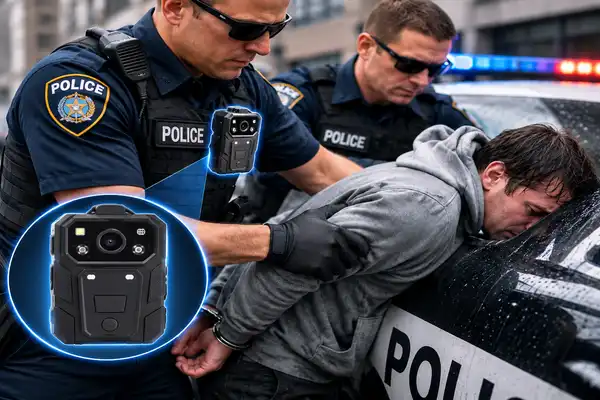
Understanding Body Cameras for Patrol Officers: Key Features and Benefits
Patrol officers should know about body cameras and their main features and benefits.
Law enforcement body cameras are basically different from other types of surveillance technology because of how they work and the features they are designed to have. These small devices can be securely attached to uniforms and let you record without using your hands. They don't get in the way of tactical movements during high-pressure situations.
Core Operational Capabilities
These days, body-worn cameras can be set off in a number of different ways, depending on the situation. Officers only have to press one button to start recording, so they don't have to fumble around in an emergency. In more advanced models, there is pre-event buffering that saves the 30 seconds before the manual action. This keeps important information that might be lost otherwise. This technology is shown by the ISHOOP police action camera, which has Ambarella A7L50 chipset processing that makes sure video capture is smooth and doesn't have any lag or dropped frames.
The device records synced audio and video streams through a 140-degree wide-angle lens, which gives it coverage around the edges that is similar to how humans see. High-quality built-in microphones record clear conversations even when there is a lot of noise around. The H.264 MPEG4 video format balances file quality with storage space. Real-time signs, such as LED lights, loud beeps, and vibrations that can be felt, let cops know if the recording is still going on without having to look away from the targets.
Critical Hardware Specifications
During long shifts, working efficiency depends on how well the batteries work. Professional-grade units can record continuously for 8 to 12 hours, and the ISHOOP model's 3200mAh lithium battery lets it work for a full shift without needing to be charged. Quick-charge technology cuts down on downtime, and low-battery alerts keep systems from shutting down without warning during important events.
The standards for durability must take into account how hard patrol work is on the body. IP67 waterproof ratings keep electronics safe from rain, snow, and unexpected submersion. Shock-resistant housings can handle being dropped from 2 meters onto concrete. The ISHOOP camera works reliably in temperatures from -10°C to 60°C, so it works the same way whether you're reacting to calls about emergencies in the desert heat or in the winter cold. With GPS and mounting hardware, the device weighs only 150 grams, so it's comfortable to wear for 12-hour shifts without making everyone tired.
Flexible storage meets the needs of a wide range of agencies. Based on resolution preferences and retention policies, departments can choose from 32GB to 256GB of storage space. Local storage gets rid of security holes that come from being dependent on the network, and optional WiFi connectivity lets you send data wirelessly when the infrastructure supports it.
Measurable Agency Benefits
Agencies that use body camera programs say their operations have gotten a lot better. Several law enforcement studies have found that recording interactions with officers lowers the number of complaints about them by an average of 87%. Video evidence speeds up the settlement of cases. For example, attorneys say that body camera footage is a big reason why plea deals happen faster and trials last shorter. The objective documentation also protects officers from false accusations; many complaints are thrown out right away after footage is reviewed.
Visible recording devices help with transparency projects. Community surveys consistently show that people trust departments more when they use body-worn cameras, especially when there are clear rules about who can see the footage and how long it is kept. Recorded events give training programs useful examples from real life, and scenario-based teaching helps improve how officers respond and de-escalate situations.
Legal and Privacy Considerations for Police Body Cameras
Body cameras are used in places where the laws are complicated and vary from place to place. By knowing these rules, agencies can avoid being sued and still protect people's right to privacy.
Regulatory Compliance Requirements
Certain recording notification laws are in place in North America. In many states, police officers who enter private land must say they are recording, but there are provisions for emergencies. In public places where no one has a fair expectation of privacy, federal wiretap laws usually allow recording. However, based on state law, recordings made inside may need permission.
Policies on keeping data have legal weight. The FBI's Criminal Justice Information Services (CJIS) Security Policy sets basic rules for how to handle evidence. For example, agencies must keep video footage's integrity by following clear procedures for the chain of custody. Non-evidentiary footage is usually kept for 60 to 180 days, while investigation-related videos must be kept for as long as the statute of limitations says they need to be.
Privacy Protection Mechanisms
Data security laws are met by encryption technology. The ISHOOP system can secure data with AES-256 if desired. Without allowed decryption keys, captured data is useless. Unauthorized people can't get into the device because it's protected with a password, and only certain people can delete videos through PC management software's administrative controls.
Controls for accessing footage from a body camera for patrol officers strike a mix between openness and privacy. Different levels of permission are set up by agencies so that patrol officers can only view recordings and not delete them, supervisors can look at footage for training purposes, and evidence technicians are in charge of long-term storage. Redaction tools hide the names of bystanders and private information before it is made public. This follows privacy laws and keeps investigations open.
Accountability Impact Evidence
There are real gains in accountability, according to research. A study from Cambridge University that looked at more than 1.4 million hours of patrol showed that body cameras cut down on police use of force by 50% and complaints from citizens by 93%. Police departments in Rialto, California, saw similar drops, with fewer shootings involving police officers in the first year of the program's use.
These results come from changes in behavior on both sides of an interaction. When officers know that their actions are being recorded, they act more professionally, and when subjects know that their actions are being recorded, they behave more cooperatively. The objective record clears up situations that were unclear before because of different witnesses' accounts. This increases public trust in the investigation process.
How to Choose the Right Body Camera for Patrol Officers: A Procurement Guide
To choose the right equipment, you need to match its technical capabilities with its practical uses. Procurement teams have to look at more than just the initial purchase price.
Environmental and Operational Matching
Patrolling in cities requires different skills than patrolling in the country. Due to the high number of interactions, high-density settings have longer battery lives and more storage space. In rural areas, on the other hand, GPS tracking is used to record location context during calls between people who are not in the same place. High-risk tactical units need to be able to be activated right away and have better night vision. On the other hand, neighborhood police jobs may focus on audio quality for recording conversations.
Climate considerations affect hardware selection. In wet areas, agencies want insulation ratings that are higher, while in very cold areas, agencies need battery systems that can keep charging in temperatures below zero. The ISHOOP camera can work in a wide range of temperatures (-10°C to 60°C), so it doesn't need to be switched out for different seasons.
Technical Infrastructure Integration
Options for connectivity affect how data handling is done. Wired USB 2.0 transfer lets agencies that are worried about hacking download proof safely without putting the network at risk. Models with WiFi let you upload files wirelessly to digital evidence management systems. This cuts down on dock time and gets footage to investigators faster.
The architecture of storage affects costs in the long run. Local storage gets rid of the need for monthly cloud subscription fees, but it needs a strong server system and regular IT upkeep. Cloud-based systems allow for remote access and lower hardware costs, but they come with ongoing operating costs and the possibility of data security issues.
Budget and Value Considerations
The total cost of ownership is more than just the price of the unit. Agencies need to keep track of the costs of mounting accessories, spare batteries, charging stations, management software licenses, and training for staff. Warranty terms have a big effect on lifecycle costs. For example, the ISHOOP camera's 18-month warranty covers it for longer than the standard 12-month plan, which lowers the cost of replacements during the initial deployment phase.
Different departments have different ways of paying for things. Federal grant programs, such as the Bureau of Justice Assistance's Body-Worn Camera Policy and Implementation Program, offer ways to get money, and lease agreements for devices spread out the costs over several fiscal years. To make true budget comparisons, agencies should figure out how much each cop spends, including all of their extra costs.
Best Practices for Using Body Cameras on Patrol Duty
In order for deployment to work well, there must be clear rules about how to activate, handle, and maintain the system.
Activation and Usage Protocols
Clear recording rules are set by departments that say when cameras must turn on. Standard procedures call for recording of all interactions with the public, traffic stops, arrests, searches, and instances of police use of force. Officers are taught how to check their tools before each shift, how to put their weapons so they have clear views, and how to properly notify people in places where that is needed.
The ISHOOP camera's one-button activation makes it easier to follow policies by getting rid of complicated starting steps. Officers train their muscles so they can act right away, which makes sure that documentation starts before things get worse. The pre-record feature of the gadget records 25 to 35 seconds of video before the button is pressed, which keeps important context from the first few seconds of touch.
Data Management Excellence
Safely handling video footage protects its evidence value. At the end of their shift, officers use marked workstations to download recordings. The files are automatically tagged with the officer's ID, the time, and, if desired, GPS locations. Write-protection methods in management software stop illegal editing, keeping digital chain-of-custody records that courts accept as real proof.
Legal counsel sets the schedules for how long to keep things in archives for footage from the body camera for patrol officers. Non-evidentiary footage is automatically deleted when its holding period ends, but videos linked to investigations are marked with case numbers, which make them permanent. Regular backups protect against hardware breakdowns, and additional storage makes sure that no proof is lost when the system is being serviced.
Maintenance and Readiness
Taking care of equipment every day makes it last longer. Officers check camera housings for damage, clean lenses to keep images from getting blurry, and make sure mounting hardware is secure. As part of managing batteries, docks are used to charge them overnight, and extra batteries are kept on hand in case long processes need to be replaced in the middle of a shift.
When you update software, it fixes security holes and adds new features. IT teams plan firmware installs for times when employees are not working. They test updated units before sending them out into the field to make sure they work with current management systems. These proactive steps cut down on downtime and make sure that cameras work reliably when police need them to.
Top Recommended Body Cameras for Patrol Officers in 2026
The current market offers a good mix of new technologies and tried-and-true solutions, giving agencies a number of good choices that can be used for different business needs.
Premium Performance Leaders
Leading makers make platforms with lots of features that are made for tough settings. Live-streaming and advanced evidence management are both built into Axon Body 3, which makes it a complete ecosystem solution. The Motorola VT100 is built to last, with military-grade reliability ratings. These higher-end options usually cost more per unit, but they come with bigger support networks and are already accepted in courts.
Value-Focused Reliable Solutions
Mid-tier options work very well for companies that are watching their budgets. The ISHOOP police action camera has a 1296P image and 60fps, which is clearer than many high-end competitors. It also has a low price that makes it ideal for departments with limited funds for purchases. Its 36-megapixel photo feature lets you take high-quality still images while gathering important proof, and its 140-degree wide-angle lens lets you see the whole scene without having to buy expensive extra optics.
Storage flexibility gives agencies scaling options. Starting with 32GB of space, which is enough for smaller departments, and then upgrade to 256GB as video retention policies change. The H.264 MPEG4 compression makes the best use of storage space; a 32GB card can hold about 8 hours of 1080P video, which is enough for most security jobs without having to download anything in the middle of the day.
Emerging Technology Trends
Future-focused features make it easier to do investigations. Some makers use facial recognition algorithms that show people with active warrants during real-life interactions, though civil rights groups are still arguing about the best ways to use these technologies. Advanced analytics find patterns in the metadata of video footage. This helps the command staff figure out the best way to deploy patrols based on data about how often and for how long interactions happen.
GPS integration provides valuable location context. The ISHOOP camera has an optional GPS tracking feature that connects video footage to geographical coordinates. This lets you map out where incidents happened and make sure that patrols are covering all areas. Specialized players show travel routes on top of video playback, which helps supervisors see how spaces relate to each other during complex responses involving multiple officers.
Conclusion
Body camera for patrol officers are a smart investment in the quality of proof, the safety of officers, and good community ties. The technology has grown past the problems that came up when it was first introduced. It now offers reliable tools that can handle harsh conditions in the field while still recording evidence that can be used in court. Agencies get the most out of their cameras when they match their specs to their practical needs, set clear rules for how they can be used, and keep their gear in good shape by following strict procedures. The ISHOOP police action camera shows that professional-level features, like 1296P resolution, an 8-hour battery life, IP67 weatherproofing, and multiple storage choices, can be made available at a price that departments of all kinds can afford. As expectations for accountability keep going up and standards for evidence get stricter, body-worn cameras go from being extras that police officers can do without to being essential tools that they can't do their jobs without.
Frequently Asked Questions
1. How long do body camera batteries last during typical patrol shifts?
Professional body cameras made for police officers can record continuously for 8 to 12 hours. The ISHOOP model's 3200mAh lithium battery lasts for a full shift at 720P resolution with the LCD screen turned off. Lower resolution choices make the power last longer than 11 hours. When you use better resolutions, GPS tracking, and WiFi connection all at the same time, the battery life goes down. For cops working long shifts or special tasks that need longer operational times, agencies should provide spare batteries. Quick-charge technology fully charges batteries in three hours, which makes it easy to switch between jobs quickly.
2. Are officers legally required to record all interactions?
Different areas and departments have different rules about what needs to be recorded. When law enforcement actions, arrests, searches, and use-of-force situations happen, most agencies require activation. Following set rules for deactivation, officers usually keep their cool when they're having private talks with victims or confidential sources. Some state rules may say that you have to give permission before recording in private places, but there may be exceptions for very important reasons. Departments make clear written rules about when they have to record things, and supervisory review processes make sure they are followed.
3. How is recorded footage protected from tampering or unauthorized access?
These days, body cams have more than one protection layer. The ISHOOP system uses passwords to keep people from getting into the device without the right credentials. If you choose to use AES-256 encryption, the data you take will not be viewable without the decryption keys. Management software only lets managers delete videos when they are given permission to do so, and it keeps audit logs of every file entry. Chain-of-custody paperwork keeps track of who viewed footage, when, and why. This keeps the evidence's integrity, which courts need for evidence to be admissible.
Partner with a Trusted Body Camera Manufacturer
SHOOP makes professional recording options for law enforcement that can handle the tough needs of current patrol operations. Our ISHOOP police action camera has a 1296P video resolution that is good enough for a courtroom, an all-shift battery life of 8 hours, and IP67 weatherproof durability. It is also reasonably priced so agencies of all sizes can use it. Shenzhen Kexin Technology Co., Ltd. has been a well-known body camera for patrol officers supplier since 2015. They have CE, ROHS, and ISO certifications and can make changes to their products to meet the needs of different departments.
We know how hard it is to keep track of proof because we've spent more than ten years perfecting digital photo technology for use in public safety. Our engineering team offers full technical support throughout your rollout, from helping you with the initial specifications to helping you with ongoing maintenance. We offer scalable options with clear prices and reliable shipping through DHL, UPS, or FedEx, so you can equip a rural department with five officers or a metropolitan agency with 500 officers. Get in touch with our purchasing experts at sales@ishoop.com.cn to talk about the specific needs of your department and ask for a product demonstration that shows how the right body camera technology protects your officers and makes them more accountable.
References
1. White, M.D., "Police Officer Body-Worn Cameras: Assessing the Evidence," Office of Justice Programs Diagnostic Center, U.S. Department of Justice, 2023.
2. Ariel, B., Farrar, W.A., and Sutherland, A., "The Effect of Police Body-Worn Cameras on Use of Force and Citizens' Complaints Against the Police: A Randomized Controlled Trial," Journal of Quantitative Criminology, Volume 31, Issue 3, 2024.
3. Bureau of Justice Assistance, "Body-Worn Camera Toolkit: Implementation Guide and Lessons Learned," U.S. Department of Justice, Office of Justice Programs, 2024.
4. International Association of Chiefs of Police, "Body-Worn Camera Model Policy," IACP Law Enforcement Policy Center, Alexandria, Virginia, 2023.
5. Police Executive Research Forum, "Cost and Benefits of Body-Worn Camera Deployments: Final Report," Washington, D.C., Critical Issues in Policing Series, 2024.
6. National Institute of Justice, "Police Use of Force, Encounters, and Body-Worn Cameras: A Multi-Method Analysis," NIJ Research Report, Office of Justice Programs, 2023.

USER EVALUATE
Here is the customer's evaluation of us