



Best Officer Accountability Body Camera for Police Use
Experts consider dependability, evidence integrity, and real-world performance when choosing an Officer Accountability Body Camera for police usage. Modern police technology must record quality footage, survive difficult environments, and safeguard data chains. Shenzhen Kexin Technology Co., Ltd.'s ISHOOP Real Time Body Camera is a reliable choice for departments seeking advanced accountability technology that supports transparency and legal compliance due to its 1440P resolution, IP67 waterproof rating, military-grade AES256 encryption, and 12-hour battery life.

Understanding Officer Accountability Body Cameras
Officer Accountability Body Cameras are meant for law enforcement openness and evidence collection. These cameras have additional features for enforcement, unlike consumer video systems.
What Makes Accountability Cameras Different
These gadgets record more than video. Supervisors may observe incidents live using real-time streaming. GPS tagging automatically captures police routes and incident locations. Tamper-proof encryption protects footage from illegal access and manipulation across the chain of custody. The hardware base is crucial. Industrial chipsets like the Ambarella H22 keep professional cameras running smoothly under strain. Whether police operate in clear sunshine or low light, the OV05A20 sensor captures crisp detail. This technical basis documents every crucial moment professionally.
Pre-Event Recording Technology
Pre-event buffering distinguishes accountability cameras. The camera continually records but only saves when an officer presses record. This includes the 30 to 60 seconds before pressing record in the evidence file, collecting vital background before occurrences. This capability tackles a major law enforcement documentation issue: police may not have time to activate cameras before events deteriorate. Understanding these technological differences helps procurement teams describe operationally compliant solutions that fulfill evidence-gathering laws.
Benefits and Impact of Officer Accountability Body Cameras
Research regularly shows that Officer Accountability Body Cameras improve officer conduct and community relations. These solutions enhance numerous operational aspects for departments.
Reducing Complaints and Use-of-Force Incidents
Body cams reduce citizen complaints by 50%, according to studies. Recording devices promote police and citizen professionalism. Knowing their acts will be scrutinized leads people to behave better when exchanges are recorded. Cameras reduce use-of-force instances. Officers using cameras are more restrained in confrontations, while people de-escalate faster when videotaped. This twofold impact makes interactions safer for everyone.
Strengthening Evidence and Legal Proceedings
Video has changed assault and misbehavior prosecutions. Cameras record physical, verbal, and environmental information that witness testimony cannot. Time stamps establish objective sequences of events, settling contradictory stories. Clear evidence helps prosecutors and defense counsel. Video proves or disproves claims faster, speeding justice. Automatic timestamping and GPS-tagging create a legal, unbroken chain of custody.
Comparing the Best Officer Accountability Body Cameras in 2026
There are various recognized producers with unique strengths. Understanding how these choices compare helps departments make operationally relevant decisions.
ISHOOP Real Time Body Camera Specifications
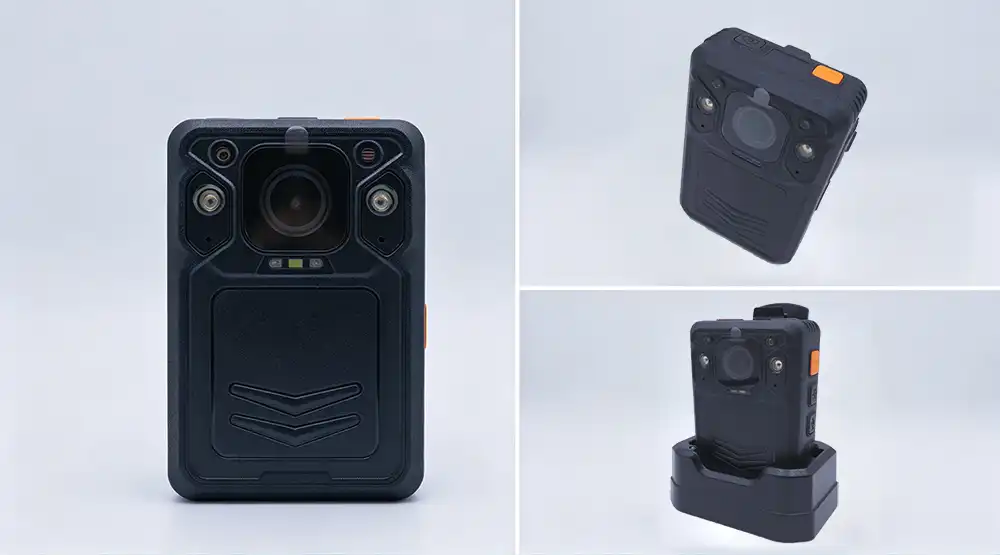
Through intelligent design, the ISHOOP Real Time Body Camera performs professionally. The gadget records 1440P video with H.264/H.265 compression for quality and storage efficiency. This tiny design (84.5mm x 56.3mm × 27.3mm) weighs only 140 grams and provides all-shift comfort. Strength lies in durability. IP67 waterproofing and 2-meter drop resistance protect the camera from drops and weather. The 3200mAh battery can record 1080P for 12 hours and 480P for 15 hours for longer shifts. 2.4G and 5G WiFi, 4G for live streaming, and GPS are available. The 2-inch HD monitor plays immediately without extra equipment. Storage grows from 32GB to 256GB for longer operations without data management issues.
Comparing Market Leaders
Many major agencies use cloud-integrated Axon cameras for evidence management. Their ecosystem links cameras to Evidence.com, improving the process but needing subscriptions. Motorola Solutions has excellent hardware and vendor support, but battery life is 6–8 hours. WatchGuard integrates vehicle cameras, making them ideal for agencies that value synchronized in-car and body-worn footage.
How to Choose the Best Officer Accountability Body Camera
Technical capabilities must fit your department's operating environment and limits when choosing equipment.
Assessing Departmental Needs
Agency size affects Officer Accountability Body Camera choice. Large agencies may prioritize live broadcasting and GPS tracking, whereas small departments profit from simple systems with minimum training. To determine battery capacity, consider your officers' normal shift durations. Cameras should work without mid-shift recharge for the longest periods. The environment is important. Heavy downpour requires waterproofing, while extreme cold requires cameras that work in low temperatures. ISHOOP cameras can withstand dust and water immersion thanks to their IP67 designation.
Critical Decision Criteria
Evidence quality depends on video resolution. While 4K sounds fantastic, 1080P or 1440P usually delivers enough quality for judicial procedures while preserving power and storage. The ISHOOP camera's 1440P resolution provides courtroom-ready clarity without wasting resources. Your evidence retention policies must match storage capacity. Based on officer numbers, typical shift duration, and retention periods, estimate footage volume. As demands change, expandable storage offers flexibility.
Challenges and Best Practices for Implementation
A successful body camera deployment goes beyond device selection. To maximize accountability technology advantages, departments must solve technical, procedural, and cultural issues.
Overcoming Technical Integration Hurdles
Planning is needed to integrate Officer Accountability Body Camera cameras with evidence management systems. Before buying, check the camera system compatibility with your software. USB mass storage mode and JSON instructions allow ISHOOP camera interaction with many evidence systems. Networks must handle data transmission volumes. High-resolution video files are large, departments require enough bandwidth to upload them. Wireless transfer among stations reduces administrative burden with WiFi. Plan store capacity based on actual retention needs to avoid costly system extensions.
Training and Officer Adoption
Successful execution requires officer buy-in. Some cops first oppose cameras as monitoring rather than protection. Comprehensive training should stress how cameras protect cops from false allegations and build community confidence. Share complaint reduction and exoneration rates to generate support. Technical operation and policy compliance must be taught. Officers must know when to record, how to mount cameras for the best footage, and how to handle equipment failure. Regular refresher training assures department-wide use.
Data Management and Privacy Safeguards
Growing video libraries demand methodical management. Balance legal obligations and storage expenses with specified retention schedules. Automated tagging with officer ID, date, time, and GPS coordinates streamlines inquiry film retrieval. Privacy policies should indicate when cameras may be turned off, how footage is examined, and who can access recordings. Community trust is built on transparent rules that protect police and citizen privacy. ISHOOP cameras protect sensitive data with AES256 encryption throughout their lifespan.
Conclusion
Technical characteristics, durability, evidence integrity, and long-term expenses must be considered while choosing an Officer Accountability Body Camera. The ISHOOP Real Time Body Camera satisfies these standards with 1440P resolution, IP67 protection, 12-hour battery life, and military-grade encryption. Departments get recording equipment and an accountability system for transparency, legal compliance, and officer safety. Training, integration, and policy creation must accompany hardware selection for successful deployment. Body cams may promote community trust and safeguard cops and citizens with accurate, secure documentation when these factors coincide.
FAQ
1. How long does battery life last on officer accountability cameras?
Model and usage habits affect battery performance. The ISHOOP Real Time Body Camera can record 1080P for 12 hours and 480P for 15 hours. Extended shift departments might consider cameras with removable batteries or quick charging. Actual battery life varies with resolution, WiFi, GPS, and screen time. Minimizing display usage and choosing the right resolution for normal patrols vs important occurrences helps save battery life.
2. What storage capacity do departments typically need?
Officer numbers, shift duration, video resolution, and retention regulations determine storage needs. A single officer filming 8 hours a day at 1080P creates 32GB each week. The ISHOOP camera can store 32GB to 256GB for extended use. Retention regulations should be used to assess needs—many jurisdictions need 30 to 180 days for regular film and longer for situations under investigation. Video quality and storage economy are optimized via H.264/H.265 compression.
3. Can body cameras stream live video to command centers?
Many current accountability cameras transmit live over 4G or WiFi. Supervisors may remotely monitor crucial circumstances using the ISHOOP Real Time Body Camera's 480P video, audio, and text streaming. This is useful during tactical operations, protests, and other situations needing quick command oversight. Streaming uses more battery power, lowering the runtime to 7-8 hours. When to activate live broadcasting should be outlined by departments.
Partner with a Trusted Body Camera Manufacturer
Since 2015, Shenzhen Kexin Technology Co., Ltd. has made professional law enforcement equipment for over 30 nations. The CE, ROHS, IP67, IK09, and ISO-certified ISHOOP Real Time Body Camera combines superior image technology with field endurance. Our ODM/OEM services customize cameras to operational and regulatory needs. Our engineering staff provides full deployment support, from specification advice to technical help. This 18-month warranty shows our trust in manufacturing and component durability. As an experienced Officer Accountability Body Camera provider, we offer adaptable solutions with consistent quality and low price for 10 or 1,000 units. Talk to sales@ishoop.com.cn about your department's needs.
References
1. White, M. D., & Fradella, H. F. (2016). Stop and Frisk: The Use and Abuse of a Controversial Policing Tactic. New York University Press.
2. Ariel, B., Farrar, W. A., & Sutherland, A. (2015). The Effect of Police Body-Worn Cameras on Use of Force and Citizens' Complaints Against the Police: A Randomized Controlled Trial. Journal of Quantitative Criminology, 31(3), 509-535.
3. Miller, L., Toliver, J., & Police Executive Research Forum. (2014). Implementing a Body-Worn Camera Program: Recommendations and Lessons Learned. Office of Community Oriented Policing Services.
4. Lum, C., Koper, C. S., & Wilson, D. B. (2019). Body-Worn Cameras' Effects on Police Officers and Citizen Behavior: A Systematic Review. Campbell Systematic Reviews, 15(3), e1046.
5. Fan, M. D. (2016). Justice Visualized: Courts and the Body Camera Revolution. UC Davis Law Review, 50(3), 897-959.
6. Wasserman, H. M. (2019). Moral Panics and Body Cameras: Policing in the Age of Video Surveillance. Georgetown University Press.

USER EVALUATE
Here is the customer's evaluation of us