



Best Cloud-Enabled Body Camera for Police Departments
Finding the finest Cloud-Enabled Body Camera for police departments requires dependable evidence gathering and smooth wireless communication. HD recording, secure data upload, and real-time streaming are available with Cloud-Enabled Body Cameras. These devices avoid laborious evidence transfers and provide supervisors with rapid access to key video.
Understanding Cloud-Enabled Body Cameras: Features and Benefits
Cloud-Enabled Body Cameras change police video evidence management. High-quality film is uploaded to secure cloud servers over WiFi by these devices. The technology automates data backup and eliminates physical storage management.
Real-Time Streaming Capabilities
During emergencies, field officers can feed live video to command centers. Supervisors track events to improve tactical judgments and resource allocation. The instantaneous visibility helps coordinate multi-unit reactions and gives situational knowledge that conventional cameras cannot match.
Enhanced Security Features
Data sent and stored on cloud servers is encrypted using advanced protocols. AES256 protects critical video from unwanted access. Administrators may restrict who can watch, download, or delete recordings, establishing clear accountability paths.
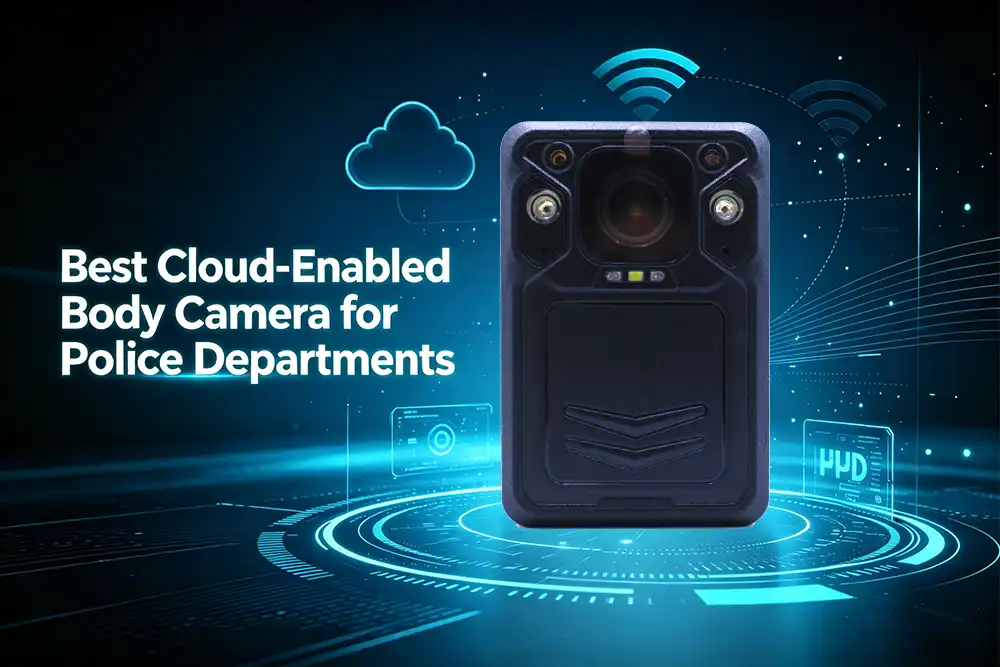
The ISHOOP Cloud-Enabled Body Camera uses a professional-grade Ambarella H22 processor and OV05A20 sensor for 1440P clarity. The gadget optimises storage economy without compromising visual quality with H.264 and H.265 coding. In tough urban radio frequency situations, dual-band WiFi (2.4G and 5G) enables robust data transfer.
Comparison: Cloud-Enabled vs. Traditional Local Storage Body Cameras
Officers must return to the station and physically dock traditional Cloud-Enabled Body Camera cameras to transfer footage from internal memory cards. Multiple failure points result from this approach. Memory cards can corrupt, cops may fail to dock their cameras, and physical damage can erase evidence.
Operational Efficiency Advantages
When cops reach secure WiFi networks, cloud-enabled systems upload footage. Human mistakes in evidence processing are eliminated with this hands-off technique. Evidence management is automated, so departments save administrative strain by not needing specialized workers to handle physical storage devices.
System Integration Benefits
Cloud solutions work smoothly with police IT infrastructure, including dispatchers and records management tools. The Cloud-Enabled Body Camera may automatically tag footage with the incident number when an officer answers a call. Digital case files that integrate all evidentiary pieces without manual data entry result from this integration.
For rigorous field activities, the ISHOOP Cloud-Enabled Body Camera's IP67 waterproof certification and 2-meter drop resistance assure reliability. The equipment captures important evidence even in severe weather or difficult terrain.
How to Choose the Best Cloud-Enabled Body Camera for Police Departments
Technical parameters must be weighed against operational needs before procurement. Police must decide how to employ these gadgets during patrols, emergencies, and lengthy special operations.
Video Quality and Recording Options
Resolution affects evidence's usefulness. 1080P is sufficient for most scenarios, while 1440P catches finer details that might be vital during investigations. Officers can modify resolution based on storage and battery life using devices with numerous resolution options. The wide 140-degree viewing angle covers the area without missing peripheral activities.
Connectivity and Network Requirements
Check if your department has enough WiFi at stations and substations for automated uploads. If police work in locations with poor fixed network infrastructure, consider 4G cameras. Check that cloud platforms throttle bandwidth to avoid system congestion when numerous officers upload film at shift end.
Battery Life and Power Management
Calculate typical shift lengths, including overtime, for Cloud-Enabled Body Camera operations. Choose cameras with 20% greater battery life than your longest shift. Pre- and post-recording catch crucial moments before cops actively initiate recording, but they use electricity. Intelligent power management balances robust recording with all-day operation on the ISHOOP camera.
Practical Guide: Using and Maintaining Cloud-Enabled Body Cameras
Successful deployment goes beyond buying gear. Device and cloud system training is needed to optimize technological benefits for officers.
Initial Setup and Configuration
Set up officer profiles with Cloud-Enabled Body Cameras and credentials. Select recording quality based on departmental regulations and cloud storage. Set automatic upload schedules to match shift patterns to assure next-day evidence availability without overloading network bandwidth.
Recording Protocols and Best Practices
Officers should learn incident-specific activation techniques. Pre-event recording captures 30 seconds to 1 minute before manual activation, maintaining context. Post-event recording continues after deactivation to document incident resolution.
Troubleshooting Common Issues
Weak cellular or WiFi signals might cause connectivity issues. When network connections are lost, devices should buffer footage locally and resume uploads when connectivity returns. Officers can easily check functionality using color-coded LED indications on the 2-inch HD display, displaying recording status and battery level.
Procurement Options and Commercial Considerations
Budgeting for cloud services entails knowing initial equipment costs and ongoing operating expenditures.
Purchase Models and Pricing Structures
Departments can buy hardware or subscribe to Cloud-Enabled Body Camera services. Multiple-year subscriptions ease financial limitations and ensure predictable annual payments. Equipping departments concurrently rather than staggered deployments allows bulk purchasing reductions.
Accessory and Mounting Solutions
The ISHOOP camera's 360-degree mount fits several uniforms. MOLLE mounts allow tactical vest deployment. Consider buying extra batteries and multi-bay docking systems that charge and transfer footage from many devices.
Warranty Coverage and Support Services
The 18-month warranty covers manufacturing and component problems. Check vendor technical support, especially response times for crucial evidence gathering concerns. Comprehensive service agreements avoid long-term operating risks and speed issue solutions.
Trial Programs and Performance Validation
Request field-testing pilot programs before purchase. Use trial units in patrol, traffic enforcement, and special operations. Officers should rate ergonomics, battery life, and usefulness. Check cloud upload speeds against departmental needs for your network infrastructure.
Shenzhen Kexin Technology offers ODM/OEM customisation for agencies with special needs in ISO-certified production facilities. This flexibility allows departments to tailor solutions to their own operating needs rather than adapting to product restrictions.
Conclusion
Modern law enforcement relies on Cloud-Enabled Body Cameras, which were formerly experimental. High-definition recording, automated evidence management, and secure cloud storage solve core camera issues. Prioritize video quality, connection, durability, and thorough security while buying. ISHOOP Cloud-Enabled Body Cameras offer professional 1440P quality, enterprise-level encryption, and all-shift battery life. Investment in robust cloud solutions helps departments fulfill modern transparency standards while safeguarding officers and communities.
FAQ
1. How secure is cloud-stored body camera footage?
Data is sent and stored using military-grade AES256 encryption on cloud platforms. Detailed audit logs document every user contact with recorded footage, and multi-factor authentication prevents illegal access. Companies with SOC 2 compliance and third-party security audits are reliable. This typically exceeds the security of on-premise storage systems exposed to physical theft or unlawful access by building staff.
2. Can cloud-enabled cameras function without internet connectivity?
Modern gadgets save video locally during network outages. The ISHOOP camera can store 256GB of data on memory cards. When connectivity returns, the technology uploads buffered footage without officer interaction, preserving evidence during network disruptions.
3. What happens if officers forget to activate the recording?
The rolling buffer of pre-event recording collects 30 seconds to 1 minute of footage. Pre-event film is automatically preserved when police record, retaining context before manual activation. Vehicle speed, weapon holster sensors, and dispatch integration can trigger automatic activation in some systems.
Partner With a Trusted Cloud-Enabled Body Camera Manufacturer
For over a decade, Shenzhen Kexin Technology Co., Ltd. has developed excellent law enforcement recording solutions. As an established Cloud-Enabled Body Camera supplier, we understand police agencies' demanding needs. ISHOOP's tough hardware and Cloud-Enabled Body Camera connection ensure dependable evidence capturing in all operating settings. We offer extensive ODM/OEM customisation for agencies with particular technical needs while maintaining CE, ROHS, and ISO certifications. We offer technical help during implementation and operation from our engineering staff. Discuss your department's demands with our procurement professionals at sales@ishoop.com.cn. We provide individual advice, technical demos, and pilot projects to test performance before investing. Work with a manufacturer that uses proven technologies to improve officer safety and operational transparency.
References
1. Johnson, M. (2023). Digital Evidence Management in Modern Policing. Police Technology Review Press.
2. Martinez, R. & Chen, L. (2022). Cloud Computing Applications in Law Enforcement: A Comprehensive Analysis. International Journal of Police Science & Management, 24(3), 287-304.
3. Thompson, K. (2023). Body-Worn Camera Technology: Implementation Best Practices for Police Departments. Law Enforcement Technology Institute.
4. Williams, D. (2022). Evaluating Video Evidence Systems: A Procurement Guide for Public Safety Agencies. Government Technology Publications.
5. Anderson, S. (2023). Wireless Connectivity Standards for Public Safety Equipment. Emergency Services Technology Quarterly, 15(2), 112-128.
6. Roberts, J. & Kim, H. (2022). Data Security Protocols for Cloud-Based Evidence Management Systems. Cybersecurity in Public Safety Journal, 8(4), 445-467.

USER EVALUATE
Here is the customer's evaluation of us