



What are the key features to look for in a night vision body camera?
Night vision body cameras with the correct technological specs are essential for law enforcement, security, and emergency response teams. These specialized gadgets use infrared lighting and high-sensitivity sensors to collect clear, court-admissible evidence in full darkness or low light. Infrared range (10–15 meters for face identification), battery endurance during continuous IR recording, IP waterproof certifications, wide-angle lens coverage, and data security methods should be considered. Understanding these characteristics guarantees your investment performs well during nighttime patrols, emergency responses, and difficult operating settings when typical cameras fail.
Understanding Night Vision Technology in Body Cameras
How Infrared Illumination Works
Infrared LED arrays, which give off light that humans can't see, are used in body cameras that can work in low light. 850nm or 940nm wavelength LEDs are usually mounted next to the main camera lens in these devices. When there isn't enough light in the room, an automatic light sensor turns on the IR-cut filter. This changes the camera from color to black-and-white recording mode and turns on the infrared lights.
How well this system works depends on how the IR LED power flow and sensing sensitivity are connected. Professional-grade units keep these things in balance so they can recognize faces up to 10 to 15 meters away in complete darkness. The ISHOOP night vision body camera, which is approved by several international standards, achieves this balance with its dual IR light setup and 4MP CMOS sensor, which makes it possible to clearly identify subjects from farther away than normal street lighting ranges.
Sensor Sensitivity and Image Quality
The power of the picture sensor to gather light is the key to good low-light performance. These days, body cameras use CMOS sensors with pixel designs that work best in low-light conditions. The sensitivity of these sensors is measured in minimum lux levels. Professional models work well at 0.01 lux or lower with IR help.
Video resolution has a direct effect on how well it works in low light. If the sensor size stays the same, higher megapixel numbers can make each image less sensitive. To keep light sensitivity while still producing HD footage, good makers combine resolution and pixel size. The F2.0 aperture lens and sensor design work together to decide whether video footage stays sharp during fast movements or records enough detail in dark areas at night.
Battery Life Considerations Under Infrared Load
When infrared lights are turned on, they use about 20–30% more power than when recording during the day. Teams in charge of buying things need to test battery specs in real-life situations, like when there is continuous infrared recording going on instead of different lighting conditions. A body camera with smart power management and a 4000mAh lithium battery can record continuously for 10 to 12 hours at night, which is enough for full police shifts without having to be charged in the middle of the shift.
Advanced units have power-saving features like adaptive IR strength, which changes the output of the LEDs based on the distance and reflection of the subject. This smart management extends the time of operation while keeping the quality of the footage. Professional models can charge quickly for 180 minutes, which makes sure that devices can get back to full power during shift changes or short station returns.
Essential Features to Evaluate in Night Vision Body Cameras
Video Performance Specifications
The ability to resolve problems is the basic level of proof quality. In order to keep face features and license plates clear, professional law enforcement apps usually need a quality of at least 1080p. The ISHOOP night vision body camera has different resolution choices, such as 2304x1296 at 30fps, so departments can find the best balance between storage space and picture detail needs.
Choosing a frame rate affects how clear motion is during dynamic events. While 30fps is fine for most documentation needs, 60fps at 720p resolution lets you record fast moves with less blur—useful during foot chases or physical fights. The H.264 compression method keeps file sizes small while keeping a level of visual quality good enough for legal presentations.
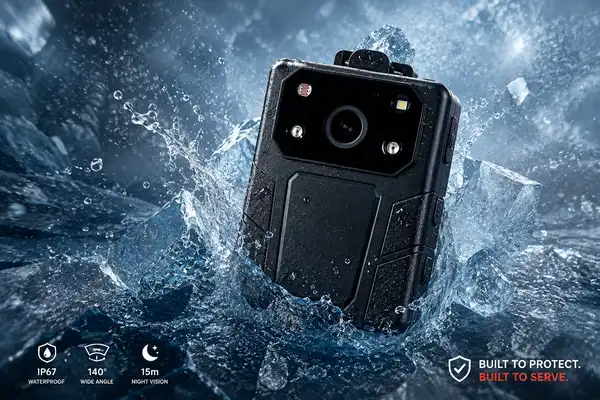
Wide-angle lenses make sure that the whole scene is captured. A 140-degree field of view sees things around the edges that narrower lenses miss, giving important context for reconstructing what happened. This wide coverage means that operators don't have to change the position of the cameras as often, which is helpful in situations that change quickly.
Power Management Systems
The operating duration is directly related to the battery size. A 4000mAh lithium battery that is built in lasts a lot longer than detachable battery systems that often have connection problems. Integrated batteries also make it easier to maintain the gadget and lower the number of places where parts can fail.
Low battery warning systems keep important operations from shutting down without warning. Officers are warned ahead of time to switch devices or go back to charging stations by audio and visual messages on the 2-inch LCD screen. Professional units keep recording during shutdown processes, catching the last moments even as the power runs out.
Concerns about charging infrastructure go beyond the specifics of each device. Single-unit charging docks that can transfer data make the process of managing evidence easier. Companies that use a lot of devices should look into fleet charging solutions that can power and sync whole sets of equipment at the same time.
Durability and Environmental Protection
People who use body cameras have to work in tough settings that have strict building standards. IP67 waterproof approval means that devices can be completely submerged up to one meter for thirty minutes. This is enough protection against heavy rain, drops in puddles, or using the device during severe weather events.
Drop resistance testing proves that something can survive in the real world. Devices that can withstand drops from two to three meters onto concrete won't get damaged by normal falls that happen during foot pursuits or fights. Professional units' small 140-gram weight lowers contact forces and keeps users comfortable even when they wear them for long amounts of time.
Temperature tolerance is important for deployment all year. Operating temperatures range from -40°C to 60°C to handle harsh weather changes, from winter patrols in the north to summer jobs in the desert. Specifications for storage temperatures make sure that equipment works even when it's left in patrol vehicles that are exposed to extreme temperatures.
Legal and Compliance Features to Consider
Data Encryption and Security
Integrity of evidence starts with recording systems that can't be changed, such as those in a night vision body camera. Administrator passwords keep people from deleting files without permission, and watermarks with the user's ID, date, and time make permanent documentation links. The dual identification method with an 8-digit device ID and a 6-digit officer ID makes ownership records that can be used as proof.
AES-256 encryption standards keep recorded data safe from people who shouldn't have access to it, even if devices are lost or stolen. This level of protection meets the FBI's Criminal Justice Information Services (CJIS) standards for how law enforcement agencies should handle data. Memory packs made for data recovery make sure that footage can still be recovered even after the night vision body camera has been severely damaged.
Recording Notification Systems
In some places, transparency laws say that people who are being recorded must be told about it. Professional body cameras have multiple ways to let you know what's going on, such as beeps, front-facing LED lights, and vibrations. These tools help police show they are following state-specific laws about recording notice.
When things are stressful, the ability to start recording with just one button makes things easier. The simplified design makes it easier to use with gloves on and lowers the chance of user mistake that could affect evidence collection. Visual proof on the LCD screen lets you know right away that the recording has started properly.
Regional Regulatory Compliance
When you are deployed in the United States, you need to be aware that different states have different laws about recording consent, especially when it comes to audio capture. One-party consent states have less strict rules than two-party consent states. Specifications for buying things should take these differences into account by including audio recording settings that can be changed to fit the needs of the operating authority.
Operations in the European Union must take into account GDPR rules that affect how personal data is collected and stored. It's easier to handle compliance when manufacturers support automated data retention policies, safe transfer methods, and access logging. Setting up plans for automatic deletion helps groups follow data minimization principles without having to do anything by hand.
Comparing Night Vision Body Cameras: Making an Informed Choice
Performance Advantages Over Standard Models
Standard body cameras that don't have built-in night vision suffer a huge drop in quality when it's dark outside. Below about 10 lux ambient lighting, the area is useless, like in badly lit parking lots or neighborhood streets without streetlights. Infrared models keep the quality of the evidence the same no matter what the lighting is like, so there are no operational gaps that could compromise case documentation.
The difference can be seen in how far away a face can be recognized. In low light, regular cameras might be able to see things up to 2 to 3 meters away. Specialized infrared cameras can see things up to 10 to 15 meters away. When stopping cars on dark country roads or identifying suspects in dark lanes, where normal lighting isn't enough for standard sensors, this extra feature is very useful in a night vision body camera.
Price-Performance Analysis
Professional-grade infrared body cameras cost extra due to their superior sensor technology and infrared parts. Cheap versions under $200 lack nite vision. Instead, they have poor low-light performance for professional evidence recording. Mid-range ($300–600) gadgets with functional infrared systems are useful for security and need little documentation.
Premium law enforcement versions, which cost $600 to $1200, have greater infrared ranges, more sensitive sensors, military drop standards, and better data security. Due to its direct manufacturer contacts, the ISHOOP camera offers professional-level functionality at a low price.
Real-World Application Performance
Traffic police incidents demonstrate the value of nite vision. Police must document what drivers did, where their automobiles were, and the surrounding circumstances at DUI checkpoints and nighttime collisions. Cameras with a 15-meter infrared range and 140-degree field of view can capture automobiles and persons in the background.
Priorities vary for enterprise security applications. Due to its invisibility, 940nm IR technology allows retail loss prevention teams to perform 10–12-hour shifts without recharging. Workers may alter their position between front- and back-of-house regions with the 360-degree flexible mount.
Emergency medical services record ambulance and hospital security occurrences using body cameras. The IP67 waterproof certification keeps devices safe while dealing with patient body fluids, and the compact size doesn't interfere with medical equipment or treatment. GPS, an optional feature, confirms location for emergency response documentation that has to be preserved in many locations.
Procurement Considerations and Best Practices
Vendor Selection Criteria
Established partnerships with recognized manufacturers are typically more valuable than local dealers. Instead of customer service staff, direct manufacturer collaborations provide you device engineering experts. At ISHOOP, Shenzhen Kexin Technology Co., Ltd. provides complete assistance for every nite vision body camera they sell, from specification to maintenance.
Certification verification ensures devices satisfy performance claims. CE, ROHS, IP67, and IK09 certifications verify safety, environmental, durability, and performance. Global corporations have more qualifications than regional enterprises that solely create for local markets.
Manufacturing expertise affects product reliability and support. Manufacturers with 10 years or more experience have great engineering capabilities and market knowledge. ISHOOP operates in over 30 countries on six continents, proving its solutions function in many operational and legal environments.
Customization and OEM Capabilities
Customization choices that meet the needs of each organization are often helpful for large-scale deployments of a night vision body camera. ODM/OEM services let you change recording parameters, user interface elements, or the way the housing looks. Custom software can include identification methods that are specific to a department or work with other evidence management systems that are already in place.
Language localization includes more than just translating the interface. It also includes things like voice prompts and help files. Support for multiple languages is very important for departments that work with diverse groups of people or for foreign groups that use standard tools in different parts of the world. For global deployments, the Russian, English, and Chinese language choices are popular setups.
Customizing the branding lets businesses make sure that equipment is used responsibly by making the agency's name stand out. Custom housing colors, etched markings, or starting screen logos make it clear who owns the equipment and may make it less likely to be stolen or lost. Manufacturers with flexible minimum order quantities make customization possible for agencies outside of big cities.
Warranty and After-Sales Support
Professional equipment normally has a one-year guarantee on manufacture defects and component failures during regular usage. Businesses that get the most out of their equipment's lifespan and budget stability benefit from extended warranties. The guarantee should specify environmental exposures such water damage, impact stress, and severe temperatures.
How easily technical assistance is reached affects how fast issues are resolved. Manufacturers that provide direct email communication to technical teams may resolve issues quicker than ticket-based systems that transmit inquiries to numerous support levels. International shopping is affected by time zones. Manufacturers maintain worldwide help hours to minimize technical downtime.
Long-term gadget serviceability relies on replacement parts. Rotating clips, battery refills, and safety displays should be accessible throughout the device's lifespan. Companies that maintain their goods for more than a year are more likely to create long-term relationships than those who swiftly switch model generations without supporting previous ones.
Conclusion
To choose the right night vision body cameras, you have to weigh the technical specs against the needs of the job and your budget. The device's ability to collect evidence that can be used in court at night depends on its infrared range, battery life, sturdiness standards, and data security features. Professional-level gear, like the ISHOOP camera, has the sensor sensitivity, power management, and build quality that are needed for accurate records in law enforcement, security, and emergency situations.
Partnering with well-known makers that offer full support, recognized certifications, and proven experience with global operation is good for procurement teams. Buying good equipment pays off by reducing gaps in evidence, making devices last longer, and making officers safer during operations in low light.
FAQ
1. What is the practical difference between 850nm and 940nm infrared LEDs?
The choice of wavelength affects both performance and visibility. 850nm LEDs give off a faint red glow that can be seen by people who are directly observing them. They also have a longer range and more sensitive sensors, making them perfect for law enforcement apps that need to keep records at a distance. 940nm wavelengths are completely unnoticeable to human eyes. This helps with secret operations where the subject shouldn't know they are being recorded, though the range is usually a little shorter.
2. What effect does night vision have on battery life during shifts?
When infrared lighting is turned on, power use goes up by about 20–30% compared to recording during the day. A professional night vision body camera with a 4000mAh battery can record continuously at night for 10 to 12 hours with the infrared feature turned on. This is more than enough time for normal security jobs. Adaptive infrared systems that change the brightness of LEDs based on how far away the subject is help save power, which means they can work longer than basic designs with set brightness.
3. Can these cameras record color footage at night?
Advanced low-light cameras with "Starvis" or a similar technology for increased sensitivity can record color video when there is no light or only the sun. But when there is no light at all (0 lux), cameras instantly switch to black and white mode when they are using infrared light. Based on how much light is around, the camera automatically switches between color and infrared modes.
Discover the Right Body Camera Solution for Your Team
Companies that care about operating openness and proof quality should only use equipment that is designed to meet the needs of professionals. SHOOP is an expert at making body-worn cameras that work reliably in even the toughest circumstances. As a night vision body camera supplier, we have CE, ROHS, IP67, and IK09 certifications, and our cameras have been used in law enforcement and security operations on six continents.
We know that decisions about procurement involve a lot of people weighing technical requirements against the available budget. At Shenzhen Kexin Technology Co., Ltd., our engineering team offers personalized advice to help you match the powers of our tools with your specific operational needs. we offer open ODM/OEM customization as well as volume prices for large orders, whether you're outfitting a police department, a business security team, or an emergency response service.
You can email our expert team at sales@ishoop.com.cn to get full technical specs, set up demonstration units, or talk about making unique configurations for your business. You can look at our full catalog of products at policebody-cameras.com and find out why businesses all over the world trust SHOOP for their body-worn camera needs.
References
1. Bureau of Justice Assistance, U.S. Department of Justice. "Body-Worn Camera Toolkit: Program Development and Implementation Guide for Law Enforcement." Office of Justice Programs, 2021.
2. International Association of Chiefs of Police. "Body-Worn Camera Model Policy Framework." Law Enforcement Policy Center, 2020.
3. National Institute of Justice. "Research on Body-Worn Cameras and Law Enforcement: Technology Performance Standards and Evaluation Methods." Office of Science and Technology, 2019.
4. Police Executive Research Forum. "Cost and Benefits of Body-Worn Camera Deployment: Comprehensive Guide for Procurement Professionals." Critical Issues in Policing Series, 2021.
5. Security Industry Association. "Technical Standards for Body-Worn Video Systems: Specifications for Professional Security Applications." SIA Standards Documentation, 2022.
6. European Telecommunications Standards Institute. "Video Surveillance Systems Performance Requirements: Low-Light and Infrared Imaging Standards." ETSI Technical Report 319, 2020.

USER EVALUATE
Here is the customer's evaluation of us