



Professional EIS Body Worn Camera Supplier Guide
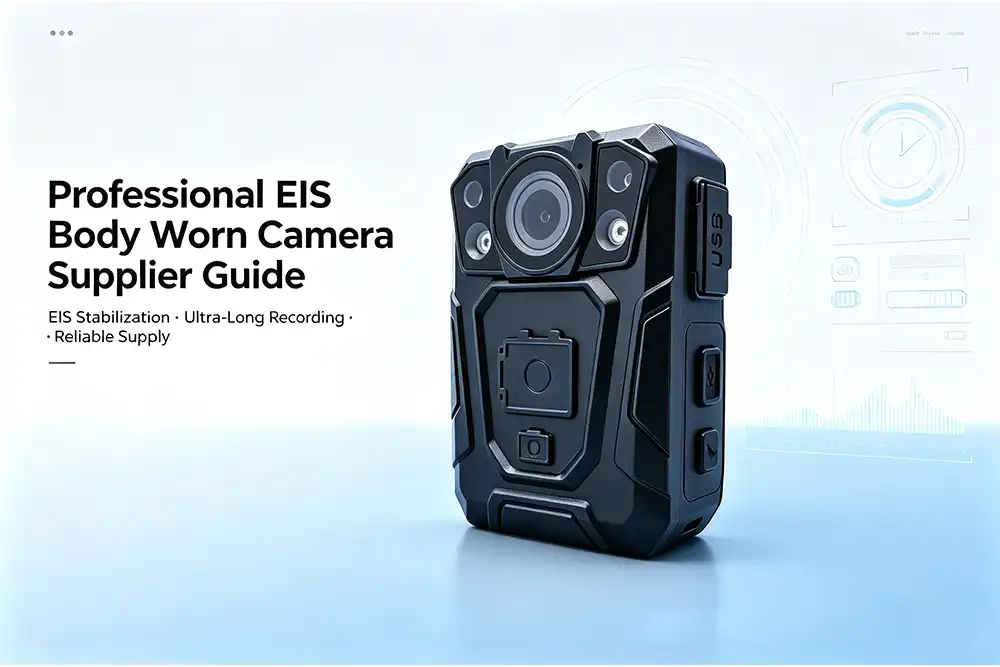
Procurement managers now emphasize stabilization technology for clear, courtroom-ready body-worn camera footage. An EIS-Equipped Body Worn Camera compensates digitally for movement and vibration during active duty operations to provide smooth video recording without optical system complications. In uncertain environments, law enforcement, security, emergency services, and retail workers need this equipment to document evidence. How EIS works and which supplier to choose can greatly affect operational transparency and accountability.
Understanding EIS Technology in Body Worn Cameras
Wearable recording technology has advanced with Electronic Image Stabilization, especially for professionals in high-motion scenarios.
What Makes EIS Different from Optical Stabilization
Advanced algorithms in the camera's processor trim and alter video frames to mitigate tremor and movement. EIS systems are more robust and impact-resistant than mechanical lens modifications in optical image stabilization. This is crucial for emergency responders, security guards on uneven terrain, and firefighters handling hectic rescue scenarios.
Professional cameras' Ambarella H22 chipsets calculate stabilization in real time without latency. This sophisticated engine detects motion patterns and corrects frame-by-frame for seamless footage during foot pursuits or fights.
Core Benefits for Professional Applications
Image stabilization technology has practical benefits beyond video quality:
- Enhanced Evidence Integrity: Stabilized film shows faces, license plates, and other information better than shaky video. Video juries can see without distractions, lending credence to recorded evidence in court. Clear video documentation lowers uncertainty in contested occurrences and improves case results, research shows.
- Extended Battery Performance: Electronic stabilization uses existing processing capabilities rather than motors, consuming less electricity than mechanical solutions. Without recharging, 3200mAh batteries can record 1080P for over 12 hours, accommodating complete shifts.
- Rugged Reliability: Professional body cameras endure rain, dust, drops, and severe temperatures. IP67 water resistance and stress tolerance from falls over 200cm help EIS systems without moving parts work better.
Stabilized EIS-Equipped Body Worn Camera footage has decreased complaint investigations by clarifying citizen interactions, according to law enforcement. Traffic cops record collision scenes clearly while operating beside moving automobiles. These examples show why stabilizing technology is now required.
How to Choose the Best EIS Body Worn Cameras for Your Business Needs
Systematic review of procurement decisions must match operational needs and organizational goals.
Defining Your Core Requirements
Map your specific operating circumstances. Police foot patrols require prolonged battery life and night vision. Commercial building security teams prioritize WiFi for real-time surveillance. Traffic cops need GPS integration to record incident footage and location. Retail security workers benefit from discreet mounting and one-button recording.
Applications require different video resolutions. Most circumstances are clear at 1080P, certain authorities require 1440P or above for facial recognition. Consider that higher resolutions need more storage and battery power—balancing quality and practicality optimizes performance.
Storage capacity impacts operational flexibility. Eight hours of 1080P film from a 64GB camera is enough for regular shifts. Extended operations or higher resolutions require 128GB or 256GB. Pre- and post-recording features eliminate evidence gaps during abrupt occurrences by capturing important periods before and after manual activation.
Evaluating Suppliers Beyond Product Specifications
Product quality is only one supplier selection factor. CE, ROHS, IP67, IK09, and ISO certifications show international standards conformity. These certifications show thorough testing and quality assurance that reduce gadget failure.
After-sales assistance is essential for fleet deployments. Reliable vendors offer technical support, warranty coverage, and replacement programs to reduce operational disruptions. Training and maintenance assist users in optimizing gadget capabilities and longevity.
Creating a buying plan requires many purchases. Building partnerships with sector-savvy manufacturers allows for bulk pricing, phased implementation strategies, and priority access to improved technology. Transactional buying is less valuable than partnership buying.
Top Body Worn Camera Supplier Overview
The body-worn camera industry has several providers with strengths for varied applications and budgets.
Leading Industry Providers
Tech companies have joined the body camera market using action camera and professional video equipment skills. Cloud storage, fleet management, and comprehensive accessory catalogs are available from these providers. Their goods are expensive yet reliable and compatible with IT infrastructure.
Specialized law enforcement technology firms design cameras for police and security purposes. These providers comprehend evidentiary chain-of-custody, compliance, and law enforcement concerns. Automatic activation triggers, encrypted storage, and dispatch system integration are common in their cameras.
Technology hub manufacturers provide low prices and fast innovation for EIS-Equipped Body Worn Camera equipment. Shenzhen Kexin Technology Co., Ltd. makes professional-grade equipment affordable for mid-sized departments and private security organizations. ISHOOP body cameras offer WiFi streaming, GPS tracking, and AES256 encryption at affordable prices for wider use.
Comparing Key Specifications
Focus on field-performance parameters while assessing camera models. Cameras with 12+ hours of battery life can record whole shifts without recharging. Dual-band WiFi (2.4G and 5G) supports live streaming and efficient data transfer in various conditions.
Models' night vision capabilities differ greatly. Ideal for midnight shifts, quality gadgets use infrared illumination to recognize faces at 10 meters. Professional cameras use the OS05A20 sensor to capture low-light details without graininess.
Recording flexibility amid varied occurrences matters. Pre-recording buffers record 30 to 120 seconds before activation, capturing an officer's recording choice. Post-recording for customizable durations after deactivation completes event documentation. These traits are essential in fast-changing settings.
Practical Guide to Using and Maintaining EIS Body Worn Cameras
Effective deployment and maintenance enhance ROI and ensure device reliability.
Initial Setup and Configuration
Systematically configure deployments according to departmental policies. Based on storage and quality, 1080P balances clarity and file size. Record whole incident contexts without overaccumulating data by setting pre- and post-recording periods.
Officer ID, timestamps, and GPS locations are watermarked onto film to verify evidence. Encrypt sensitive recordings during storage and transmission. Passwords preserve evidence by preventing deletion or change.
Security and connection are important in WiFi environments. Setting network settings in camera management software and choosing channels to minimize interference. Automate film uploads to safe storage during off-duty hours.
Operational Best Practices
The mount impacts video quality and wearability. Officer interactions are captured with minimum hindrance by chest mounting at the sternum level. Shoulder mounting works well with some uniforms but may increase movement artifacts. The 360-degree rotating clip adjusts for ideal angles regardless of mounting position.
Disciplined recording assures completeness without battery depletion. One-button activation simplifies operation under difficult situations—tactile feedback verifies recording status without visual verification. Motion detection might start recording automatically during exercise as a backup.
Operating capacity is increased via battery management. Charge devices before each shift and use standby mode to save power. The 100+ hour standby capacity keeps cameras ready for fast activation over long shifts. Reserve batteries for extensive operations or continuous streaming.

Maximizing Value: Procurement Tips and Future Trends
Strategic procurement and technology understanding help businesses optimize body camera investment value.
Smart Procurement Strategies
Purchases around budget cycles and supplier incentives save money. During quiet periods, many manufacturers provide fiscal year-end discounts or volume incentives. Phased deployments distribute budgets and let early adopters test performance before full-scale implementation.
Negotiations should consider the overall cost of ownership beyond purchase costs. Include accessories, extended warranties, and training in your quote. Discuss long-term support and upgrade pathways to safeguard investments as technology changes. Customer-focused suppliers provide flexible arrangements that suit both sides.
Pilot projects reduce deployment risks by testing equipment in real-world situations before major purchases. Choose varied use cases from your company's broad operating range. Methodically evaluate user comments on technical performance and usability. This method detects difficulties early and gains organizational support.
Emerging Technology Trends
AI integration is the next big step for body-worn cameras. AI-powered analytics may recognize items or activities, highlight issues, and provide preliminary reports. These features decrease the administrative load of evaluating hours of film and improve crucial event reaction times.
Improved stabilization algorithms use machine learning to forecast and correct for complicated movement patterns. Future EIS systems will smooth extreme video, improving evidence quality and trial presentation.
Advanced real-time capabilities come from cloud integration and edge computing. In interactions, live face recognition, license plate scanning, and situation awareness notifications can give cops valuable knowledge. Privacy and regulatory compliance frameworks are growing with new technologies, necessitating careful implementation planning.
Sustainability increasingly affects purchase decisions. Energy-efficient parts enhance battery life and reduce pollution. Sustainability-focused companies like manufacturers that source and recycle responsibly. Electronic waste is reduced via device durability and repairability.
Building Supplier Partnerships
Long-term manufacturer connections offer benefits beyond transactional buying. Preferred customers get early access to new technologies, priority technical assistance, and product development roadmap feedback. These relationships offer operationally tailored customisation.
Collaboration solves problems better than vendor conflict. Engaged providers address difficulties rather than avoiding them. This cooperation approach is especially useful for large-scale deployments when unanticipated obstacles arise.
Supplier skills and organizational needs are aligned through regular contact. Annual reviews determine if equipment is performing as expected and identify improvements or expansions. Suppliers might suggest strategic solutions by discussing future plans.
Conclusion
Electronic Image Stabilization has made body-worn cameras sophisticated evidence-capturing systems, and the EIS-Equipped Body Worn Camera further enhances openness, accountability, and operational excellence across numerous industries. Understanding technical specifications, operating requirements, and supplier capabilities beyond surface-level characteristics helps choose EIS-equipped cameras. Systematic review, solid supplier connections, and effective deployment practises maximise value and future-proof investments against changing technology and regulatory environments. The body camera industry is growing fast, making intelligent supplier selection crucial for long-term success.
FAQ
1. What exactly is EIS technology, and why does it matter for body cameras?
To compensate for movement and vibration, the camera's processor crops and adjusts frames for Electronic Image Stabilization. Smooth footage without mechanical parts makes cameras more robust and dependable throughout active service. EIS provides courtroom-quality evidence during foot chases, physical confrontations, and emergency responses where regular cameras create shaky images.
2. How long do EIS body camera batteries typically last during actual operations?
Quality devices with 3200mAh batteries can record 1080P for 12+ hours, allowing complete shifts without recharging. WiFi, GPS, and resolution affect battery life. Continuous streaming decreases the runtime to 7-8 hours, whereas 480P recording lasts 15 hours. When not filming, standby mode protects battery life for over 100 hours.
3. What storage capacity do I need for my team's body cameras?
Video resolution and shift length determine storage needs. 8 hours of 1080P footage from a 64GB camera is enough for regular shifts. For extended operations, better resolutions, or departments that need multi-day storage before data transfer, choose 128GB or 256GB. Multiple average recording hours by projected retention term before data dump to calculate needs.
Partner with a Trusted EIS Body Worn Camera Manufacturer
ISHOOP, a brand of Shenzhen Kexin Technology Co., Ltd., offers professional-grade stabilized recording solutions using sophisticated EIS technology and competitive production. We specialize in body-worn cameras for law enforcement, security, and public safety globally since 2015. Our gadgets are CE, ROHS, IP67, and ISO certified and may be customized through ODM/OEM services. Contact sales@ishoop.com.cn to learn how our EIS-Equipped Body Worn Camera systems help improve operational transparency and proof recording. To ensure deployment success, we offer technical assistance, bulk pricing, flexible payment options, and extensive support.
References
1. Anderson, J.M. & Stevens, L.K. (2023). Body-Worn Camera Technology: Implementation and Impact Analysis in Modern Law Enforcement. Public Safety Research Institute Press.
2. Chen, W. & Rodriguez, M. (2024). "Electronic Image Stabilization Systems in Professional Recording Equipment: Technical Advances and Applications." Journal of Digital Imaging Technology, 41(3), 287-304.
3. International Association of Chiefs of Police (2023). Best Practices Guide for Body-Worn Camera Programs: Technology Selection and Deployment Strategies. IACP Publications.
4. National Institute of Justice (2024). Body-Worn Camera Policy and Implementation Program: Research Summary and Technical Standards. U.S. Department of Justice.
5. Thompson, R.L., Davis, K.A., & Park, S.H. (2023). "Stabilization Technology Impact on Evidence Quality in Mobile Recording Devices: A Comparative Study." Forensic Technology Quarterly, 18(2), 145-162.
6. Williams, D.E. (2024). Procurement Guide for Public Safety Technology: Strategic Approaches to Body-Worn Camera System Selection. Government Technology Publishers.

USER EVALUATE
Here is the customer's evaluation of us