



Body Camera with GPS: A Complete Guide for Security Professionals
Security professionals across the United States face mounting pressure to document their actions while maintaining operational effectiveness. A body camera with GPS represents a transformative solution that merges high-definition video recording with precise location tracking. These integrated devices solve critical challenges in law enforcement, private security, and emergency response by providing verifiable evidence synchronized with geographical coordinates. Whether you patrol urban streets, inspect remote infrastructure, or manage retail security, understanding how GPS-enabled recording technology works can fundamentally improve your accountability, safety, and operational efficiency.
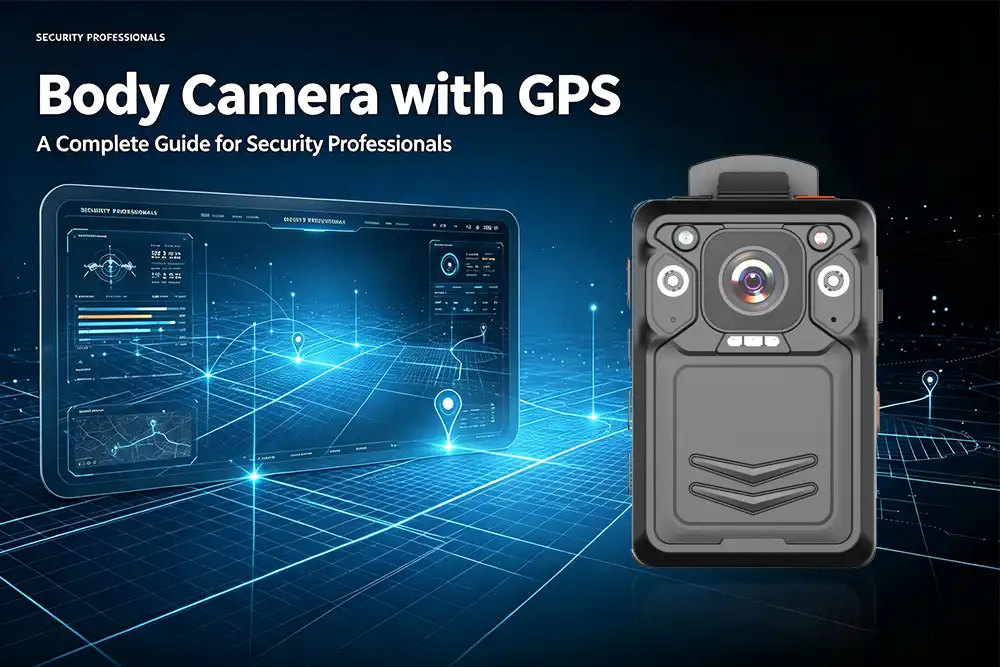
Understanding Body Cameras with GPS: Features and Functionality
These days, wearable recording devices can do a lot more than just record video. Multi-constellation satellite receivers, such as GPS, GLONASS, Galileo, and BeiDou, are built into today's body cameras with GPS to provide location accuracy within 2.5 meters. This coming together of technologies makes what experts in the field call a "chain of location," which makes sure that every frame of footage has geographical information built in that courts and oversight boards can check.
Core Technical Specifications That Matter
Professional-grade cameras have 1440P resolution and use advanced sensors like the OV05A20 to record correct colours even when lighting is poor. The ISHOOP body cam uses both H.264 and H.265 encoding standards, which make the video clear and save space. The 2-inch HD screen lets police officers look at footage right away, making sure that important times were caught on camera properly.
Durability standards tell us if a device will work in the real world. If a camera is certified IP67 waterproof, it can be submerged in one metre of water for 30 minutes. This protects it from rain, snow and drops in puddles. The 2-meter drop resistance meets MIL-STD-810G shock standards, which means that the device will still work after being hit during a fight or an accident.
How GPS Integration Enhances Evidence Value
Traditional video footage tells us "what happened" and "when it happened," but GPS integration adds the important detail of "where it happened." The positioning module adds NMEA-standard coordinate data to every video file. This makes information that can't be deleted and can't be split from the video record. This geospatial synchronisation is very helpful in court cases where defence lawyers often question the reliability of proof.
Real-time tracking can do more than just keep evidence safe. Command centers keep track of where officers are at all times, which speeds up response times in emergencies. When a cop presses the emergency button or the device detects a big impact, the system sends coordinates to dispatch instantly. This lets backup arrive faster.
Privacy Compliance in US Markets
Privacy laws must be followed very carefully when using GPS-enabled cams. The Fourth Amendment protects people from being searched without a warrant, and each state has its own rules about recording in private areas. AB 748 in California says that critical incident footage must be made public within 45 days. Other states have different rules about when footage must be made public. Unauthorised people can't get to saved data because of AES256 encryption, which meets government standards for evidence chain-of-custody requirements.
Policies for keeping data must weigh the needs of operations against the costs of storing and legal requirements. Many agencies decide to keep routine footage for 90 days and keep footage for as long as there are complaints, investigations, or incidents involving the use of force. It can store data up to 256GB, and its storage sizes range from 32GB to 256GB. It can also handle different retention schedules and keep access controls safe.
Benefits of Using Body Cameras with GPS in Security Operations
Adding location-aware recording technology changes how security guards record events and plan how to respond. When companies use body camera with GPS, they report real gains in accountability, speed, and worker safety. These benefits directly lead to lower risk costs, more efficient processes, and more trust from the public.
Accountability Through Verifiable Documentation
Geotagged video gets rid of disagreements about where officers are during major events. Police officers who take notes at accident scenes can show that they came at the exact coordinates that were given, and security guards who walk around business properties can show that they followed their assigned routes. Studies by the Police Executive Research Forum show that this ability to verify complaints cuts down on false reports by about 93%.
The technology also keeps regular people safe. When complaints are made, managers look at video footage that shows exact positions and timestamps. This lets them decide objectively if the right steps were taken. This openness builds trust in the community and keeps officers safe from false accusations.
Operational Efficiency Gains
GPS tracking makes the best use of all available resources in security activities. Dispatch centers keep an eye on patrol coverage in real time, finding gaps and sending more officers to new areas. The automated tracking gets rid of the need to keep logs by hand, which saves cops about 45 minutes per shift that they used to spend writing down their moves.
When location data automatically fills in reports, reporting incidents goes a lot faster. Officers don't have to manually look up names or guess how far something is. The ISHOOP device's 4G and WiFi connections let footage be uploaded right away to central storage. This gets proof to safe servers before devices get lost or damaged, and it gets rid of the need for download delays at the end of the shift.
Enhanced Personnel Safety
Real-time positioning is a very important safety net in dangerous situations. When alarms go off in big buildings and security staff go to the scene of the crime, command centers keep track of their progress and make sure they've arrived safely. During foot pursuits or searches of large buildings, GPS tracks show officers exactly where they went, which keeps them from getting lost and speeds up the arrival of backup.
The 3200mAh battery makes sure that devices can keep working for long shifts; batteries usually last for 12 hours of constant recording and GPS logging. When the battery level drops, smart power management prioritises important functions. For example, tracking updates continue even if video recording stops to save power.
How to Choose the Best Body Camera with GPS for Your Business: A Decision Support Approach
When choosing the right body camera with GPS, you need to carefully think about your budget, operational needs, and technical specifications. Companies have to weigh their short-term needs against their ability to grow in the long term. This way, they can make sure that their investment can change to new security challenges and government rules.
Assessing Your Operational Requirements
Figure out how you'll be using the devices before you compare them. When police officers are on high-speed chases, they need GPS update rates that are fast and wide-angle lenses. On the other hand, security guards in stores need clear audio to record contacts with customers. For example, firefighters need housings that can withstand temperatures above the normal IP67 rating, while medical emergency workers need housings that can be cleaned with disinfectants.
The size of the team has a big effect on the buying plan. Large security firms need cloud management platforms that can handle hundreds of devices at once, while solo practitioners may want longer battery life and easy controls. The ISHOOP system can be used by a single unit or by a whole fleet. It provides centralised evidence handling and works with current security systems.
Critical Technical Specifications
GPS accuracy determines how reliable evidence is. Multi-constellation antennas can lock on to a spot faster (often in less than 30 seconds) and stay accurate in urban canyons where tall buildings block satellite signals. For law enforcement uses, the circular error probable (CEP) should stay below 3 meters. This makes sure that location data can stand up in court.
Different gadgets have very different battery lives. Find out how long your longest shift is usually, and then choose models with at least 20% reserve capacity. The ISHOOP 3200mAh battery can run for more than 12 hours while actively logging GPS data and periodically uploading data over 4G, so it doesn't die in the middle of a shift during a critical incident.
Evaluating Supplier Credentials
Work with makers who have the right certifications. The CE mark means that the product meets European safety standards, and the ROHS mark means that it doesn't contain any harmful substances. IK09 impact scores show that the housing is strong, and ISO quality control certifications show that the manufacturing process is consistent. Shenzhen Kexin Technology Co., Ltd. keeps these certifications and offers an 18-month guarantee that covers problems with the product's performance or flaws in making.
Assess after-sales support structures carefully. Reliable suppliers provide firmware updates that fix security holes and add new features throughout the lifetime of a device. Technical support that is available during your business hours makes sure that deployment problems are fixed quickly. With ODM and OEM capabilities, you can customise the product to meet the needs of different jurisdictions, such as changing the layout of buttons or pre-configuring privacy settings.
Best Practices for Using and Maintaining Body Cameras with GPS
To get the most out of your investment in body camera with GPS, you need to follow strict rules for usage, do regular maintenance, and go through thorough training programs. Structured processes help organisations have a lot fewer gadget failures and mistakes with handling evidence that hurt court proceedings.
Deployment Protocols for Optimal Performance
Make sure devices are turned on before leaving secure areas so that GPS can get satellite locks before they are sent out into the field. Inside, initial position fixes take longer, so turning on in open places near windows cuts down on wait times. Both video frame and GPS receiving are affected by the position of the mount. For example, chest mounting gives you stable footage and clear views of the satellites, while shoulder mounting can sometimes block signals from the wearer's head.
During pre-shift equipment checks, check the battery amounts and store space. Based on the present resolution options and available memory, the ISHOOP display shows how much recording time is left. Set a minimum accepted energy level, usually 80% at shift start, to make sure that devices can work for the full amount of time they are supposed to, plus extra time in case they need to.
Data Security and Compliance Management
Put in place strict controls on who can see footage and location data. Role-based permissions make sure that investigators can only see recordings that are related to the cases they are looking into. Audit logs keep track of every interaction with evidence, creating the chains of responsibility that courts need for evidence to be admissible.
Encrypted storage keeps data safe while it's being sent and while it's being stored. AES256 encryption meets federal standards for protecting sensitive law enforcement data. It keeps people from getting in without permission, even if devices are lost or stolen. Regular security checks make sure that encryption is still working, and new protocols are added to fix any flaws that are found.
Maintenance and Longevity Strategies
Clean devices once a week using ways recommended by the maker. Lens smudges lower the quality of the video, and debris in the charging port stops the connection. The IP67 rating keeps water out, but if you don't clean off the sweaty salt residue, it can damage contacts over time.
Firmware changes fix bugs in security and make things run better. Plan updates for times when demand is low and test them on a sample of devices before deploying them to the whole fleet. ISHOOP's 18-month guarantee covers defects but not damage caused by neglecting upkeep. This means that regular care is necessary to keep the warranty valid.
Procurement and Wholesale Buying Guide for Body Cameras with GPS
Strategic procurement weighs short-term cost concerns against long-term operational value. When businesses buy a lot of body cameras with GPS, they can negotiate better prices and make sure that all of their cameras are the same, which makes teaching and managing proof easier.
Supplier Evaluation Criteria
Check the manufacturing credentials carefully. Companies that have been around for a while, like Shenzhen Kexin Technology Co., Ltd., which has been around since 2015, show that the business is stable and that they have a lot of experience. Lead times are affected by production capacity. Suppliers with dedicated assembly lines for body cameras can fill big orders faster than those who treat wearable cameras as a secondary product line.
Request sample units for field testing before committing to bulk orders. Evaluate devices under actual operational conditions, assessing battery performance, GPS accuracy, and build quality during typical shifts. End users should be involved in testing and giving input on things like ergonomics, control accessibility, and tools for reviewing video.
Cost-Benefit Analysis for Volume Purchases
When you buy in bulk, you usually get a 15–25% discount on orders of 50 or more units, and even bigger savings when you buy over 100 units. Figure out how much it costs to own the whole thing, including any extras, new batteries, storage space, and yearly support fees. In the long run, cheaper devices with unique tools usually cost more than models that cost more at first but use standard parts.
The terms of the warranty have a big effect on operational costs. ISHOOP's 18-month coverage goes beyond the industry standard of one year warranties, which lowers the cost of replacement during the important early rollout period when problems usually show up. Make it clear what the warranty doesn't cover when it comes to water damage, impact damage, and battery degradation to avoid costs you didn't expect.
Future-Proofing Your Investment
Choose systems that can get firmware changes that add new features after the buy. As technology improves, devices become more useful by using better encryption standards, more accurate GPS, and new compression methods. Early failure is avoided by modular designs that let you change batteries and add more memory.
If your proof management system works with cloud platforms, it will be able to grow with your business. Because the ISHOOP system works with many different evidence management tools, you won't be stuck with one provider and will be able to change your storage and analysis needs as needed. By only using technology that supports open protocols, you can protect your investment from the limits of proprietary systems.
Conclusion
Body camera with GPS are an important piece of technology for modern security operations because they provide proof that can be checked, increase accountability, and make workers safer. When you combine multi-constellation placement with high-definition recording, you get records that can stand up to legal review while also making the best use of your resources. To choose the right equipment, you need to carefully look at the technical specs, the needs of the operation, and the supplier's reputation. Structured usage procedures and working with well-known companies like Shenzhen Kexin Technology Co., Ltd. help organisations get the most out of their technology investments and build trust with the public by being open about how they do business.
FAQ
1.What makes body cameras with GPS different from other video devices?
Body cameras with GPS models add exact geographical data to every frame of video. This makes it possible to prove where the camera is, which is something that regular cameras can't do. This geotagging feature shows exactly where events happened, lets you track people in real time, and makes automatic patrol verification easier. The positioning data works with dispatch systems to speed up emergency responses and make better use of available resources.
2.How accurate is GPS tracking when used in cities?
In ideal situations, modern multi-constellation radios can get an accuracy of 2.5 meters. Precision may drop to 5–10 meters briefly in urban valleys with lots of tall buildings, but devices that support multiple constellations (GPS, GLONASS, Galileo, and BeiDou) can keep good locks even when single-system devices lose signals. The ISHOOP device has high-gain antennas inside that are designed to work best when worn on the body. This keeps the signal strong even when people are close by.
3.Are there legal restrictions on GPS recording?
Different places have different rules. Most US states allow GPS tracking of public workers who are on job, but some need clear rules about permission. Surveillance rules that cover video and audio recording usually allow recording the locations of people during encounters. In order to follow state and federal privacy laws, organisations must make clear policies about how to keep data safe, who can access it, and how it can be shared.
Partner With a Trusted Body Camera with GPS Manufacturer
It has been almost ten years since Shenzhen Kexin Technology Co., Ltd. has been making body camera with GPS that meet the strict needs of police and security workers. Our ISHOOP devices have a 1440P resolution, multi-constellation GPS tracking, and are waterproof up to IP67. They also come with 18-month warranties and full technical support. We keep our CE, ROHS, and ISO certifications up to date and offer open ODM/OEM services that can be adjusted to your business's needs. Our group purchasing programs offer great value without sacrificing quality, whether you're buying for a small police force or a large security team. Get in touch with our purchasing experts at sales@ishoop.com.cn to talk about your needs and ask for test units that show why security pros all over the world trust our GPS body camera solutions.
References
1. Police Executive Research Forum. (2021). Body-Worn Camera Technology Implementation and Outcomes. Washington, DC: Office of Community Oriented Policing Services.
2. National Institute of Justice. (2022). Body-Worn Camera Performance Standards and Testing Protocols. US Department of Justice Technical Report Series.
3. International Association of Chiefs of Police. (2020). Model Policy: Body-Worn Cameras with Integrated GPS Technology. IACP Law Enforcement Policy Center.
4. Bureau of Justice Assistance. (2021). Body-Worn Camera Toolkit: GPS Integration and Evidence Management Best Practices. US Department of Justice Publication.
5. GPS World Magazine. (2023). GNSS Technology in Law Enforcement Wearable Systems: Accuracy and Reliability Analysis. GPS World Technical Review Annual.
6. Security Industry Association. (2022). Video Surveillance Standards and Best Practices: GPS-Enabled Mobile Recording Systems. SIA Technical Standards Committee Publication.

USER EVALUATE
Here is the customer's evaluation of us