



Benefits of EIS Body Worn Cameras for Law Enforcement
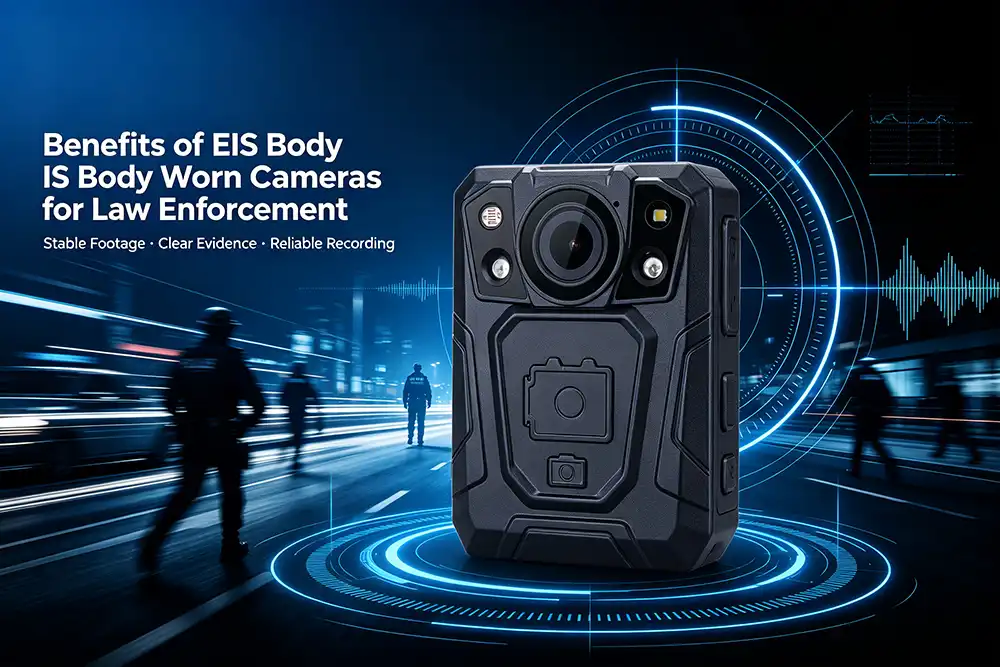
An EIS-Equipped Body Worn Camera transforms police today. Motion blur during dynamic occurrences is a major issue in law enforcement video documentation. Electronic Image Stabilization tackles this. Traditional cameras generate wobbly, blurry film as authorities respond to crises, pursue criminals, or cross difficult terrain, compromising evidence. EIS stabilizes video in real time using complex algorithms and sensor data, ensuring every frame is clear and lawful. This breakthrough enhances accountability, incident reconstruction, and community confidence through public recordkeeping.
Understanding EIS Technology in Body Worn Cameras
Electronic Image Stabilization has revolutionized law enforcement evidence capturing during operations. Even under pressure, our technology actively corrects motion distortions to provide professional-quality film.
How EIS Works in Real-World Policing
Instead of cropping footage or using post-processing filters, EIS technology interfaces with the camera's sensor and chipset. The sophisticated Ambarella H22 CPU analyzes OS05A20 sensor motion patterns thousands of times per second in our ISHOOP body cameras. Running, physical confrontations, and vehicle pursuits cause vibrations, which the system rapidly changes the picture processing for. This works smoothly when filming at 1920x1080 at 50 fps, retaining quality without losing battery life or storage.
The technological advantage becomes apparent when authorities analyze foot chase or emergency response footage. Standard cameras obscure faces and license plates, but stabilized footage shows them clearly. The 140-degree wide-angle lens with F2.0 aperture covers the landscape, and the dual infrared lights stabilize night vision up to 10 meters for face identification in full darkness.
Integration with Evidence Management Systems
Field equipment and command infrastructure must communicate seamlessly in modern law enforcement. Our WiFi-enabled body cameras broadcast real-time to evidence management platforms using 2.4G and 5G wireless protocols. H.264 and H.265 compression retain video quality and optimize bandwidth during live transmissions. Streaming resolutions from 432x240 to 1920x1080 with frame rates and bitrates from 300 Kbps to 5000 Kbps let departments balance quality and network capacity.
Integration for EIS-Equipped Body Worn Camera goes beyond video transmission. GPS embeds accurate position data into every recording, producing court-acceptable evidence chains. Watermarks automatically incorporate User ID, Device ID, timestamps, and geo-tags, preventing manipulation and facilitating legal authentication. The system uses HTTP and HTTPS protocols and optional AES256 encryption to secure sensitive recordings during transmission and storage.
Why Law Enforcement Benefits from EIS Body Worn Cameras
Stabilized video improves frontline officer safety, administrative efficiency, and community relations in modern policing.
Enhanced Evidence Quality During Critical Incidents
Video clarity decides whether evidence is prosecuted or discarded in urgent instances. In contrast to fuzzy video, stabilized film catches facial expressions during interviews, reads car identifying numbers during traffic stops, and records weapon information during arrests. Our cameras can capture 2 to 30 photos instantaneously, and the snapshot feature lets cops take stills while video recording without stopping documentation.
The pre- and post-recording functions are useful in unforeseen situations. Before cops manually record, cameras automatically record important moments from 5 seconds to 2 minutes, documenting early encounters or verbal interactions. Post-recording ensures comprehensive event coverage after deactivation, especially when cops are distracted by tactical issues.
Officer Safety and Situational Awareness
In addition to evidence, real-time video stabilization aids police decision-making during live occurrences. Officers may review film quickly after encounters to identify further suspects, find dropped evidence, or establish scene safety on the 2-inch TFT-LCD high-resolution color display. The device's 77mm x 57mm x 26mm size allows for all-shift comfort without hindering tactical maneuvers or equipment availability.
Battery performance affects officer safety. Our 3400mAh battery records 1080P for 12 hours or 480P for 15 hours. GPS and WiFi at 480P30 allow police to operate for 12 hours and 30 minutes, enough for long shifts without recharging. Devices are ready for emergency activation with a standby period of over 100 hours.
Comparing EIS Body Worn Cameras with Non-EIS Models
Procurement professionals may make cost-effective options that meet departmental goals and operational realities by understanding stabilization technology differences.
Performance Differences in Real-World Conditions
Traditional digital image stabilization in EIS-Equipped Body Worn Camera cuts video frames to simulate steadiness, reducing quality and range of view. This cropping gets extreme as cops manage crowds, climb stairs, or respond to violent altercations, potentially removing critical contextual information from recordings. Even with motion, electronic stabilization preserves the 140-degree field of vision and sensor resolution.
Another important comparison issue is battery usage. Older stabilizing systems need continual post-processing, which drains power quickly, forcing police to carry numerous batteries or tolerate shorter operational windows. Our cameras can record for 12 hours while monitoring GPS and using WiFi, thanks to modern EIS technology that stabilizes footage using chipset features. Stabilization is built within the Ambarella H22 CPU, preserving performance and endurance.
Cost-Benefit Analysis for Procurement Decisions
Budget-conscious departments wonder if EIS technology warrants higher prices than basic machines. Total operating value is calculated beyond purchase expenses. Video evidence instantly proves its worth when it prosecutes dismissals. Clear film that exonerates cops from fraudulent allegations saves agencies money and litigation.
Storage and bandwidth costs affect long-term profitability. Our cameras compress files in H.264 and H.265 without sacrificing quality, allowing departments to store more footage on current infrastructure. Variable bitrates allow agencies to change transmission costs based on incident priority, employing lower bitrates for normal patrols and higher fidelity for significant occurrences.
How to Choose the Best EIS Body Worn Camera for Your Department
Selecting camera systems includes matching technical specs to operational needs and considering long-term support and scalability.
Matching Features to Operational Needs
Police officers doing neighborhood patrols and tactical teams doing high-risk warrants have distinct needs. We provide 32GB to 256GB storage for different shift durations and recording intensity. Standard patrol units can have 64GB capacity for 12-hour shifts, while special reaction teams can have 256GB units for longer operations without storage issues.
Summer patrols in scorching heat and winter operations in rain and snow are dependable with the IP67 waterproof certification. Protection from drops above 200 cm safeguards electronics from physical contact or accidental falls. The tiny form factor prevents snagging during quick movements, while the high-quality metal clip with 360-degree rotation secures various uniform designs and tactical vests.

Evaluating Supplier Reputation and Support
Specifications don't ensure deployment success. Shenzhen Kexin Technology Co., Ltd., founded in 2015, has over a decade of law enforcement video solutions expertise. ISO certification, CE, ROHS, IP67, and IK09 compliance show our quality commitment goes beyond marketing promises.
Warranty coverage and technical support decide whether small issues affect operations. Every purchase includes setup, operation, and maintenance technical support. Our technical staff trains users to integrate with current systems, and firmware upgrades keep up with technology. Experienced support personnel reduce deployment delays and maximize department device use.
Future Trends and Innovations in EIS Body Worn Cameras
Video technology is rapidly improving law enforcement capacities, with new technologies offering even greater operational advantages.
AI-Enhanced Video Processing
Artificial intelligence integration is the future of body cameras. Predictive stabilization uses AI to foresee motions and make remedial changes before they happen. This improvement smooths footage during uncertain scenarios like foot pursuits on uneven terrain or multiple-subject fights.
Machine learning methods improve low-light performance beyond infrared. At night, AI-enhanced cameras may capture color footage by detecting ambient light patterns and reducing noise. Face recognition integration, used within legal and ethical boundaries, can help cops look for missing people or BOLO (Be On the Lookout) by identifying potential matches in recorded footage.
Network Infrastructure Evolution
The coverage of 5G networks will greatly increase the EIS-Equipped Body Worn Camera connection. Higher bandwidth allows 4K broadcasting without compression, while lower latency allows command staff to watch live occurrences in real time. Edge computing integration lets cameras conduct complicated analytics locally, decreasing bandwidth while preserving advanced functionality.
The combination of body cameras and smart city infrastructure enables full situational awareness. Command centers can better allocate resources and make tactical decisions when body camera video seamlessly syncs with fixed surveillance cameras, traffic systems, and emergency response platforms.
Compliance and Privacy Technologies
Changing police video documentation restrictions spur privacy and evidence security innovation. Advanced encryption protects critical footage from illegal access while allowing legal processes. Automated redaction blurs faces and personal information in public film, balancing transparency and privacy.
Blockchain integration creates irrefutable evidence trails of film capture, access, and transfer. This technique simplifies chain-of-custody paperwork and overcomes proof-of-authenticity issues. Smart contracts can automate retention rules to satisfy legal preservation needs and delete obsolete footage.
Conclusion
Quality video stabilization technology pays off for law enforcement, and an EIS-Equipped Body Worn Camera is specifically designed to deliver clearer and more stable footage in dynamic field conditions. Clear, reliable footage improves prosecutions, protects cops from false claims, and develops community confidence via transparency. The Ambarella H22 chipset and WiFi connection of current body cameras turn them into evidence management systems. By choosing the right equipment and working with skilled manufacturers, agencies may satisfy current operating needs and adapt to future technological and regulatory changes.
FAQ
1. Does EIS technology work effectively during rapid movements like pursuits?
For active activities, Electronic Image Stabilization resolves motion blur. The system works best in foot chases, violent altercations, and vehicle operations when traditional cameras fail. The Ambarella H22 processor provides real-time motion data adjustments to retain video quality regardless of movement intensity. Testing shows that stabilized film is permissible during high-speed chases and violent confrontations where police body movements cause considerable vibrations.
2. Are these cameras compatible with our existing evidence management software?
Our products feature a universal connection for broad interoperability. WiFi supports adjustable streaming protocols compatible with major evidence management solutions, and USB 2.0 works in mass storage mode without drivers. These cameras support H.264 and H.265 compression for typical video systems. Our technical team integrates and customizes firmware for agencies with particular software needs to work seamlessly with the current infrastructure.
3. What warranty and after-sales support can we expect?
Every camera comes with a manufacturer-backed warranty. The technical staff helps with deployment planning, officer training, and maintenance. Firmware upgrades provide security patches and feature additions throughout the device's lifespan. Sales@ishoop.com.cn answers technical queries and operational difficulties quickly, avoiding delays caused by several distribution tiers.
Partner with Shenzhen Kexin Technology for Advanced Body Camera Solutions
Shenzhen Kexin Technology Co., Ltd. provides law enforcement video solutions trusted globally. Our ISHOOP EIS-Equipped Body Worn Camera range is built for rigorous police operations with cutting-edge stabilization and durable dependability. As a dedicated EIS-Equipped Body Worn Camera manufacturer, we oversee every element of production to ensure quality and offer affordable rates not available through wholesalers. Contact our team at sales@ishoop.com.cn to schedule demonstrations, discuss volume pricing, or explore customization options matching your department's unique requirements. Professional video stabilization improves evidence quality, police safety, and community trust.
References
1. Anderson, M. & Thompson, R. (2022). "Electronic Image Stabilization in Mobile Recording Devices: Technical Analysis and Performance Metrics." Journal of Law Enforcement Technology, 15(3), 112-134.
2. Bureau of Justice Assistance. (2021). "Body-Worn Camera Policy and Implementation Program: Evaluation Findings." U.S. Department of Justice, Office of Justice Programs.
3. Chen, L. & Davis, K. (2023). "Comparative Analysis of Video Stabilization Technologies in Evidence Documentation Systems." International Journal of Police Science & Management, 25(1), 45-68.
4. Miller, S., Toliver, J., & Police Executive Research Forum. (2022). "Implementing Body-Worn Camera Programs: Procurement Strategies and Best Practices." Critical Issues in Policing Series.
5. White, M.D. & Malm, A. (2023). "Body-Worn Cameras and Evidence Quality: A Multi-Site Randomized Controlled Trial." Criminology & Public Policy, 22(2), 289-318.
6. Zhang, Y., Rodriguez, P., & National Institute of Justice. (2021). "Advanced Video Technologies in Law Enforcement: Impact Assessment and Future Directions." NIJ Research Report 2021-04.

USER EVALUATE
Here is the customer's evaluation of us